
Objective measurement for assessment, monitoring and rehabilitation.
Neuro Garage Health integrates Eye Tracking, EEG, EMG, GSR/EDA, IMU and VR only when the clinical or scientific question justifies them. The catalog is organized as one primary research pathway per disease or clinical condition rather than duplicating every technology module as a separate service.
55 clinical and research pathways
Each pathway specifies its objective, participant profile, technologies, protocol, outputs, limitations and the decisions the evidence can support.
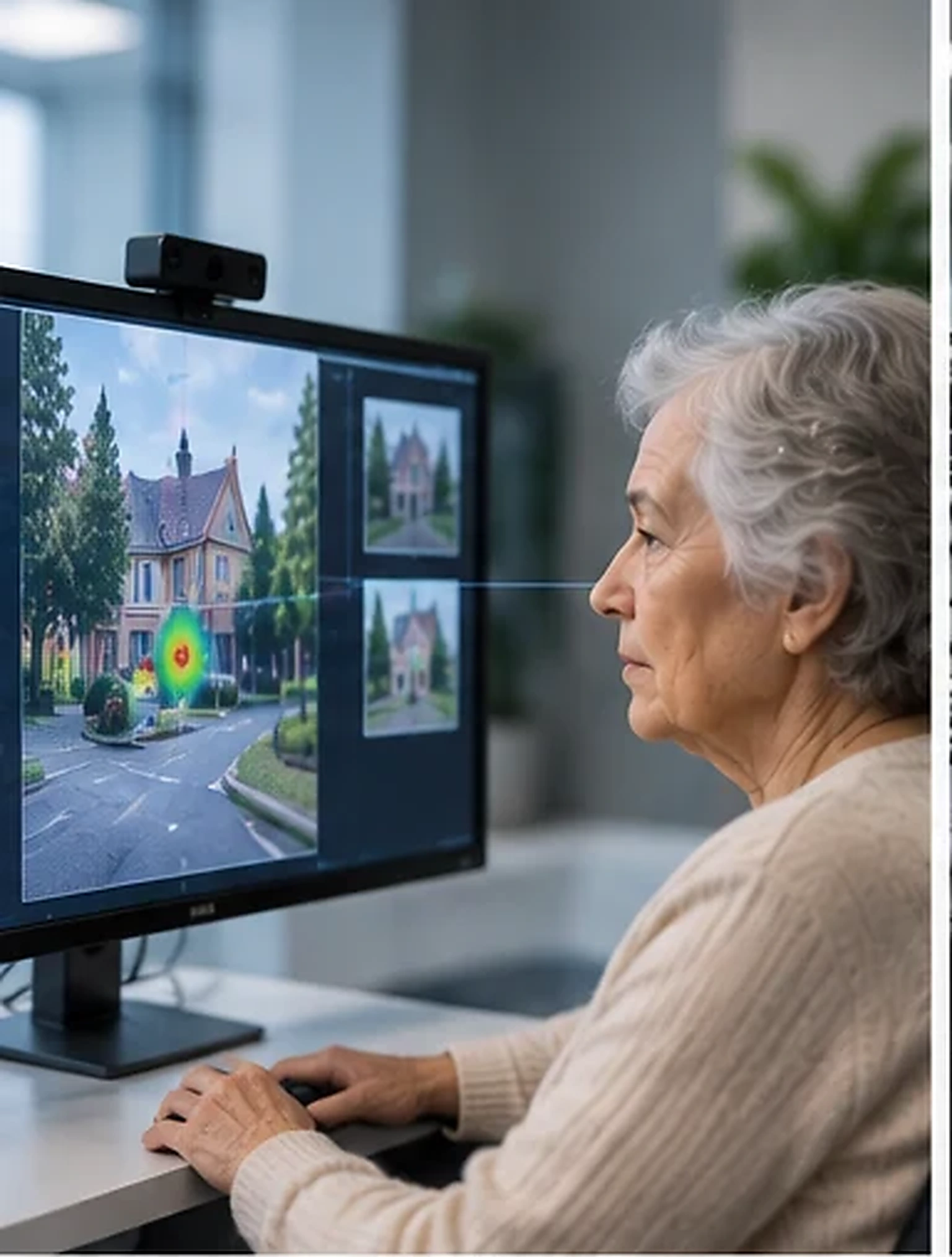 H01
H01Alzheimer Assessment, Monitoring & Cognitive Support
How are visual attention, oculomotor control and cognitive-neurophysiological function changing in this person over time?
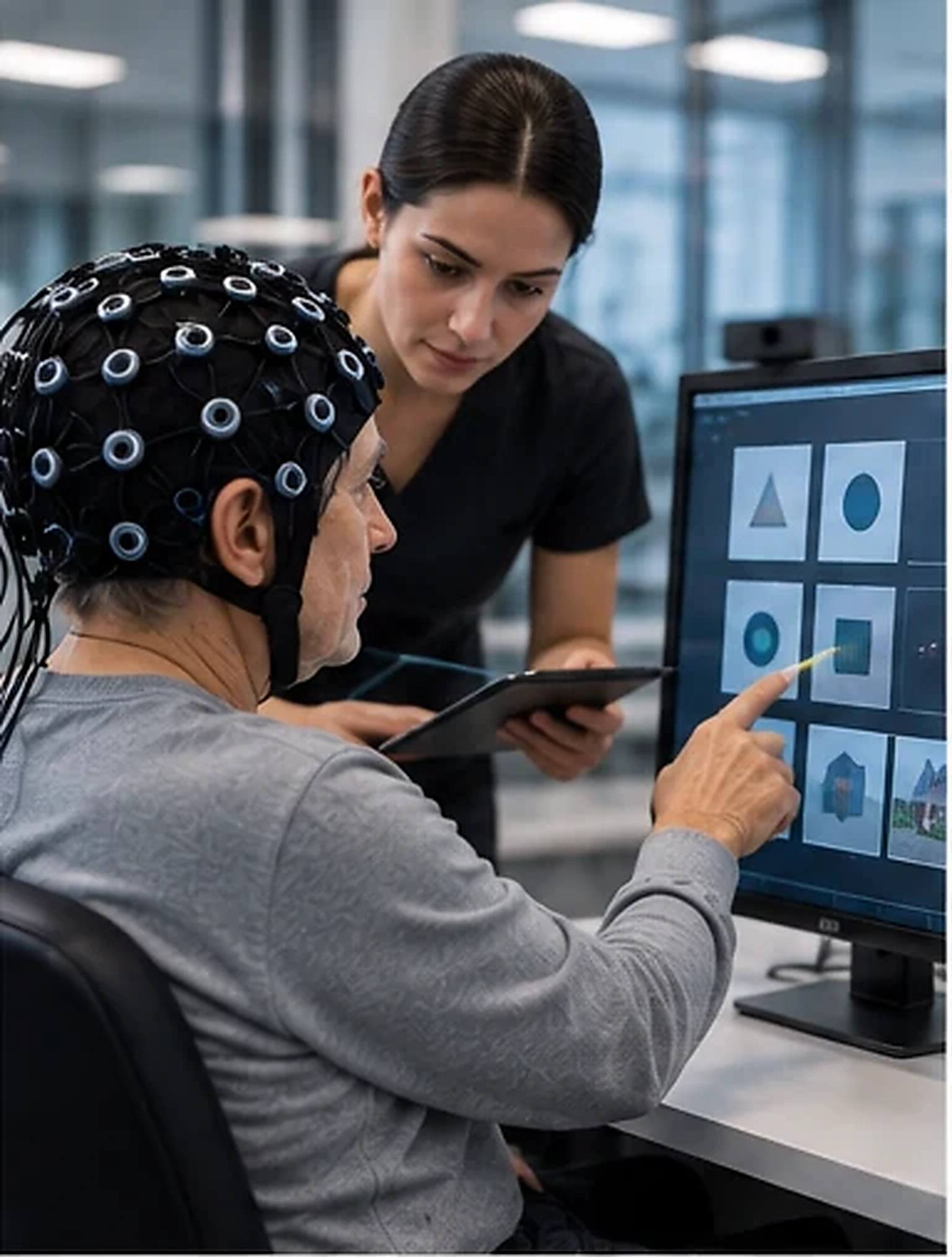 H02
H02MCI Assessment, Monitoring & Cognitive Rehabilitation
Which attention, executive and visual-cognitive functions are changing in mild cognitive impairment, and how do they respond to rehabilitation?
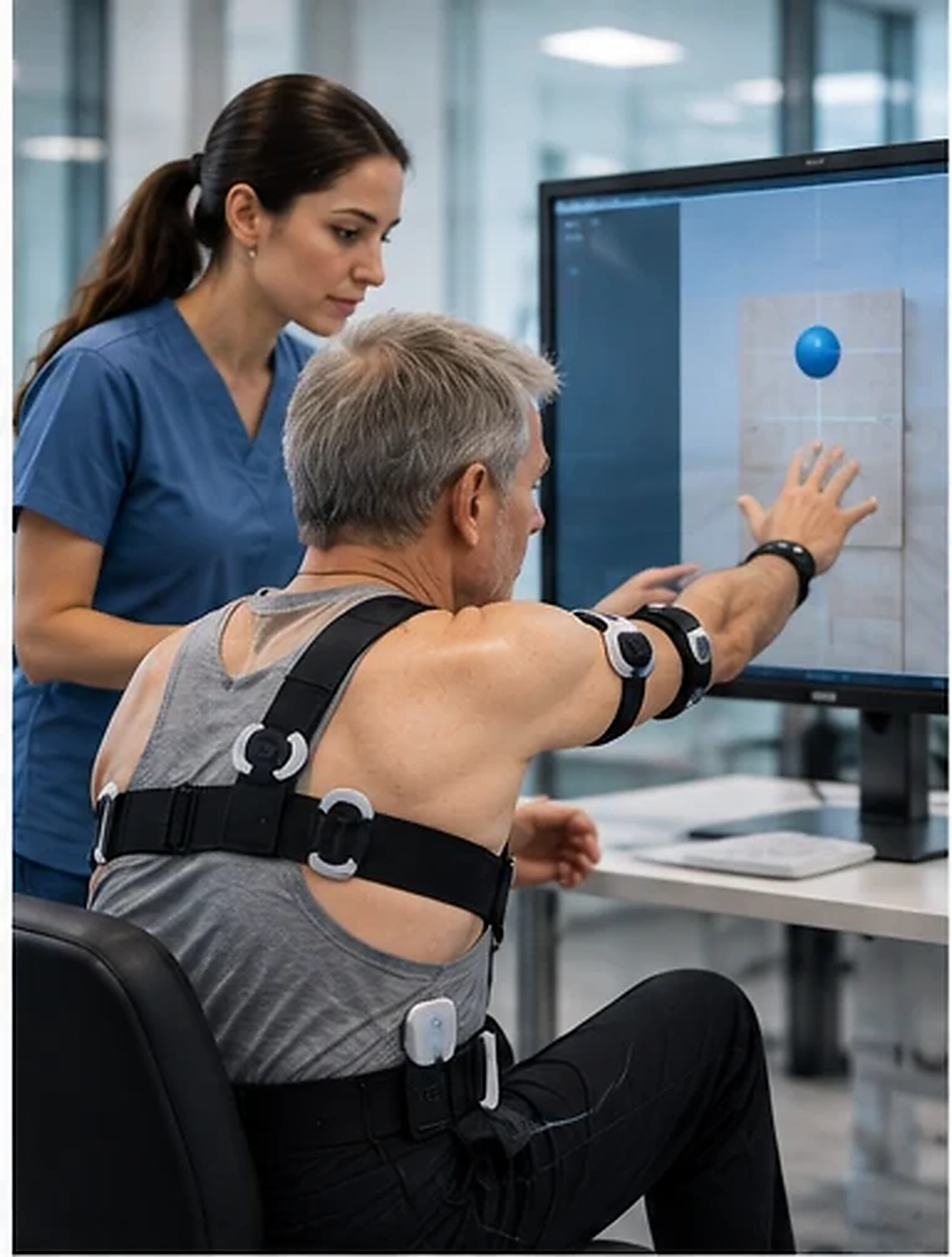 H03
H03Stroke Assessment & Neurorehabilitation
Which motor, mobility, communication or visual-attention functions are impaired after stroke, and how are they recovering?
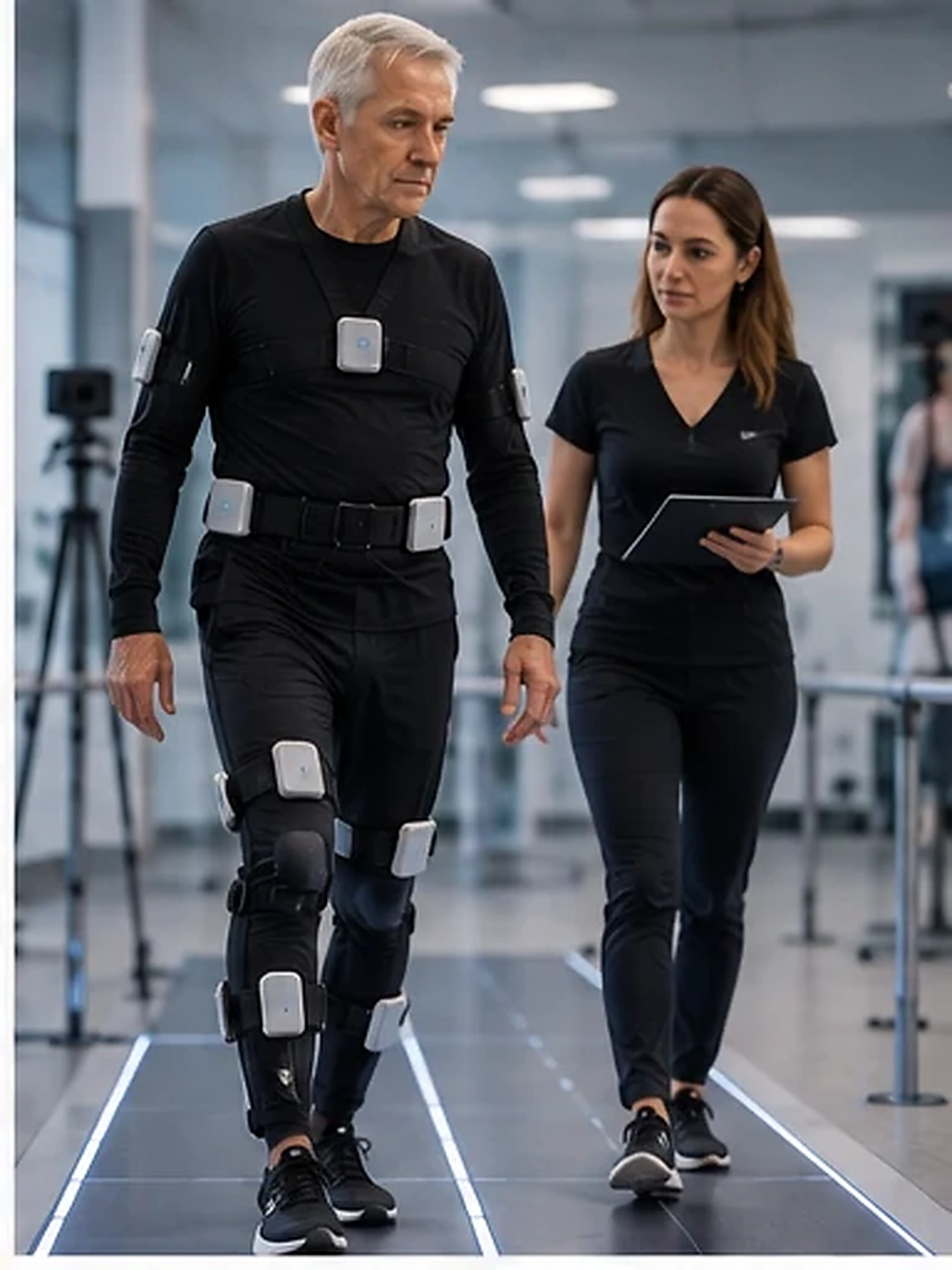 H04
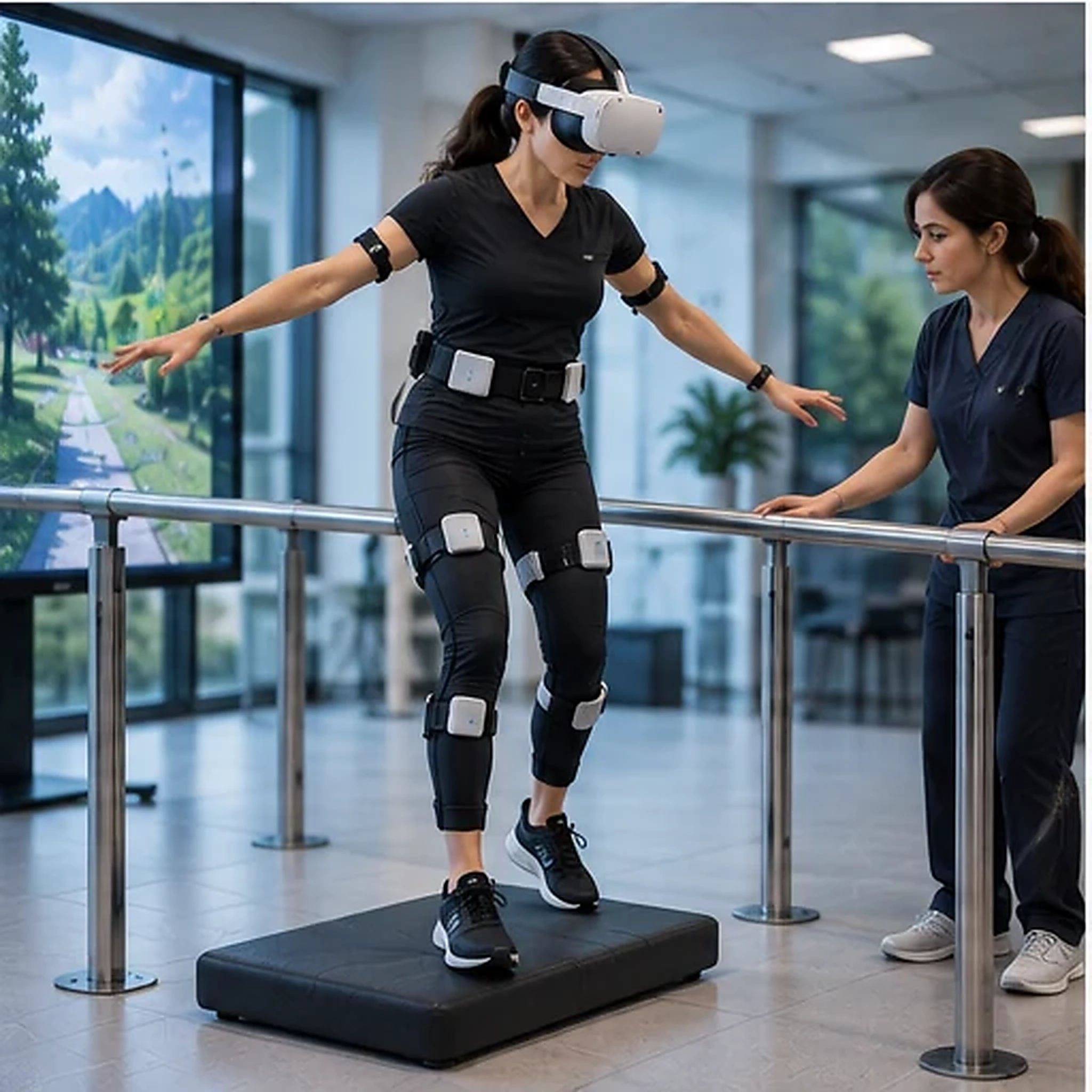
H04Parkinson Assessment, Monitoring & Rehabilitation
How is Parkinson’s disease affecting gait, balance, movement and dual-task function, and how are these measures changing with rehabilitation?
 H05
H05Multiple Sclerosis Assessment, Monitoring & Rehabilitation
How is multiple sclerosis affecting mobility, balance and motor function, and how are those functions changing over time?
 H06
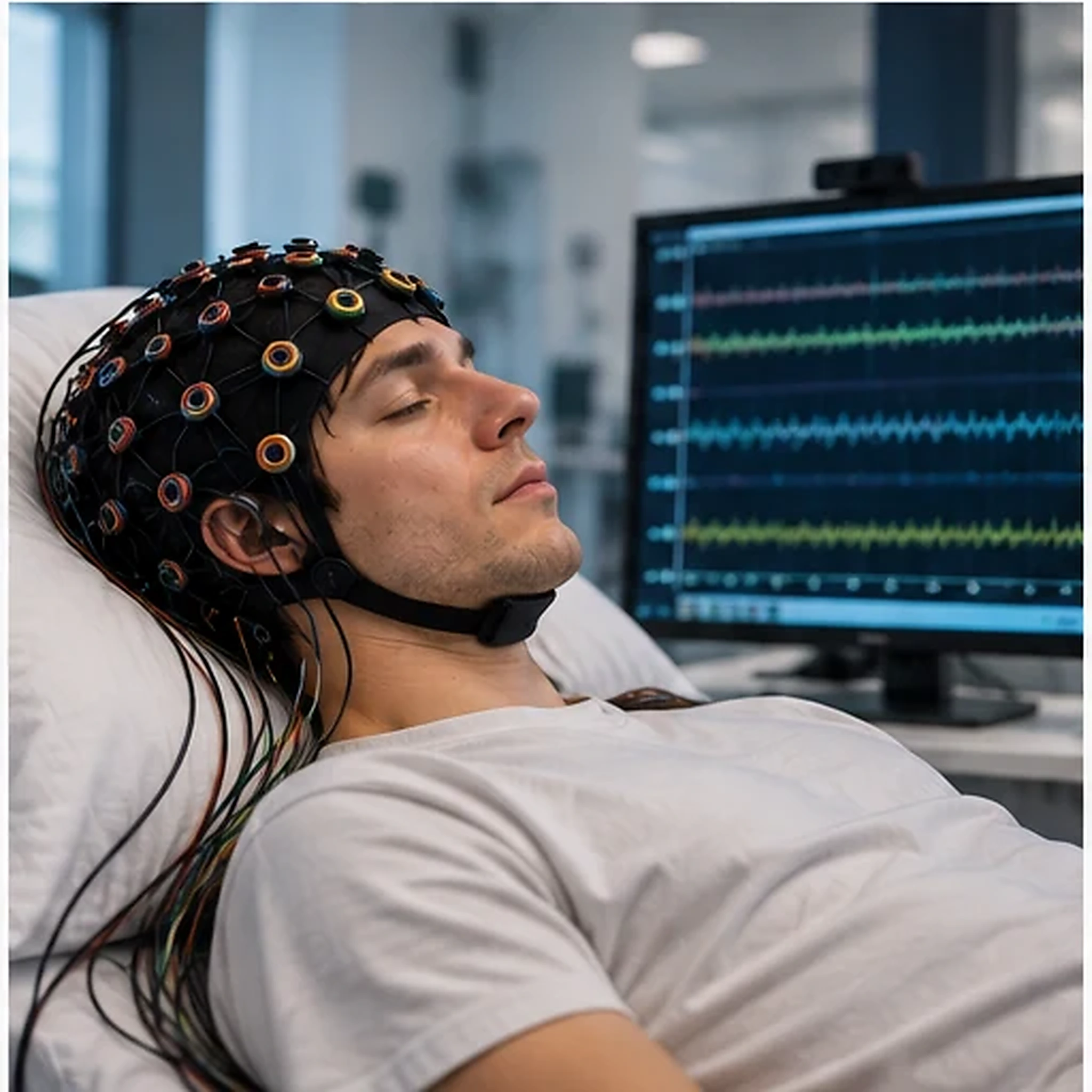
H06Epilepsy Complementary Neurophysiological Assessment
What EEG activity is present during the protocol, and how does it support the neurologist’s clinical interpretation?
 H07
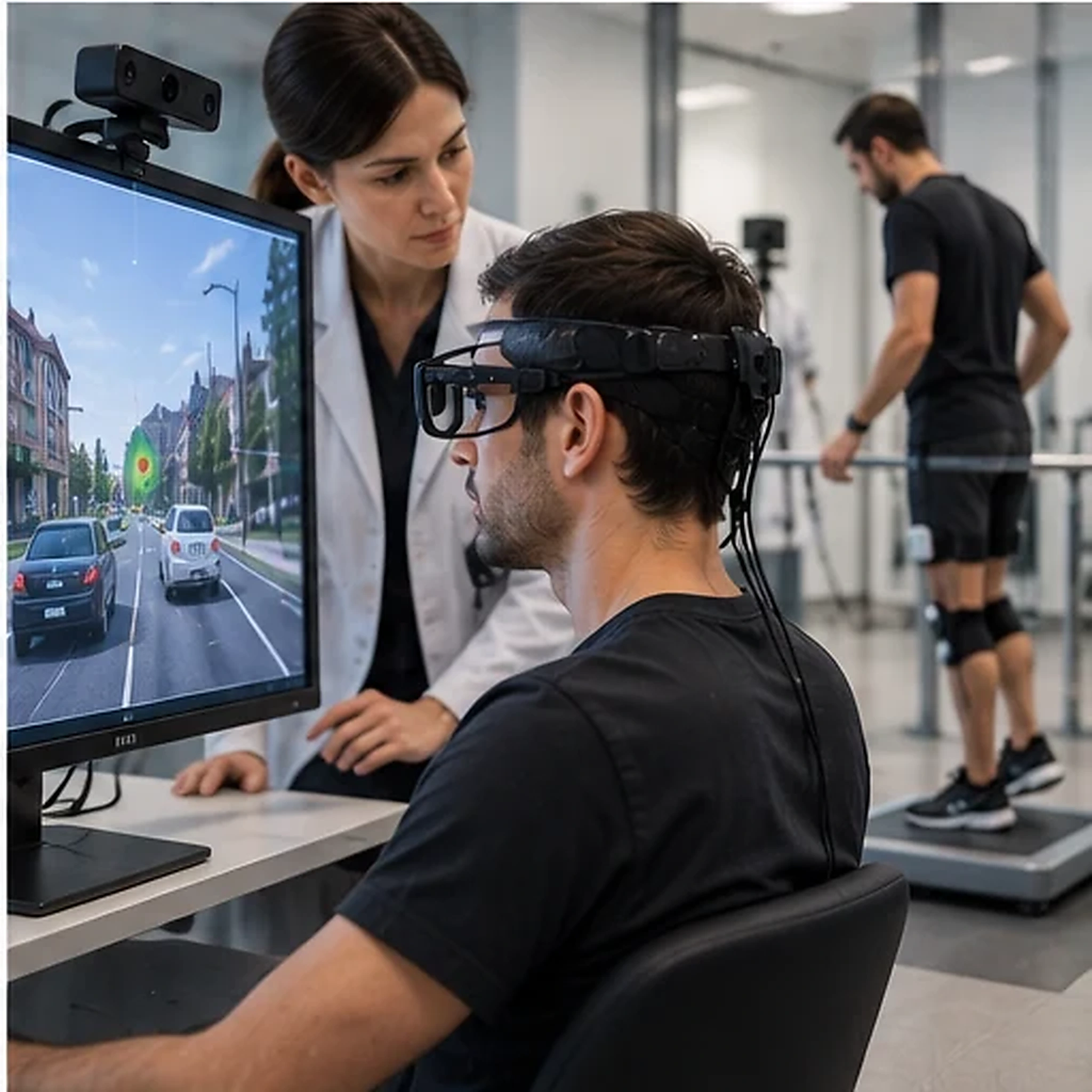
H07Traumatic Brain Injury Assessment & Rehabilitation
Which cognitive, oculomotor, balance and mobility functions are affected after traumatic brain injury, and how are they recovering?
 H08
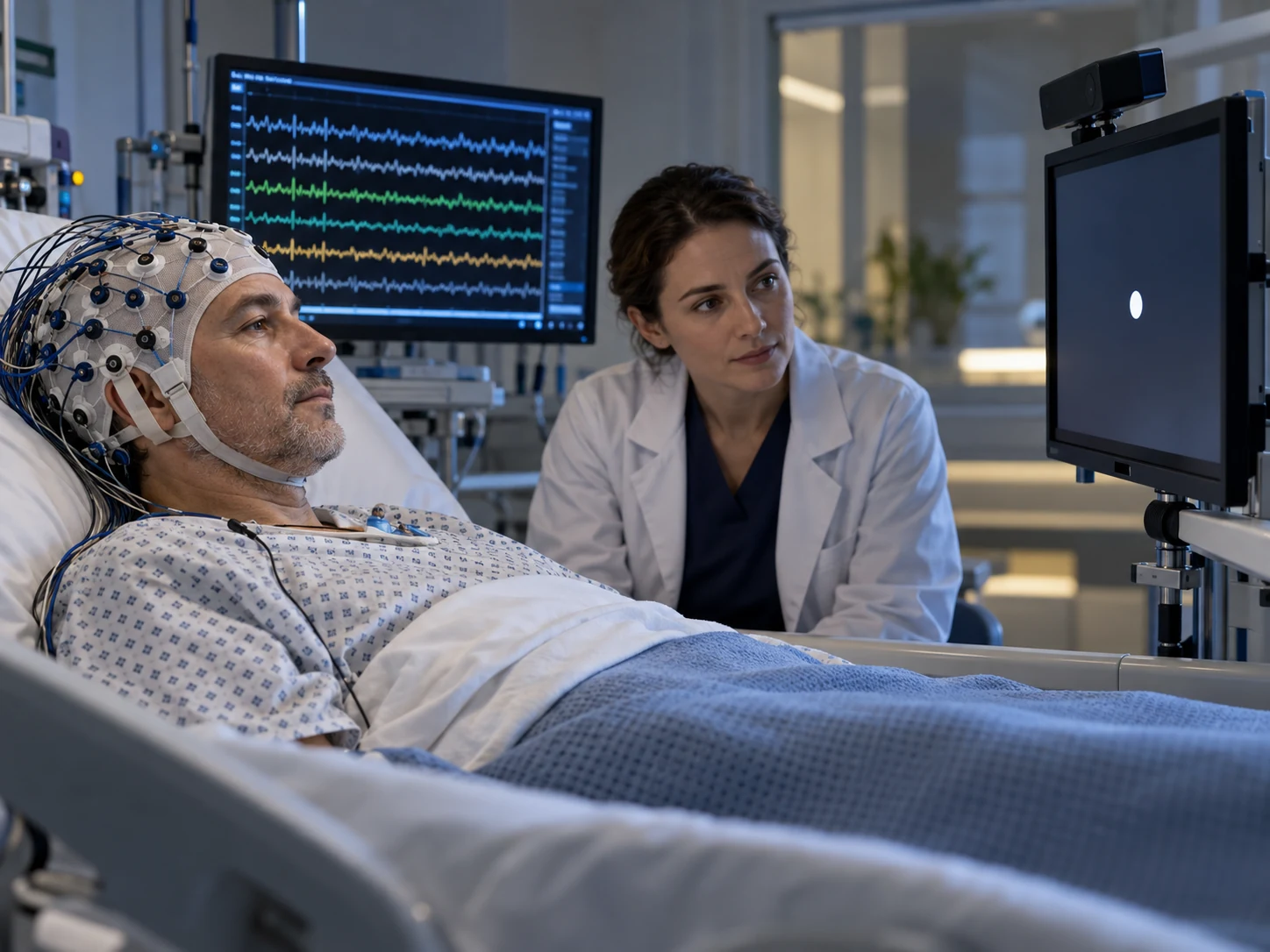
H08Disorders of Consciousness Assessment
Are there reproducible neurophysiological or eye-movement responses that add objective evidence to the clinical assessment of consciousness?
 H09
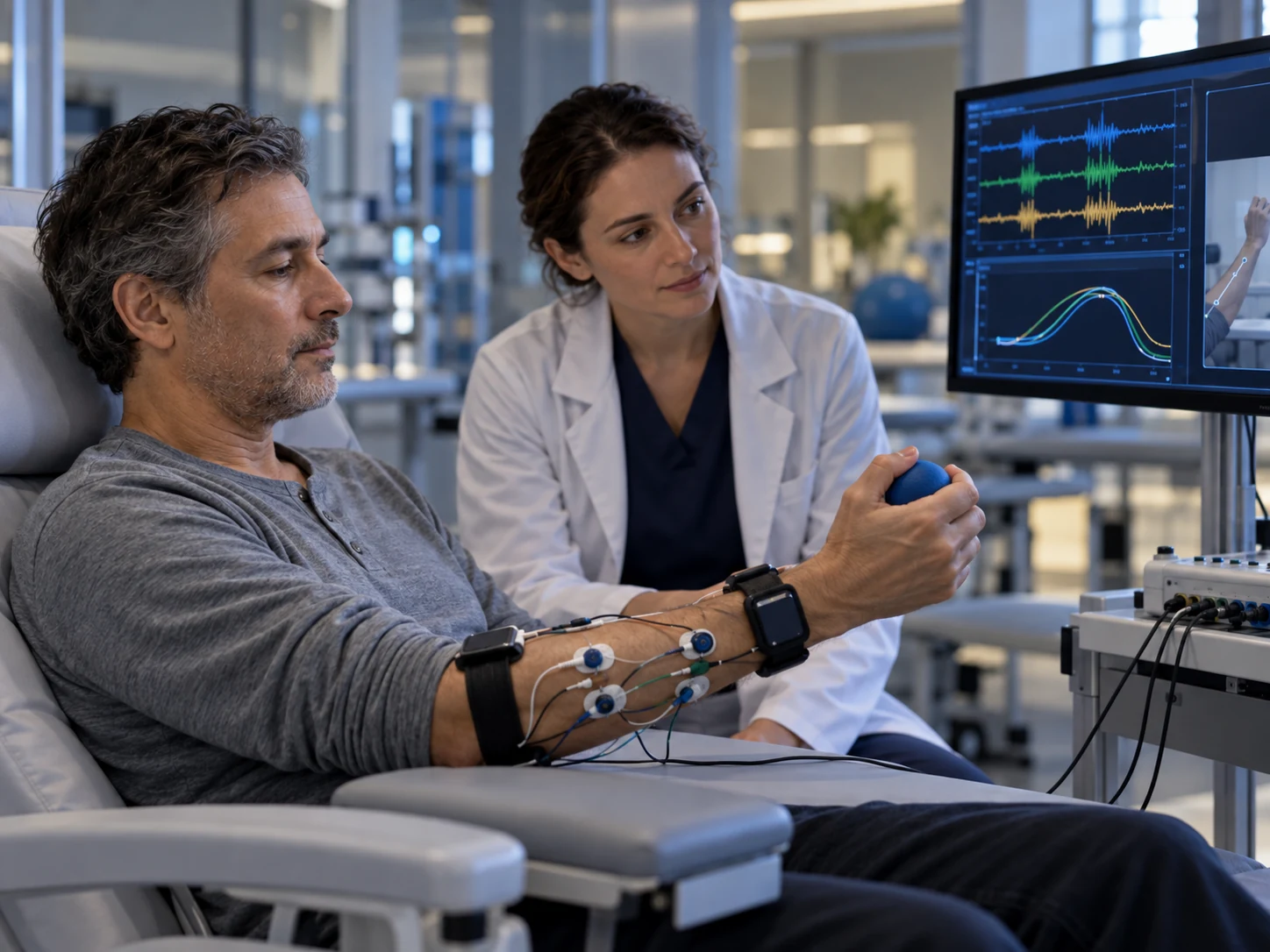
H09ALS Neuromuscular Assessment & Monitoring
How are muscle activation and functional movement changing over time in a person with ALS?
 H10
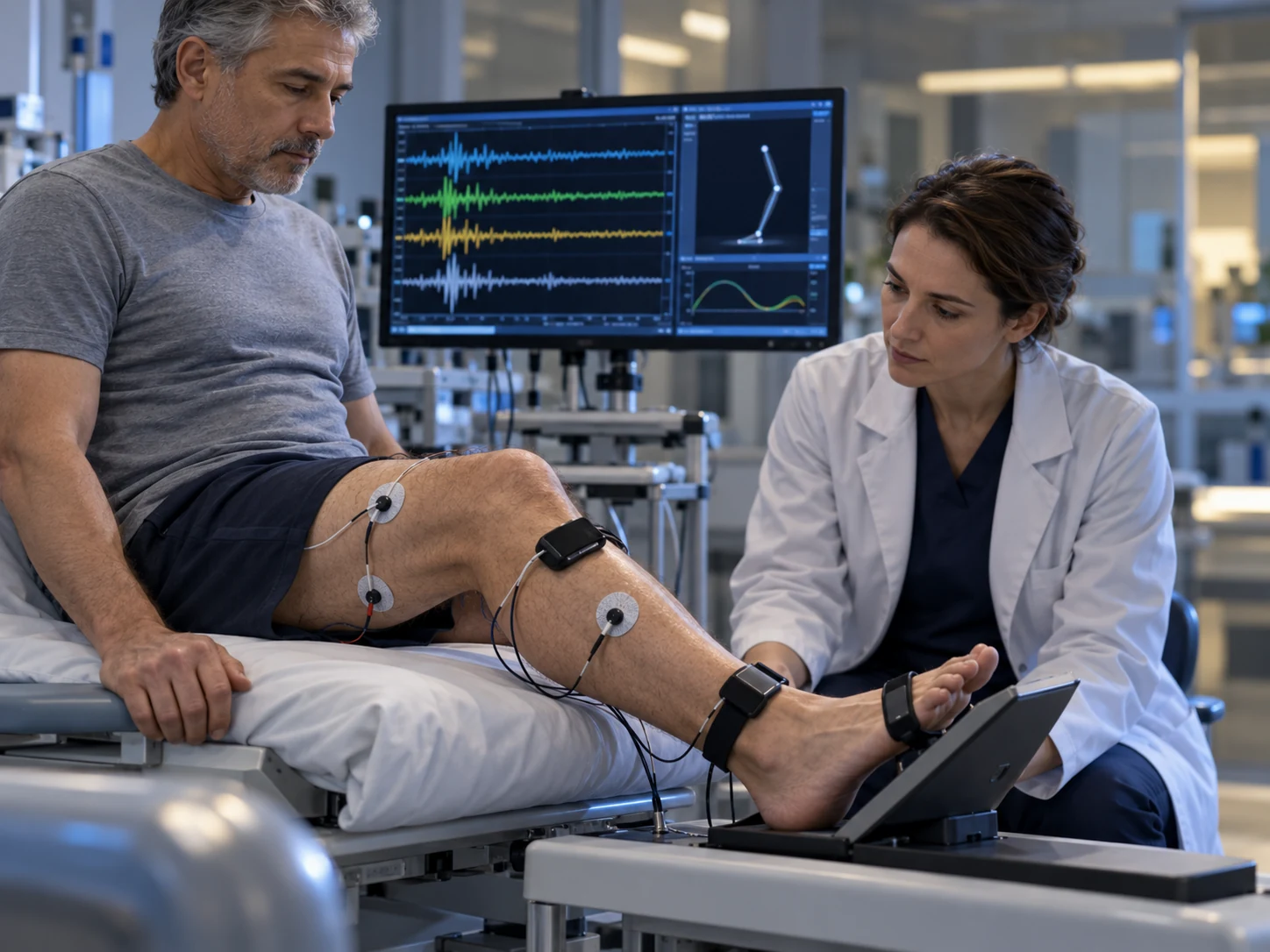
H10Peripheral Neuropathy Neuromuscular Assessment
How is peripheral neuropathy affecting muscle activation, movement and gait function?
 H11
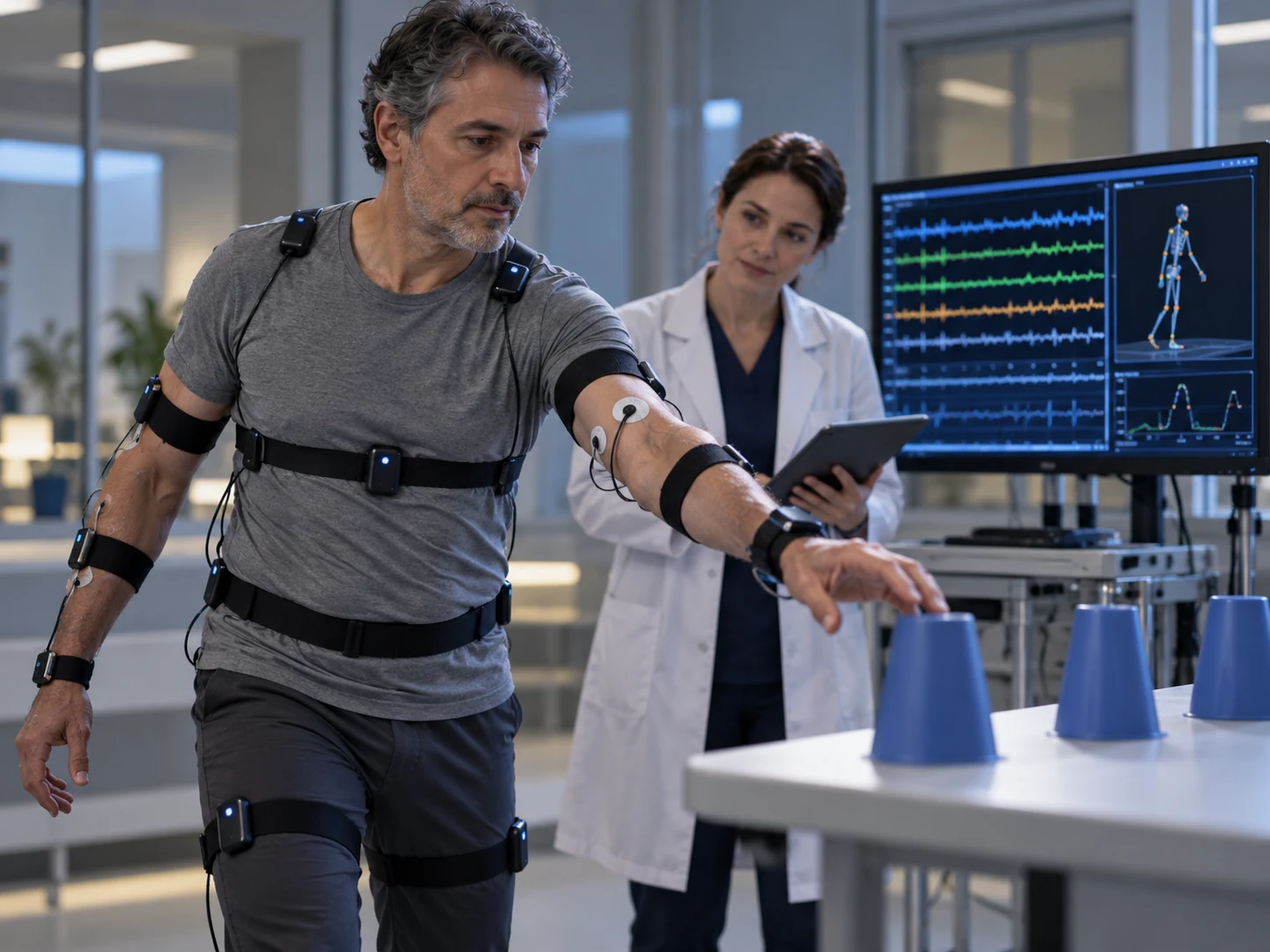
H11Movement Disorders Assessment & Monitoring
What are the frequency, amplitude, timing and functional characteristics of the abnormal movement pattern?
 H12
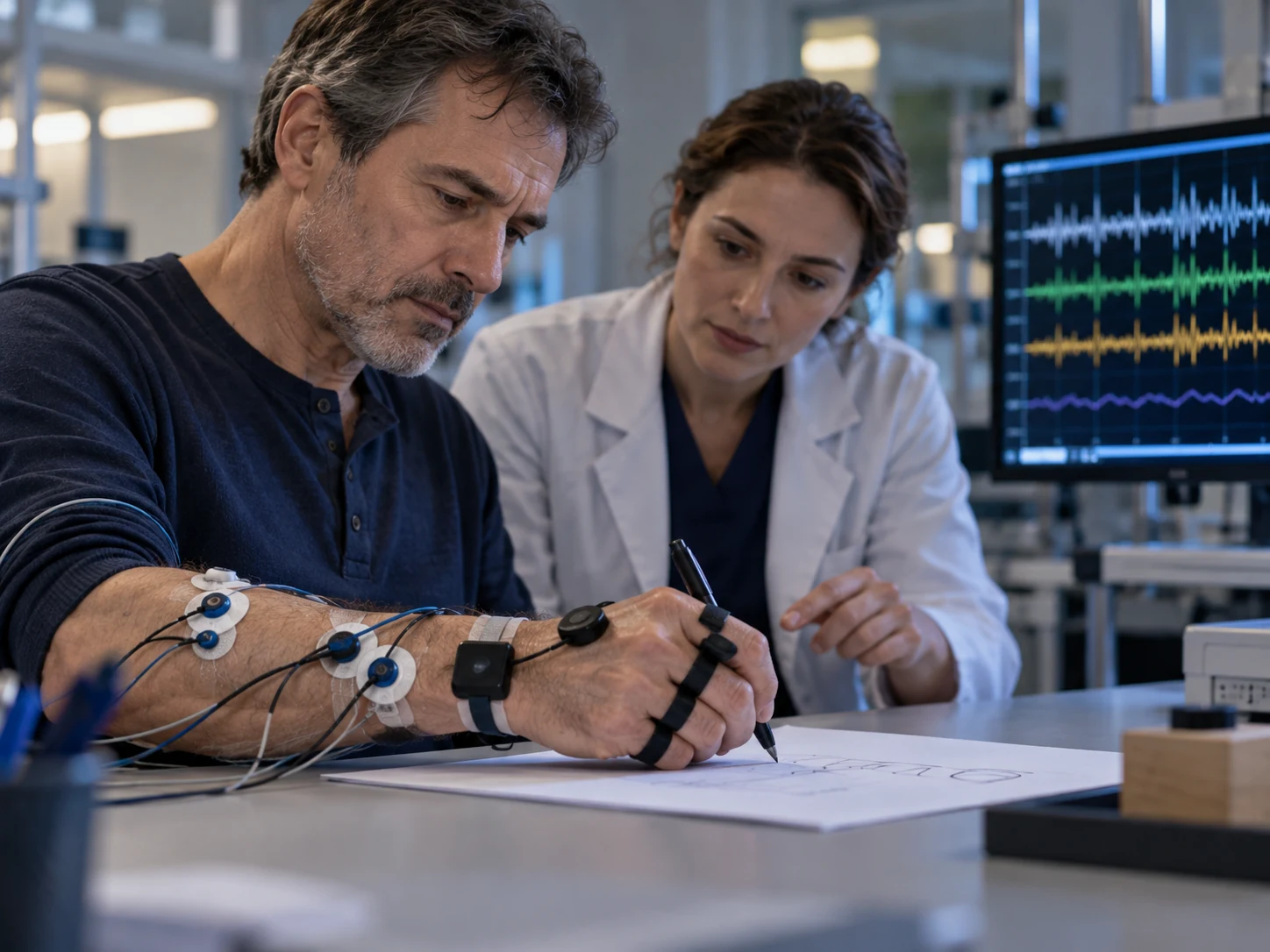
H12Task-Specific Dystonia Assessment & Rehabilitation
Which muscle-activation and movement patterns become abnormal during the task that triggers dystonia?
 H13
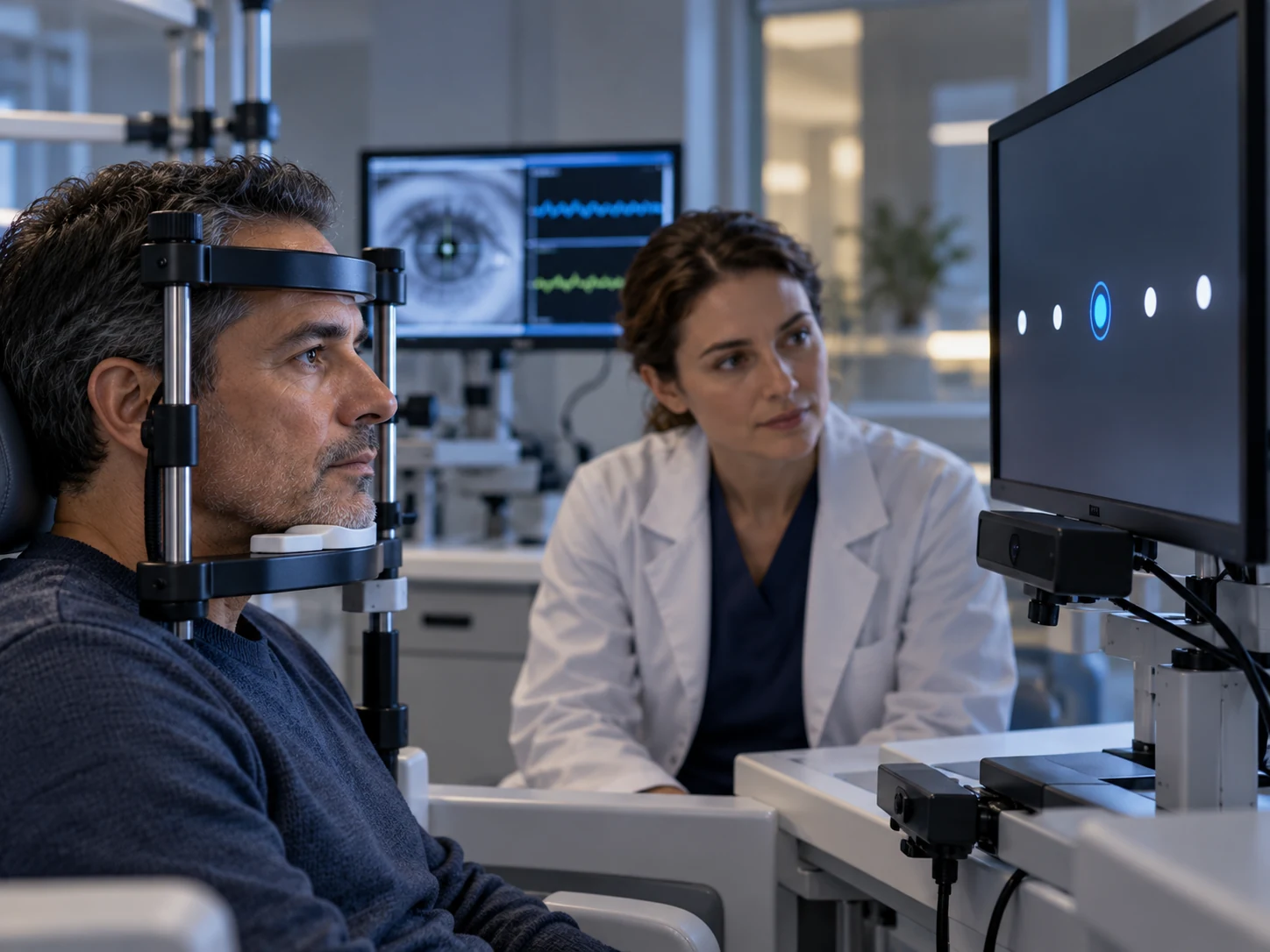
H13Neuro-Ophthalmology & Oculomotor Assessment
How accurately and consistently can the patient fixate, generate saccades, pursue targets and explore visual information?
 H14
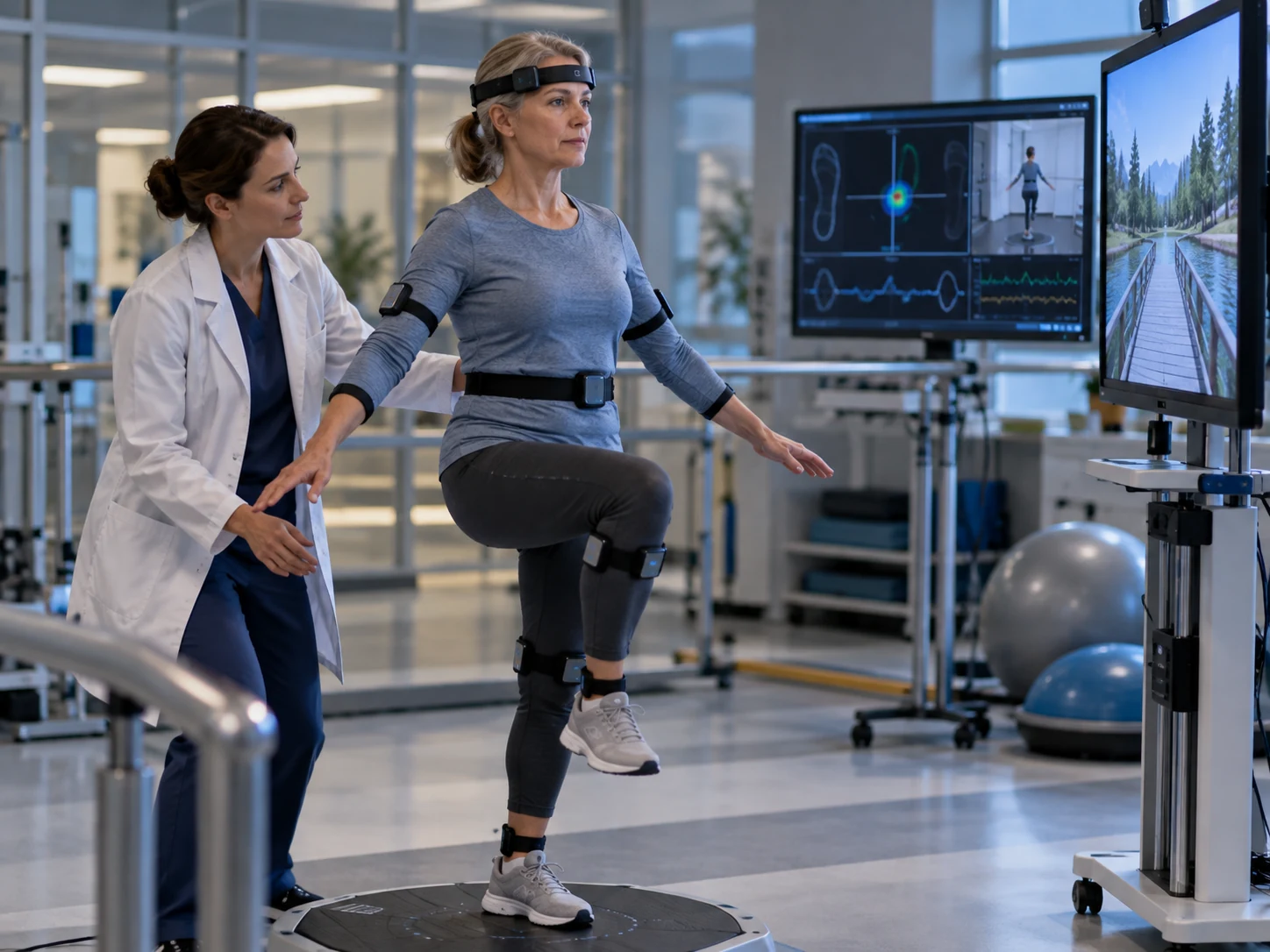
H14Vestibular Dysfunction & Vertigo Assessment and Rehabilitation
How are vestibular dysfunction and vertigo affecting postural control, visual-vestibular function and balance, and how do they respond to rehabilitation?
 H15
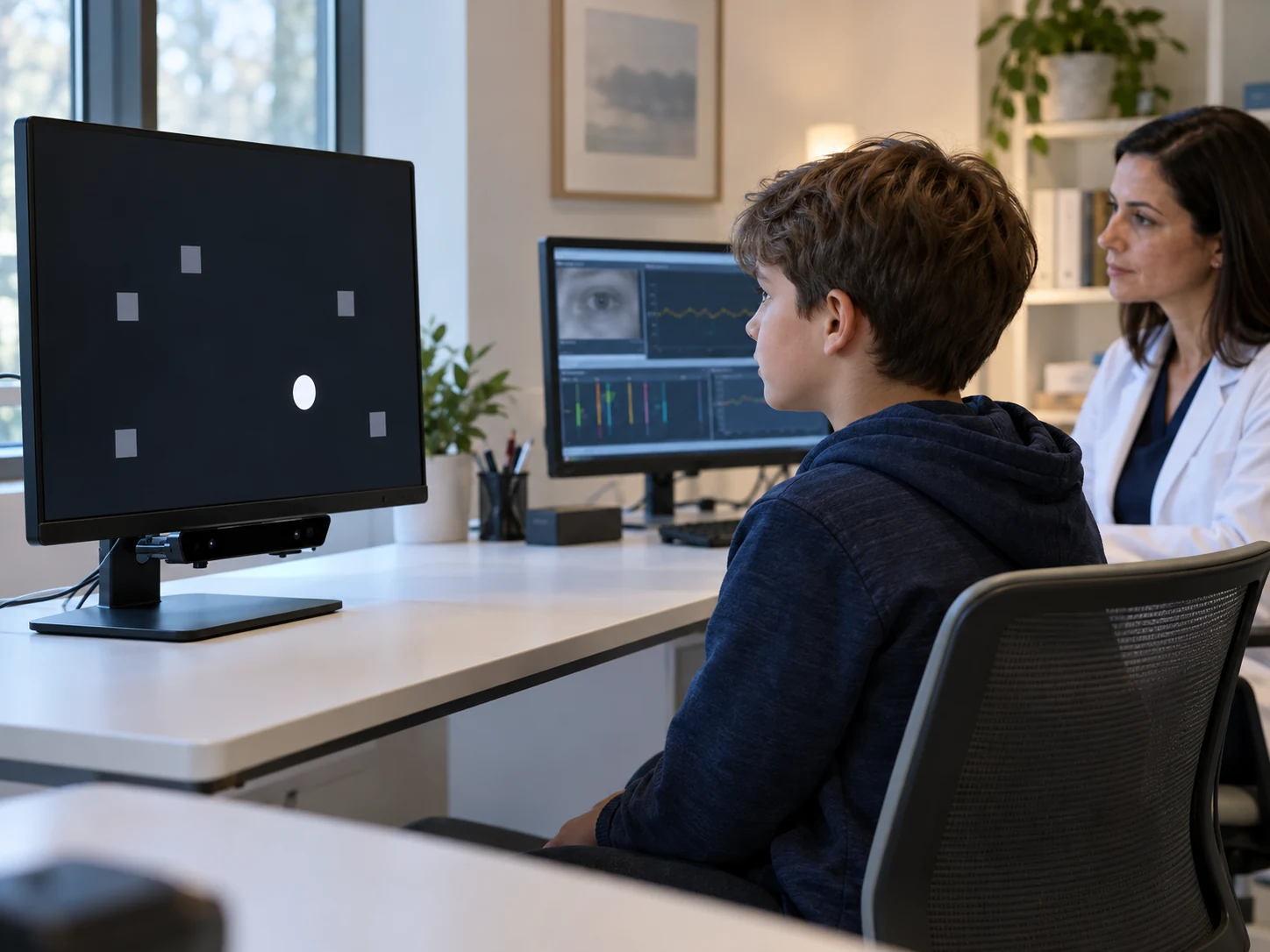
H15ADHD Neurobehavioral Assessment
How does this person allocate and sustain attention, resist distraction and regulate responses during structured tasks?
 H16
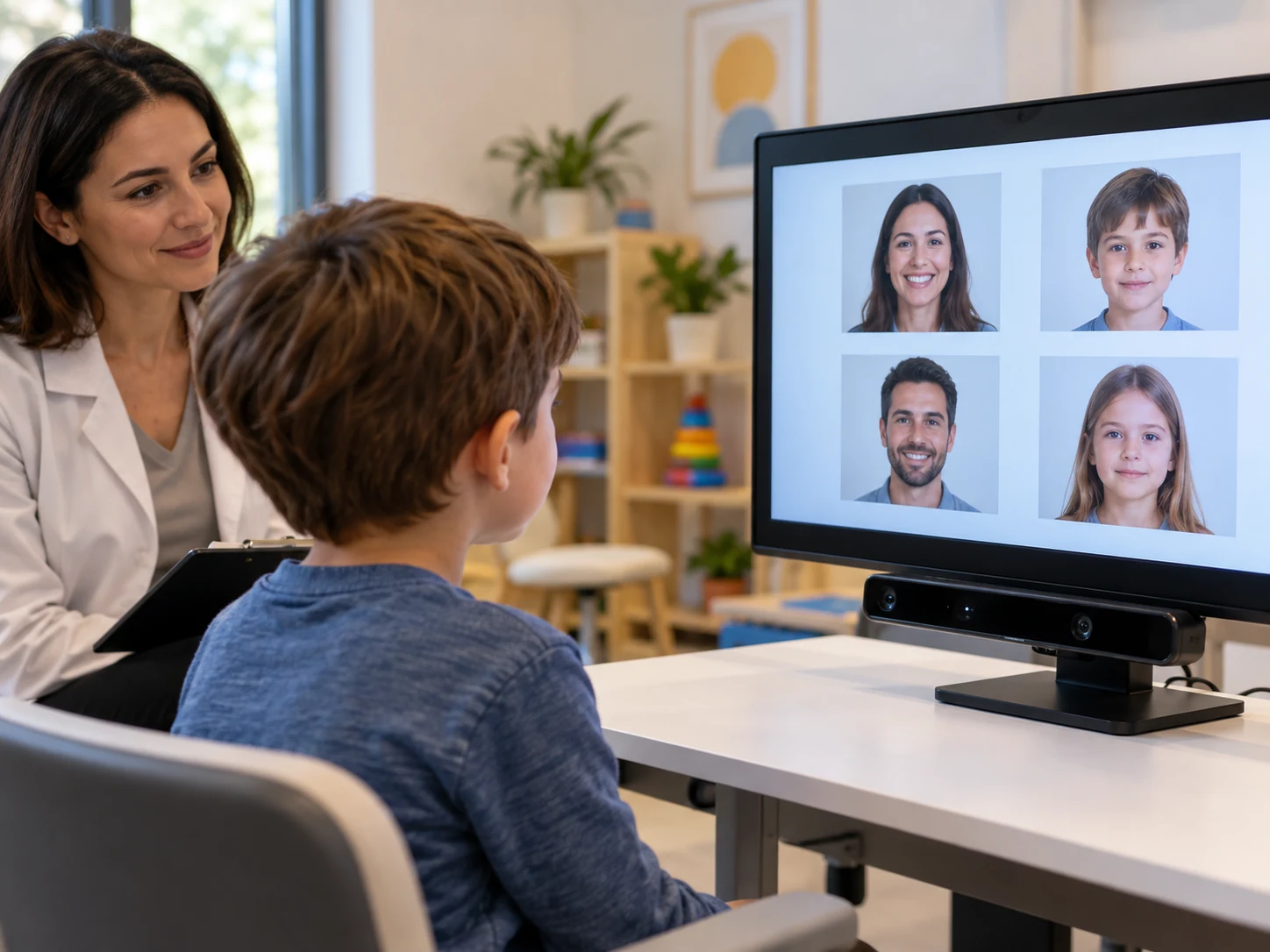
H16Autism Neurobehavioral Screening, Assessment & Monitoring
How does the person allocate attention to social and non-social information, faces, eyes and joint-attention cues?
 H17
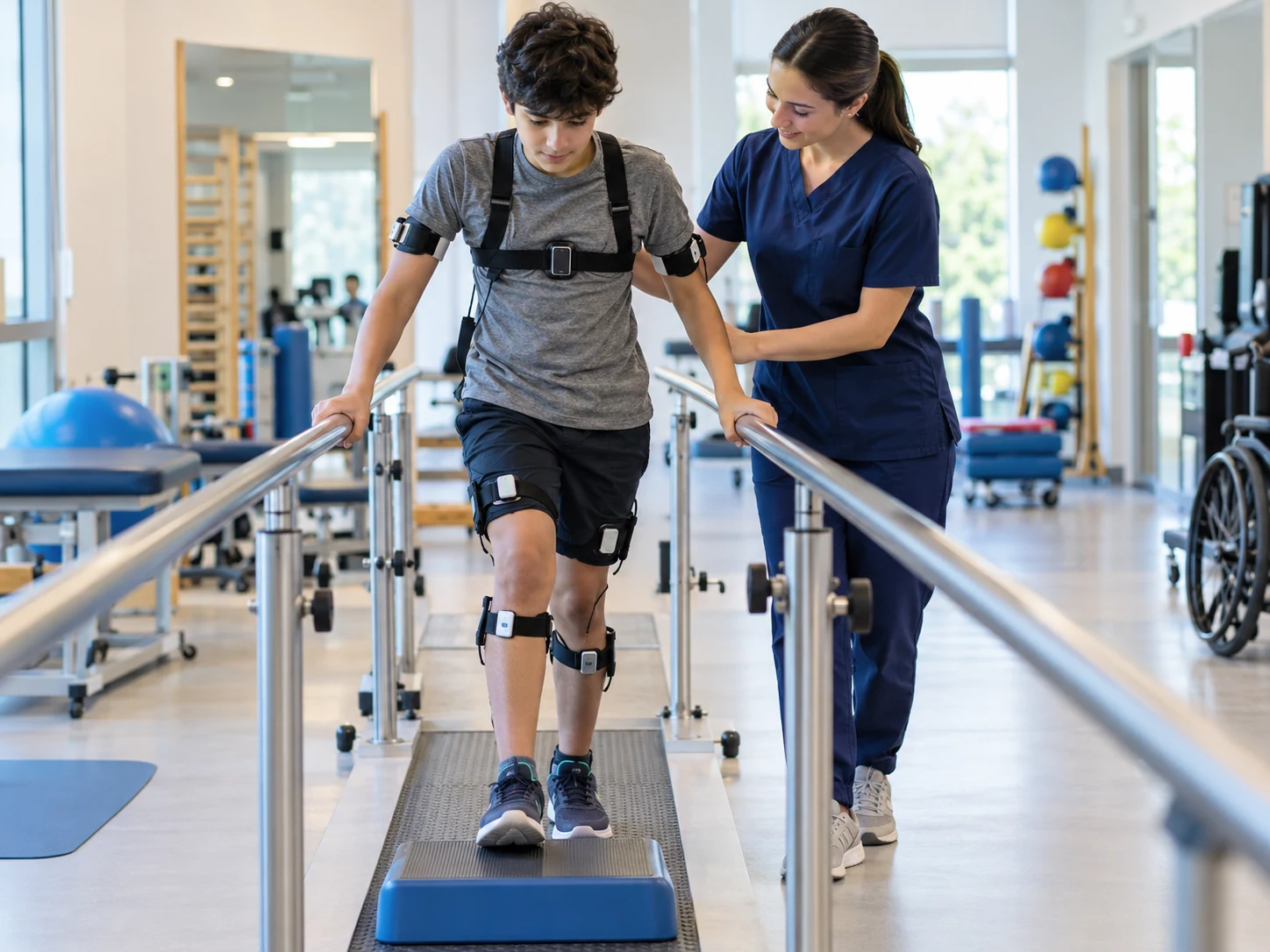
H17Cerebral Palsy Motor & Functional Rehabilitation
Which motor, postural and balance patterns limit function in cerebral palsy, and how are they changing with rehabilitation?
 H18
H18Dyslexia Reading & Oculomotor Assessment
What reading and oculomotor pattern accompanies this person’s reading difficulty?
 H19
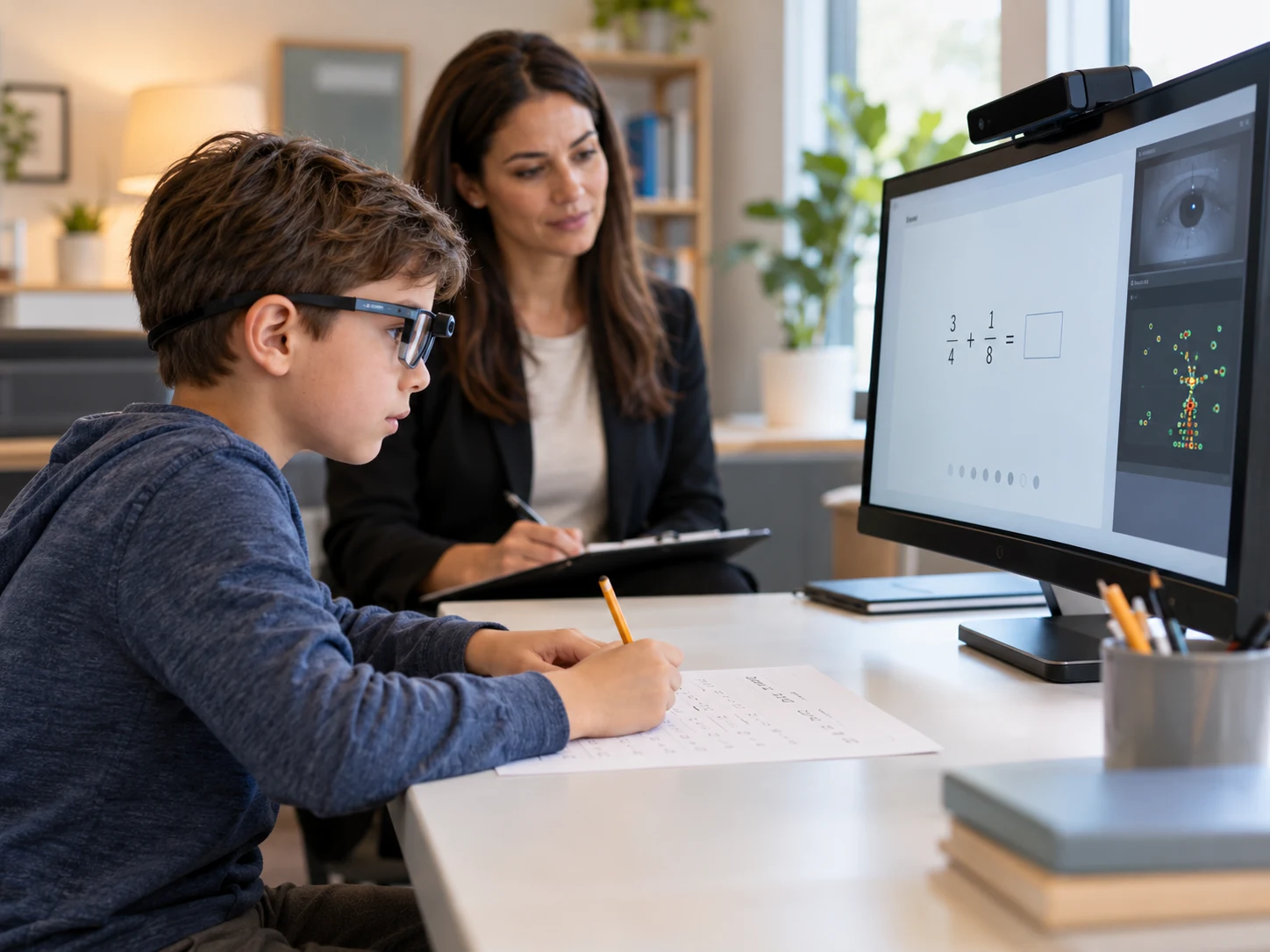
H19Specific Learning Disorders Neurobehavioral Assessment
How does the learner visually search, sequence information and execute the specific academic task that is difficult?
 H20
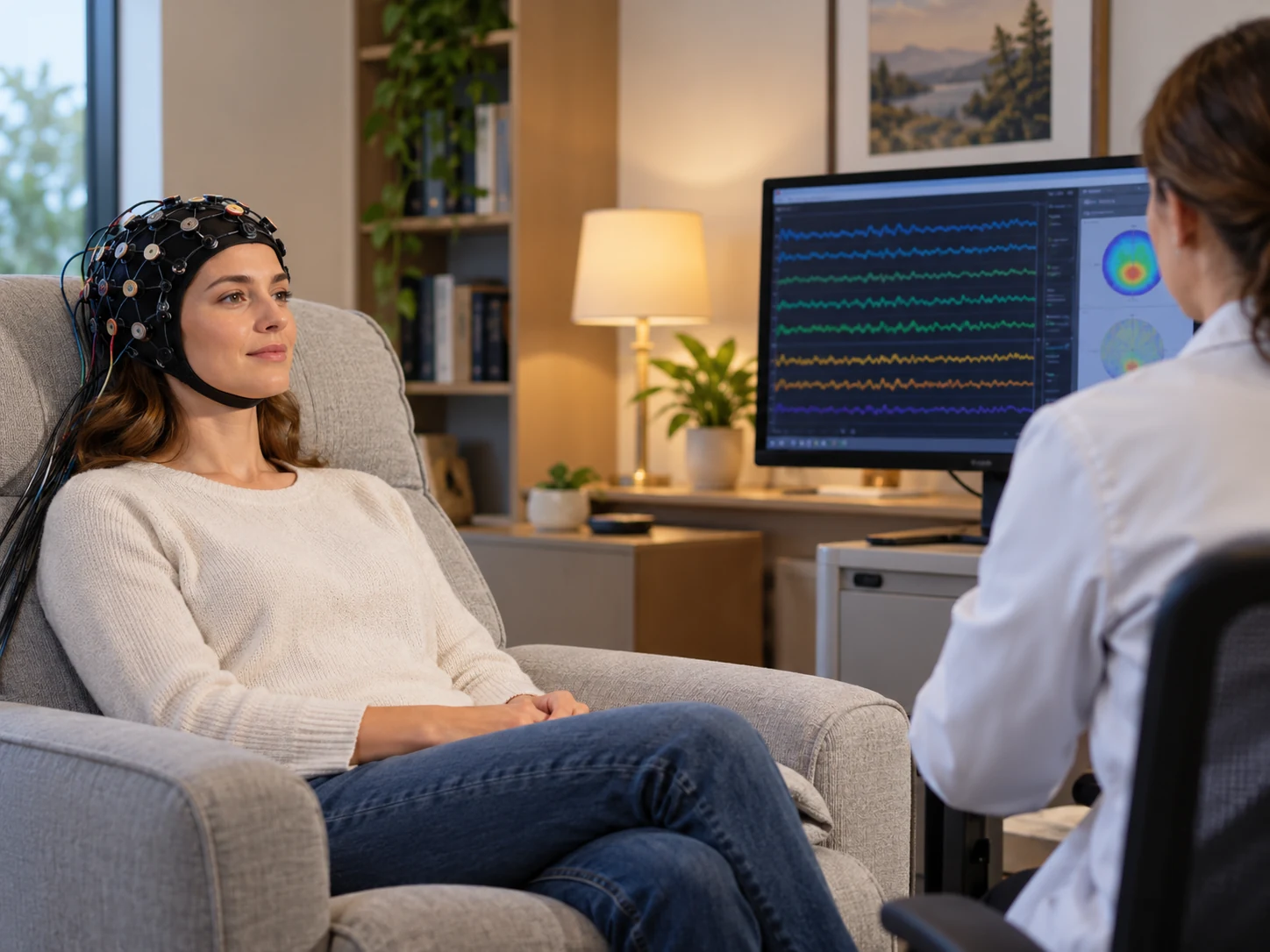
H20Major Depression Neurophysiological Assessment & Neurofeedback
What neurophysiological patterns are present during rest or cognitive/emotional tasks, and how do they change over time or during neurofeedback?
 H21
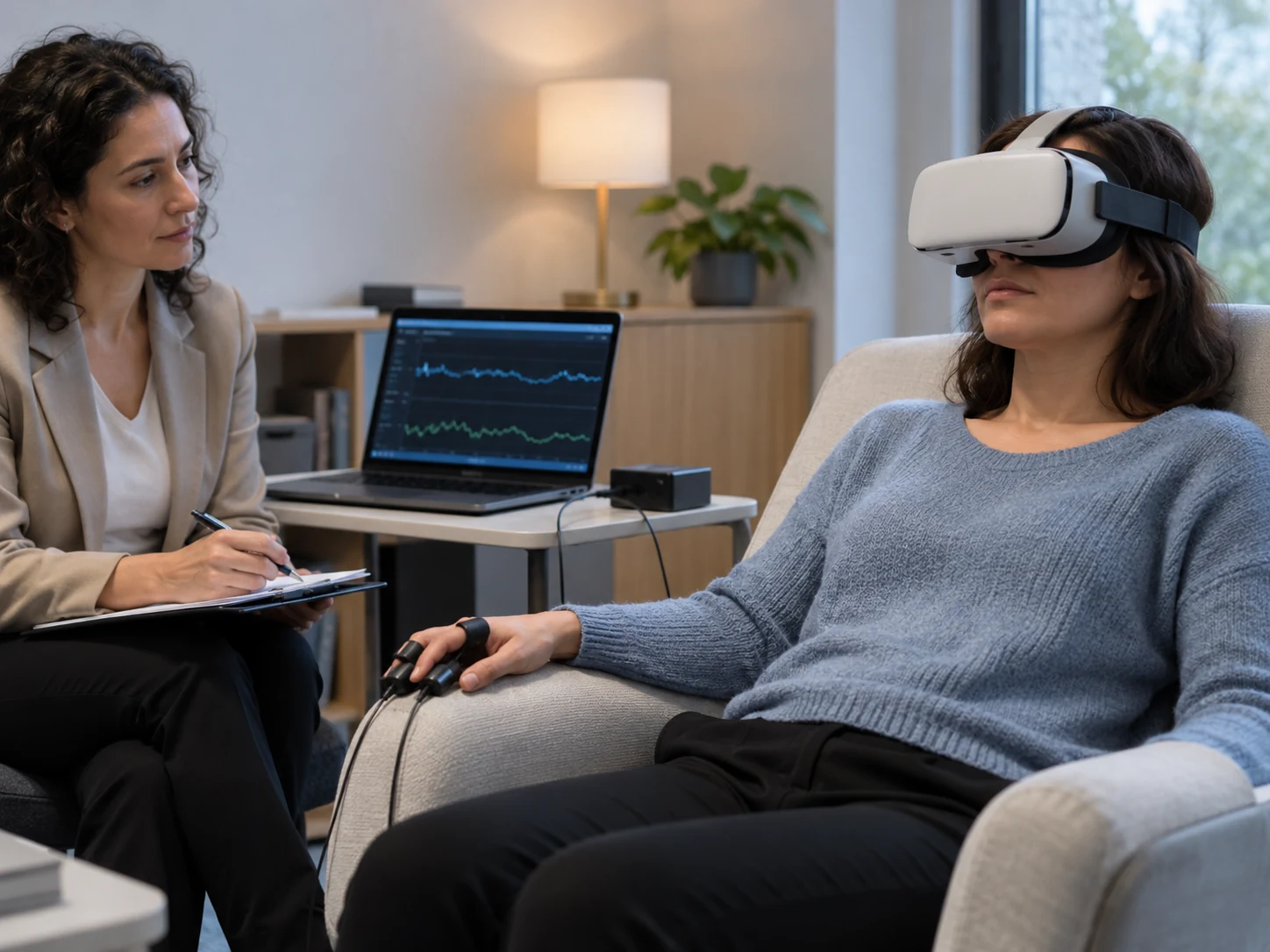
H21Anxiety Disorders Assessment, VR Exposure & Physiological Regulation
How strongly and how long does the person react to anxiety triggers, and how does that response change during graded exposure and regulation?
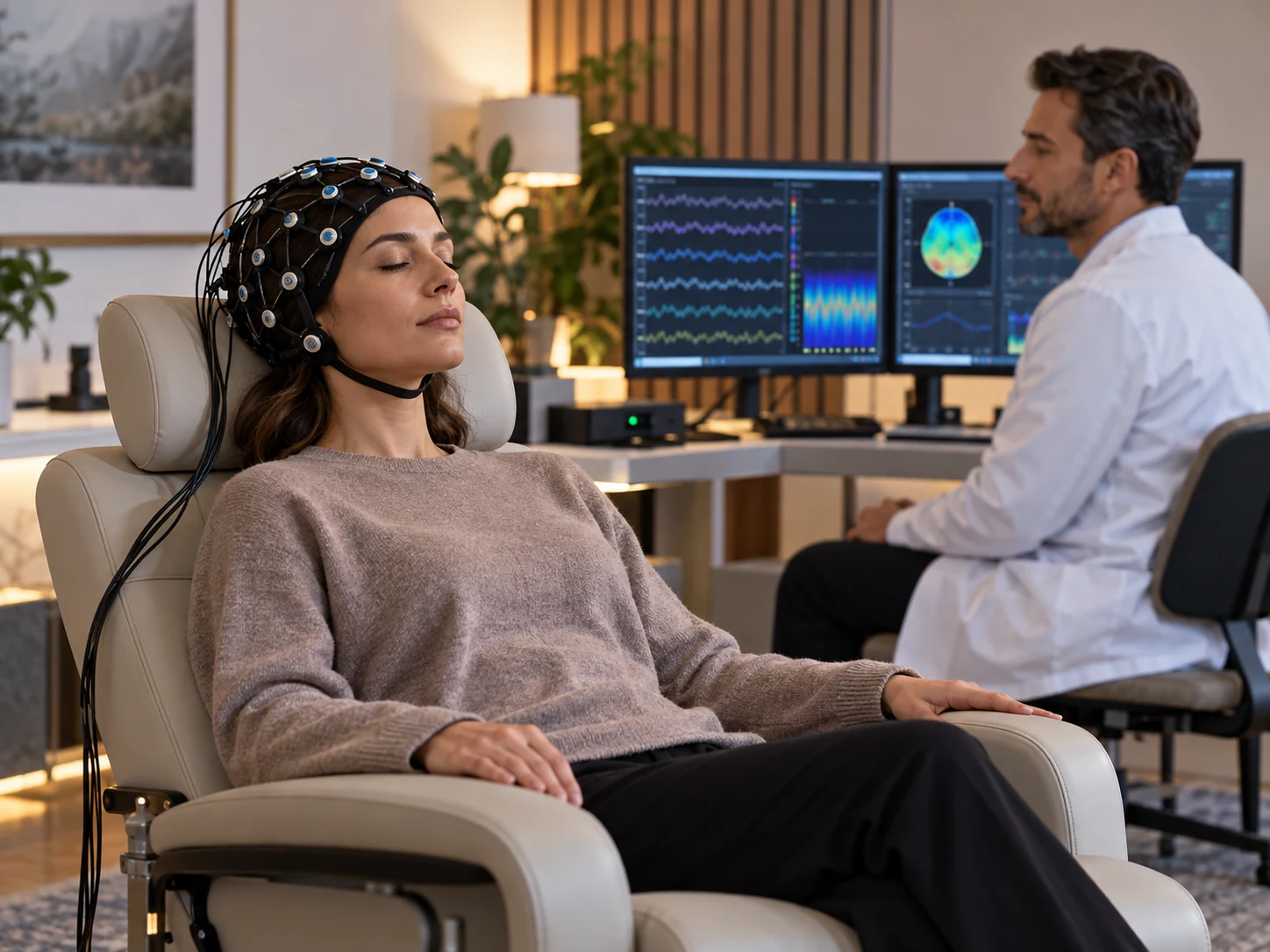 H22
H22PTSD Neurophysiological Assessment & Neurofeedback
How does neurophysiological and autonomic reactivity change across neutral, clinically approved trauma-related and recovery conditions?
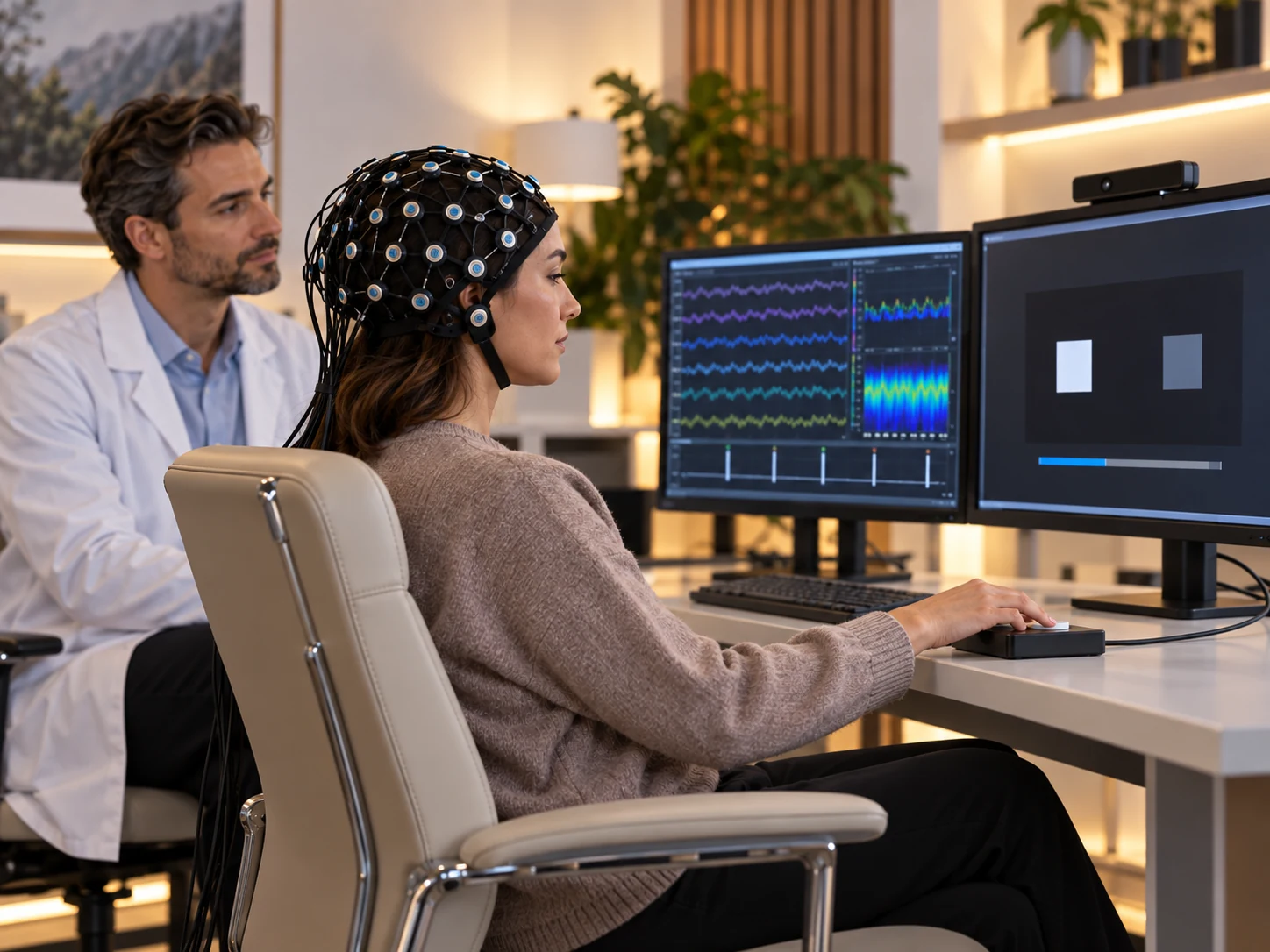 H23
H23Schizophrenia & Psychotic Disorders Assessment
What oculomotor, visual-exploration and neurophysiological patterns are present, and how do they change longitudinally?
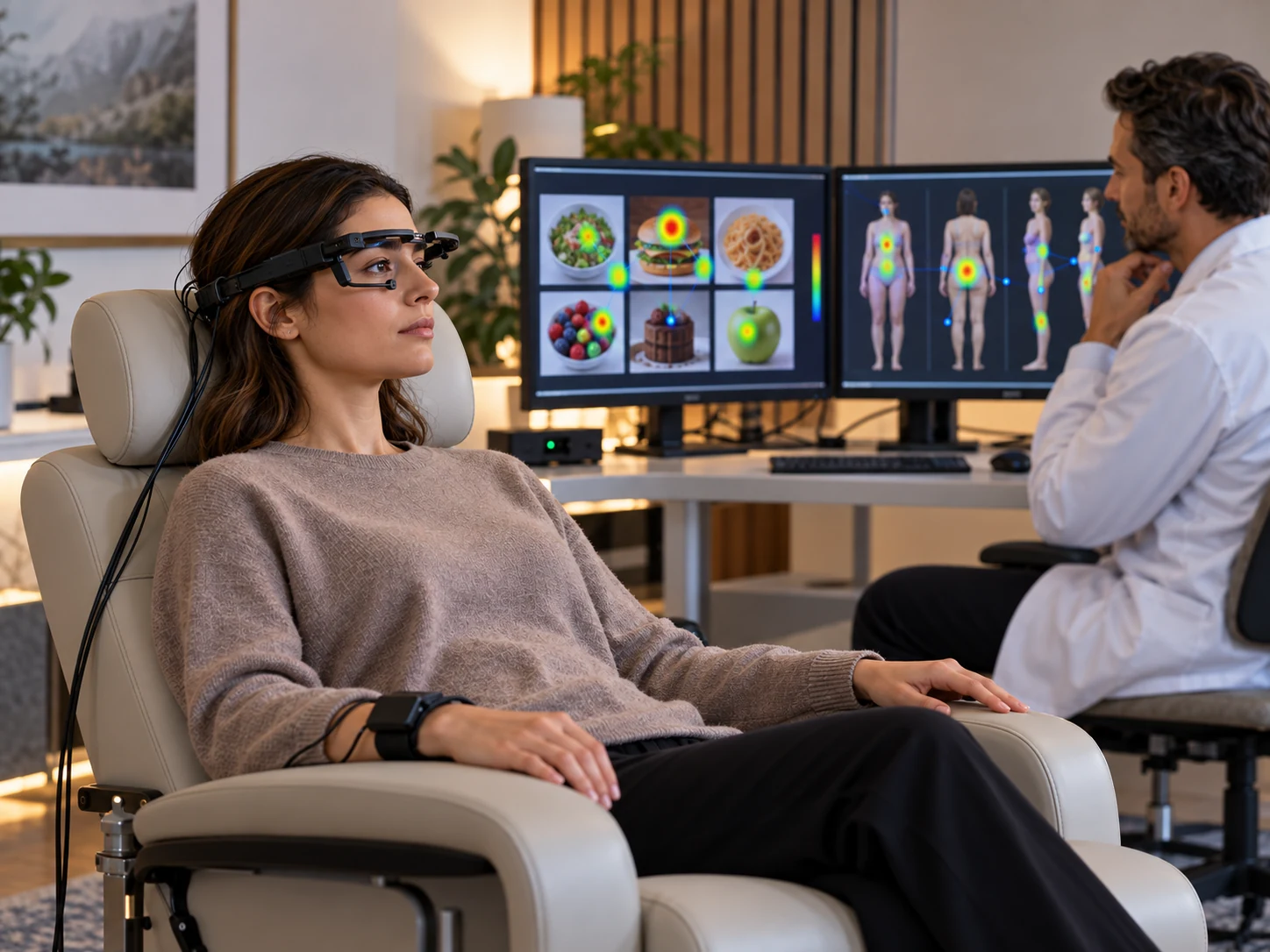 H24
H24OCD Neurobehavioral Assessment & Research
How are cognitive control, error monitoring, uncertainty and compulsive attention expressed during structured OCD-relevant tasks?
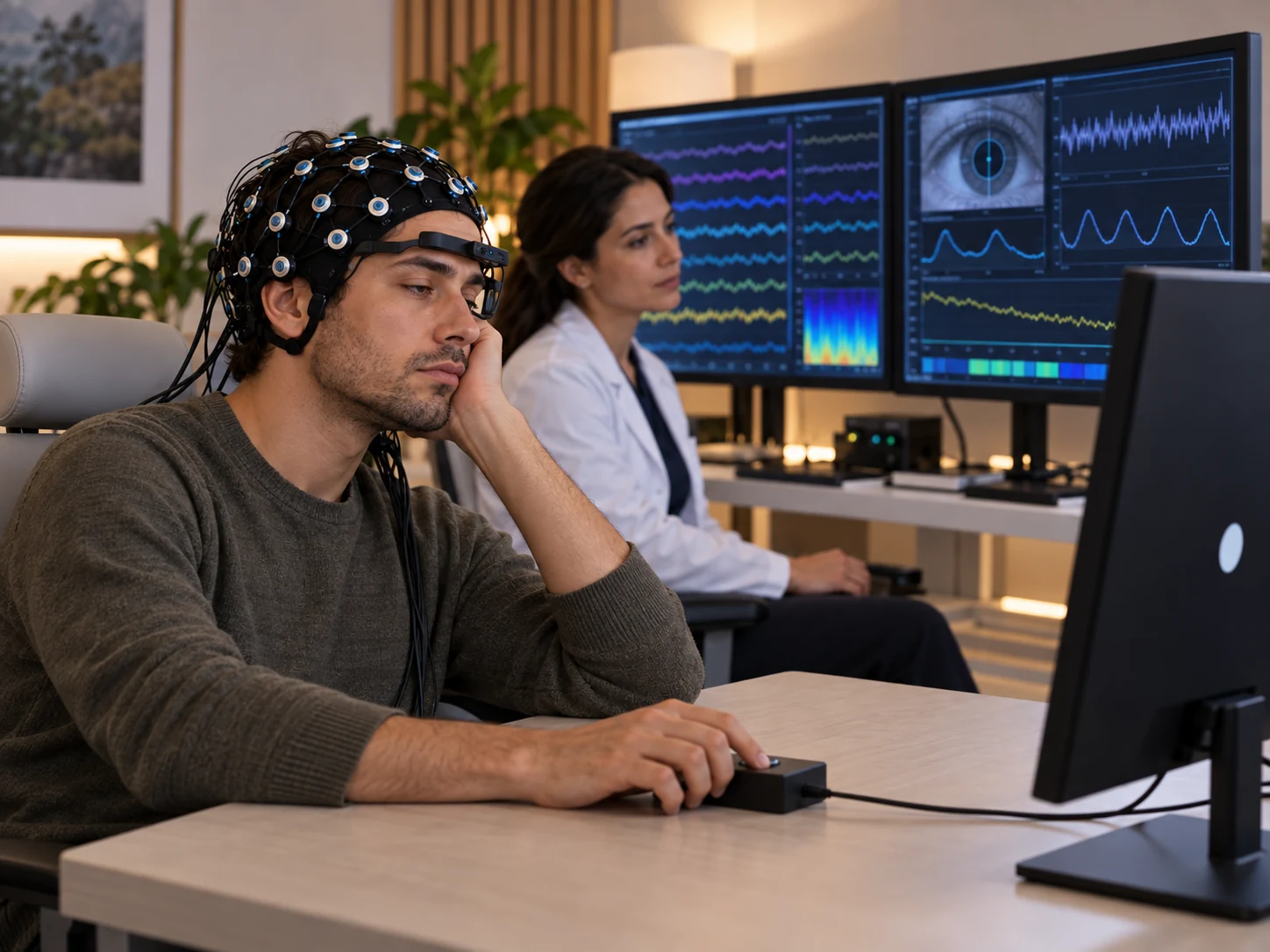 H25
H25Substance Use Disorders Neurophysiological Assessment & Neurofeedback
How does the person respond to substance-specific cues, disengage attention and regulate inhibitory control?
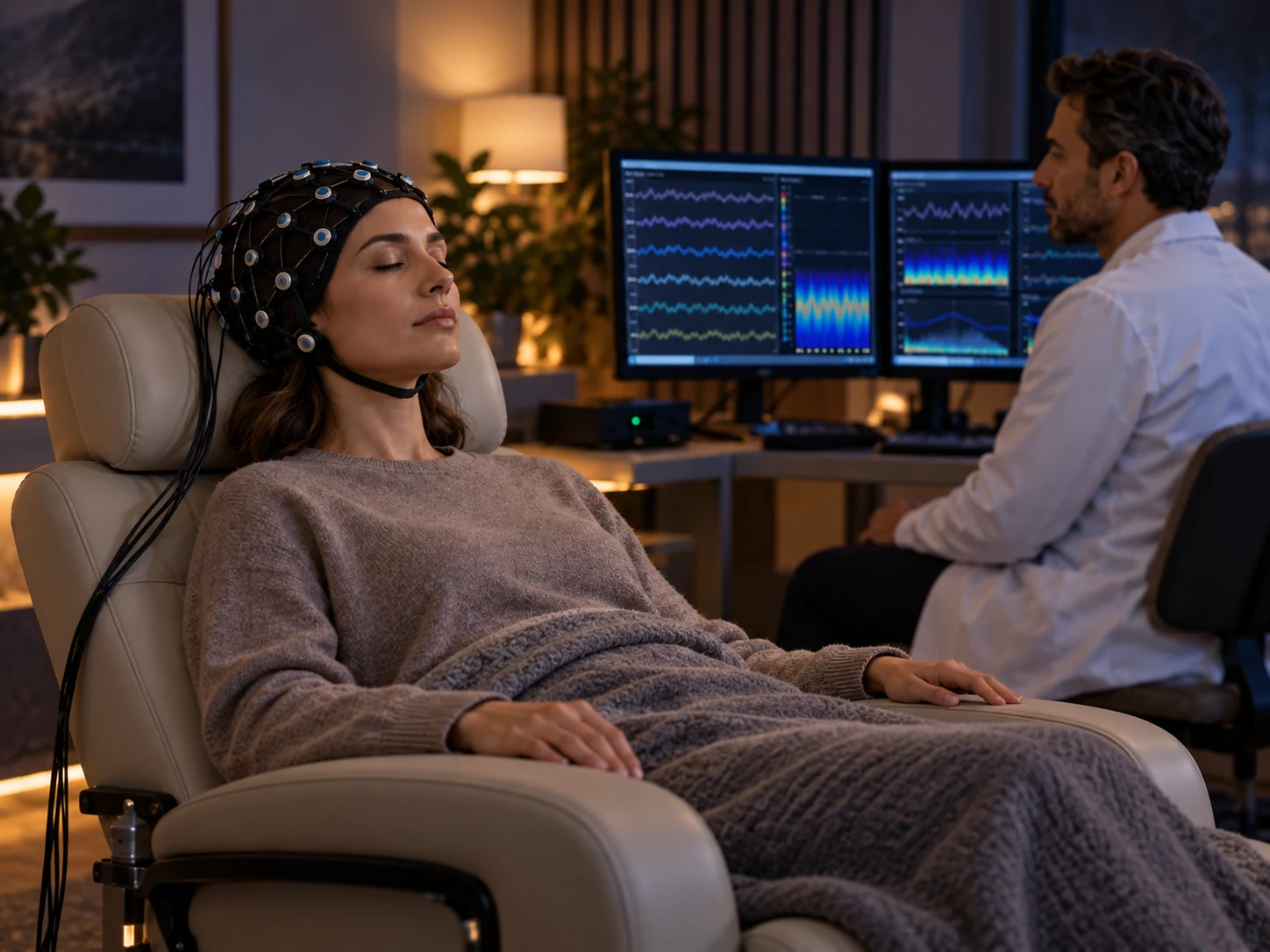 H26
H26Eating Disorders Neurobehavioral Assessment
How is attention allocated toward or away from food, body-image and other clinically relevant stimuli?
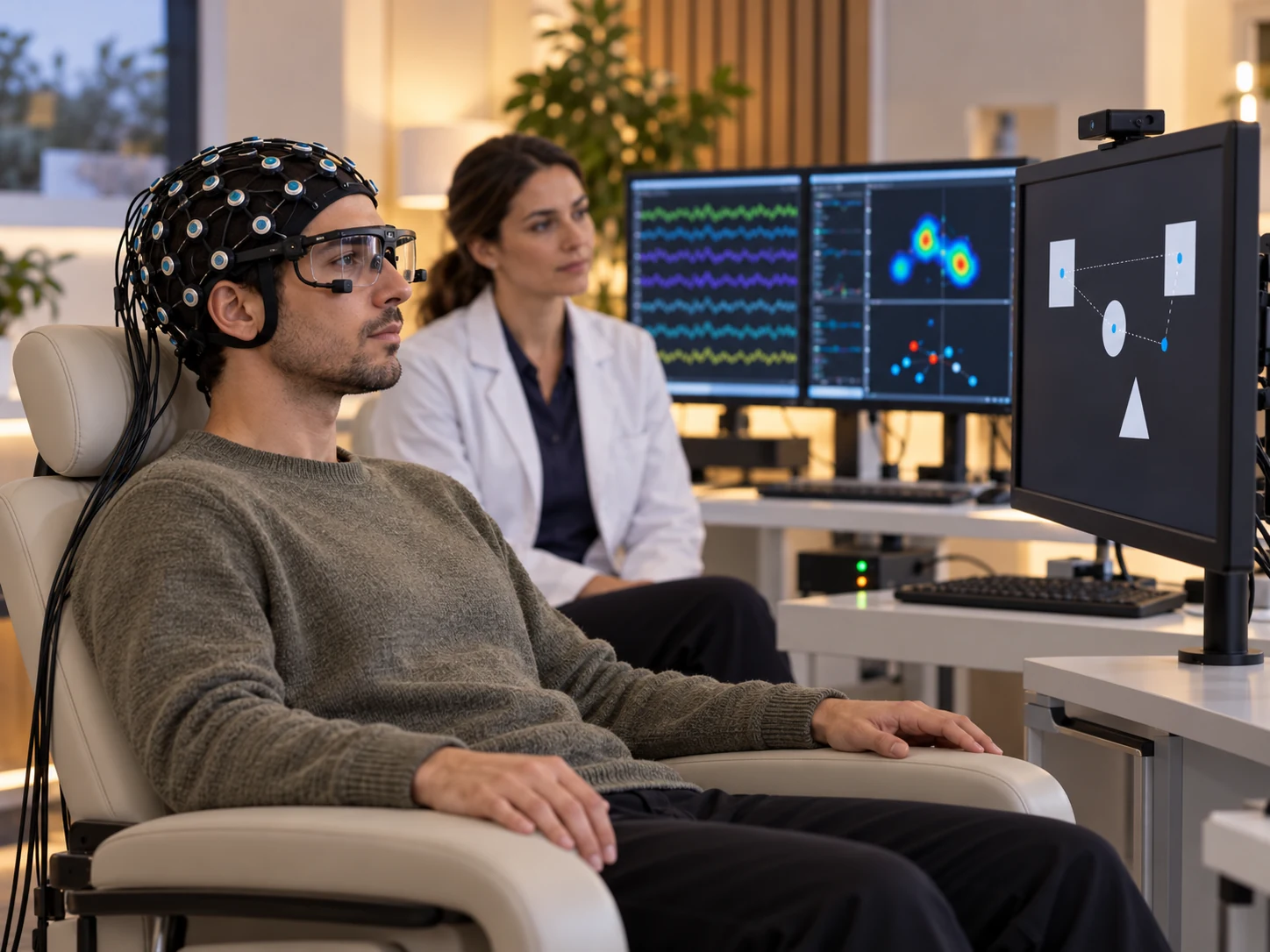 H27
H27Insomnia Neurophysiological Assessment & Monitoring
What resting or daytime neurophysiological patterns accompany insomnia, and how do they change during treatment?
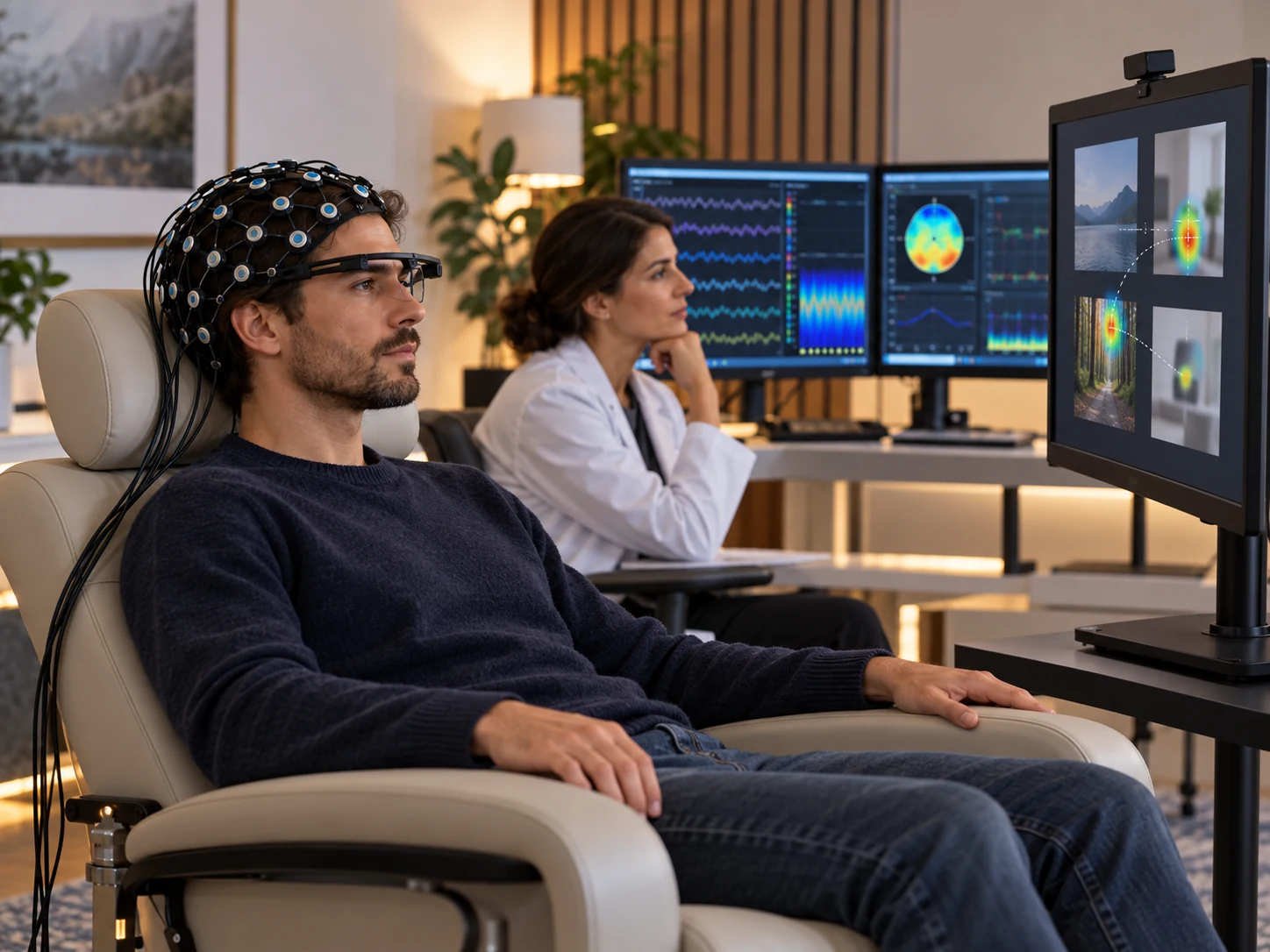 H28
H28Fatigue & Somnolence Assessment
How does alertness deteriorate during sustained performance, and what ocular and EEG indicators accompany that decline?
 H29
H29Chronic Pain Multimodal Assessment & Neuroregulation
How are neurophysiological, autonomic and functional responses associated with chronic pain, and how do they change during regulation or rehabilitation?
 H30
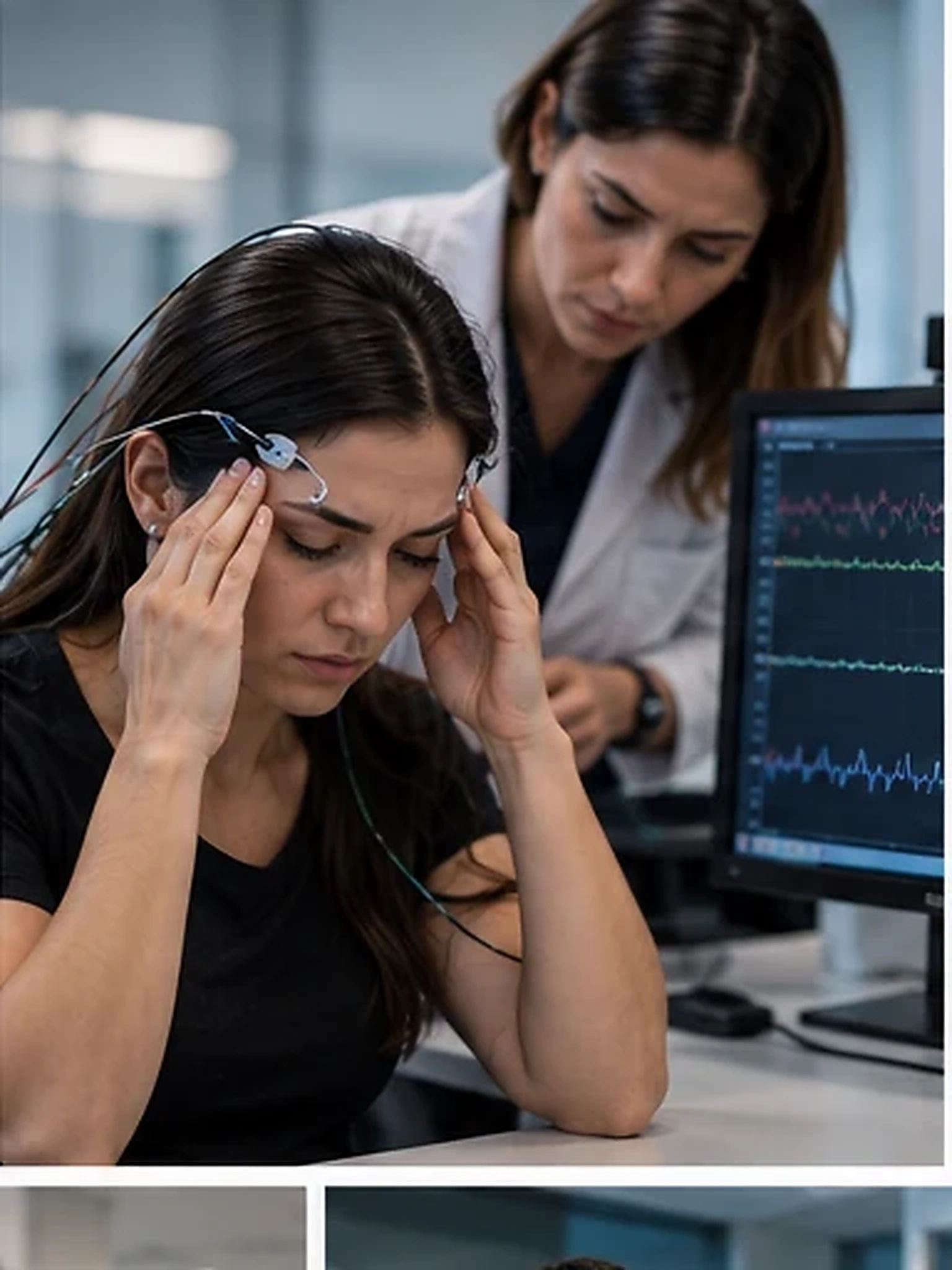
H30Migraine Neurophysiological Assessment & Biofeedback
Which physiological patterns are associated with migraine episodes or triggers, and can the patient improve voluntary regulation through biofeedback?
 H31
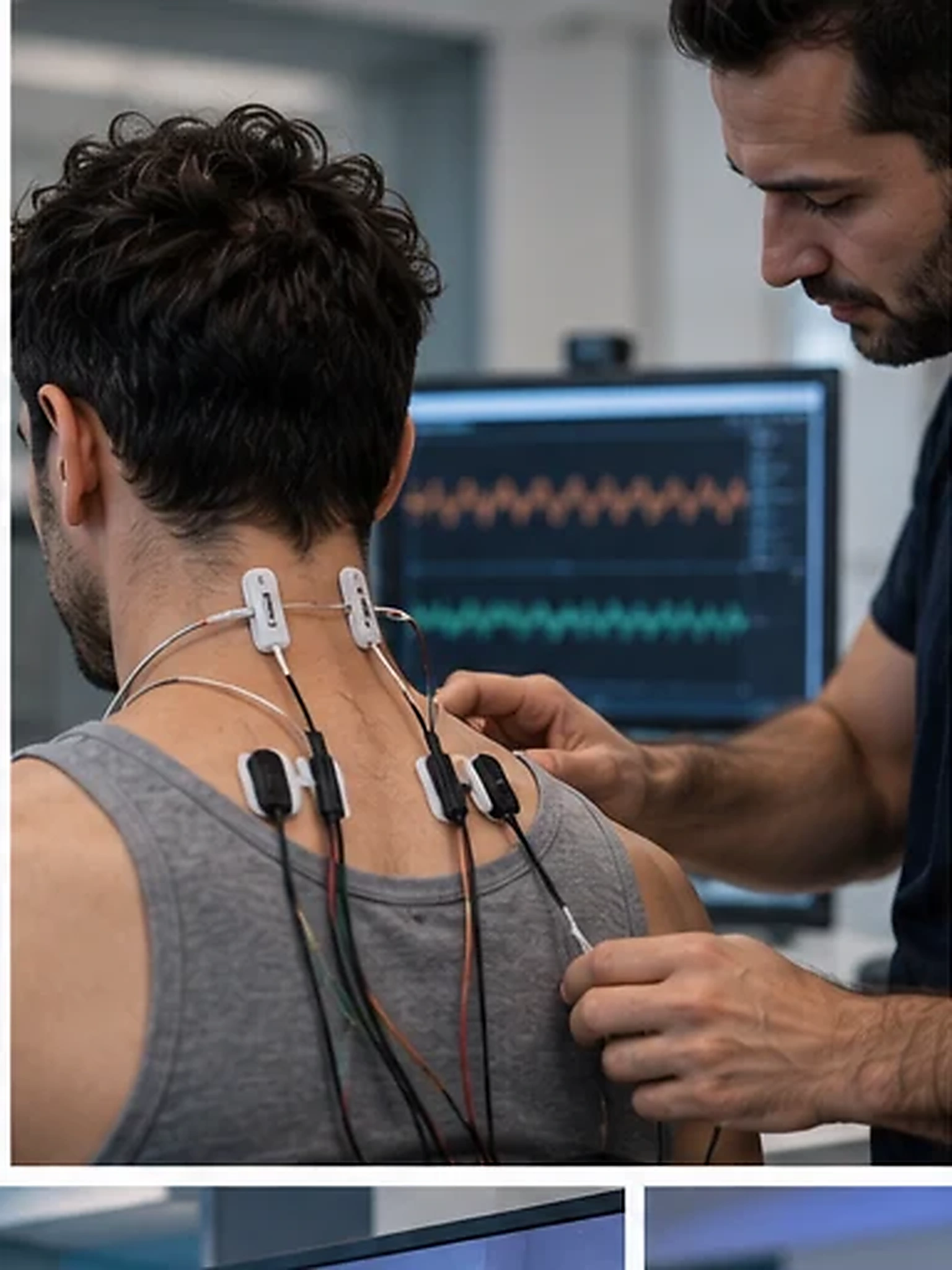
H31Tension-Type Headache EMG Assessment & Biofeedback
What muscle-tension pattern is present at rest and during relevant tasks, and can the patient learn to reduce it?
 H32
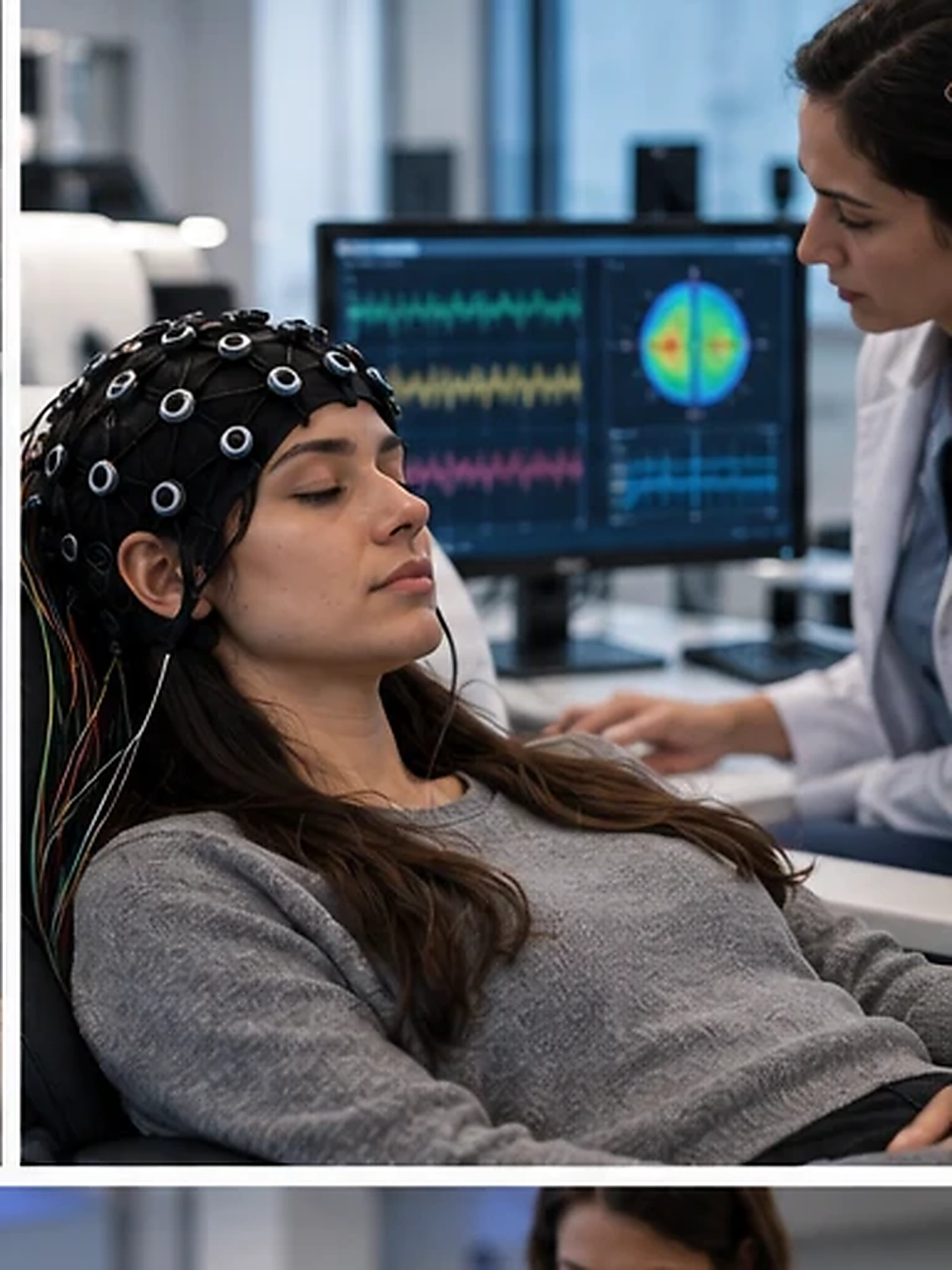
H32Fibromyalgia Neurophysiological Assessment & Bio/Neurofeedback
What neurophysiological and physiological patterns accompany fibromyalgia symptoms, and how do they change during feedback-based regulation?
 H33
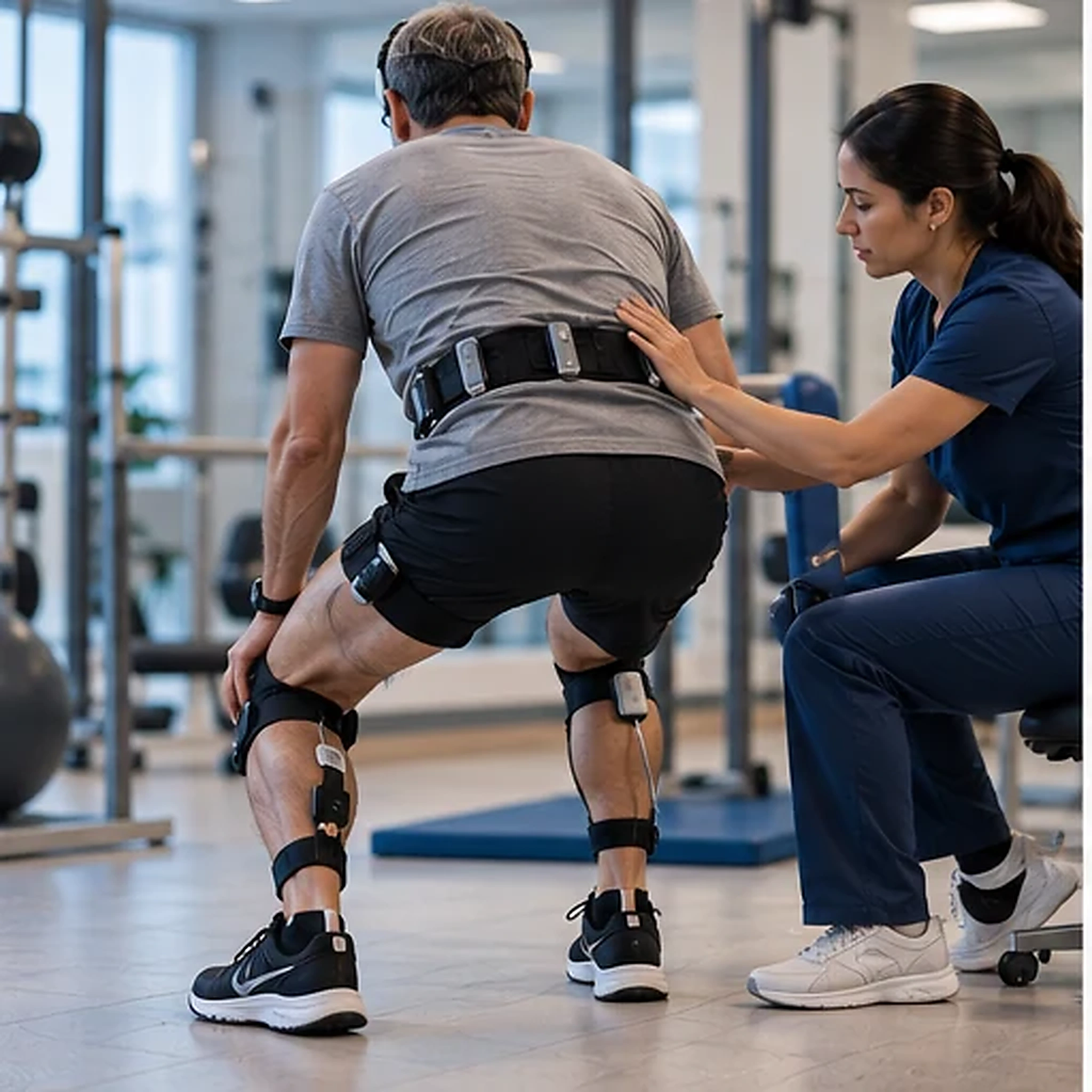
H33Chronic Low Back Pain Functional Assessment & Rehabilitation
How are trunk movement and muscle activation altered by chronic low back pain, and how do they change with rehabilitation?
 H34
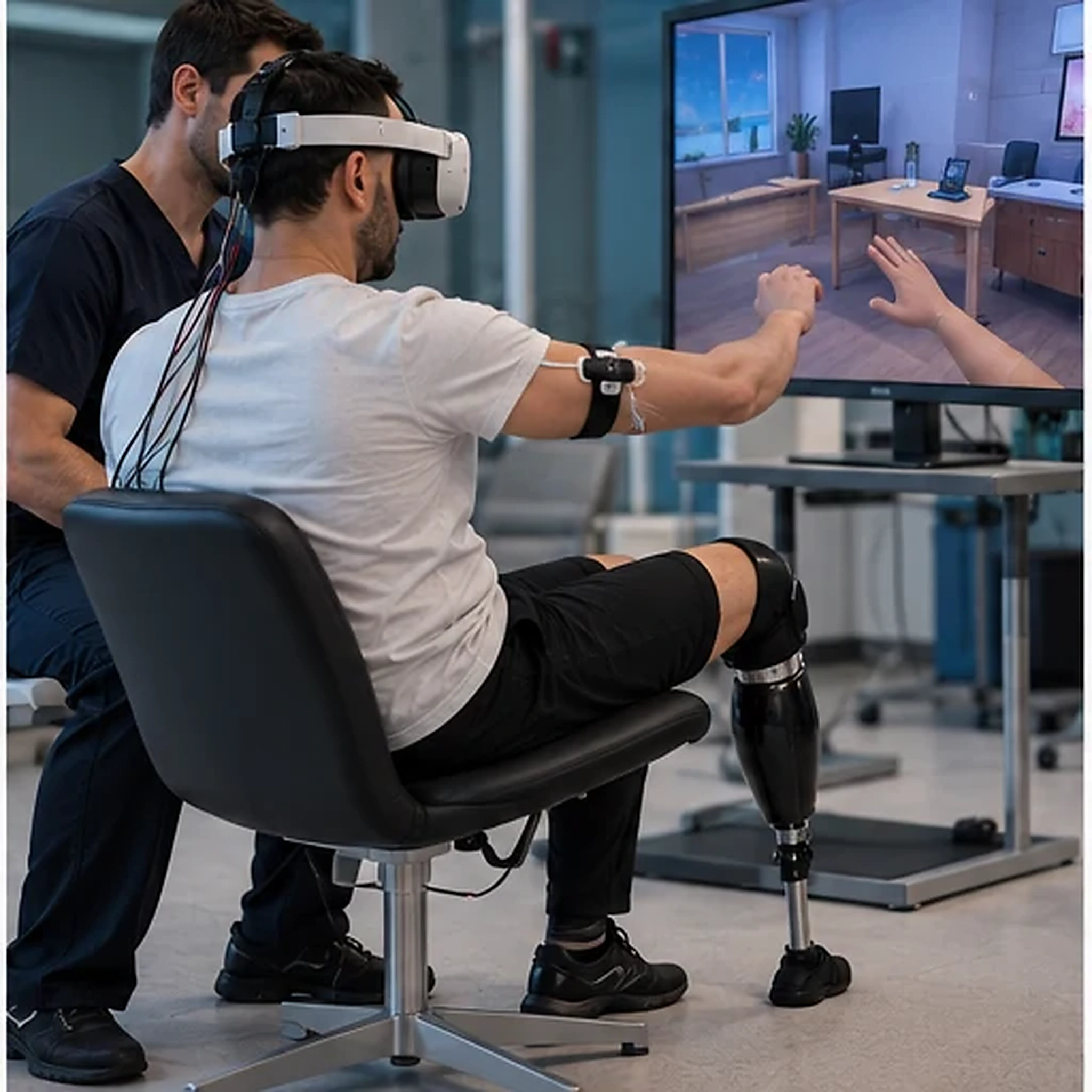
H34Phantom Limb Pain VR Rehabilitation
Can congruent visual and motor feedback alter phantom-limb pain, body perception and movement experience across repeated sessions?
 H35
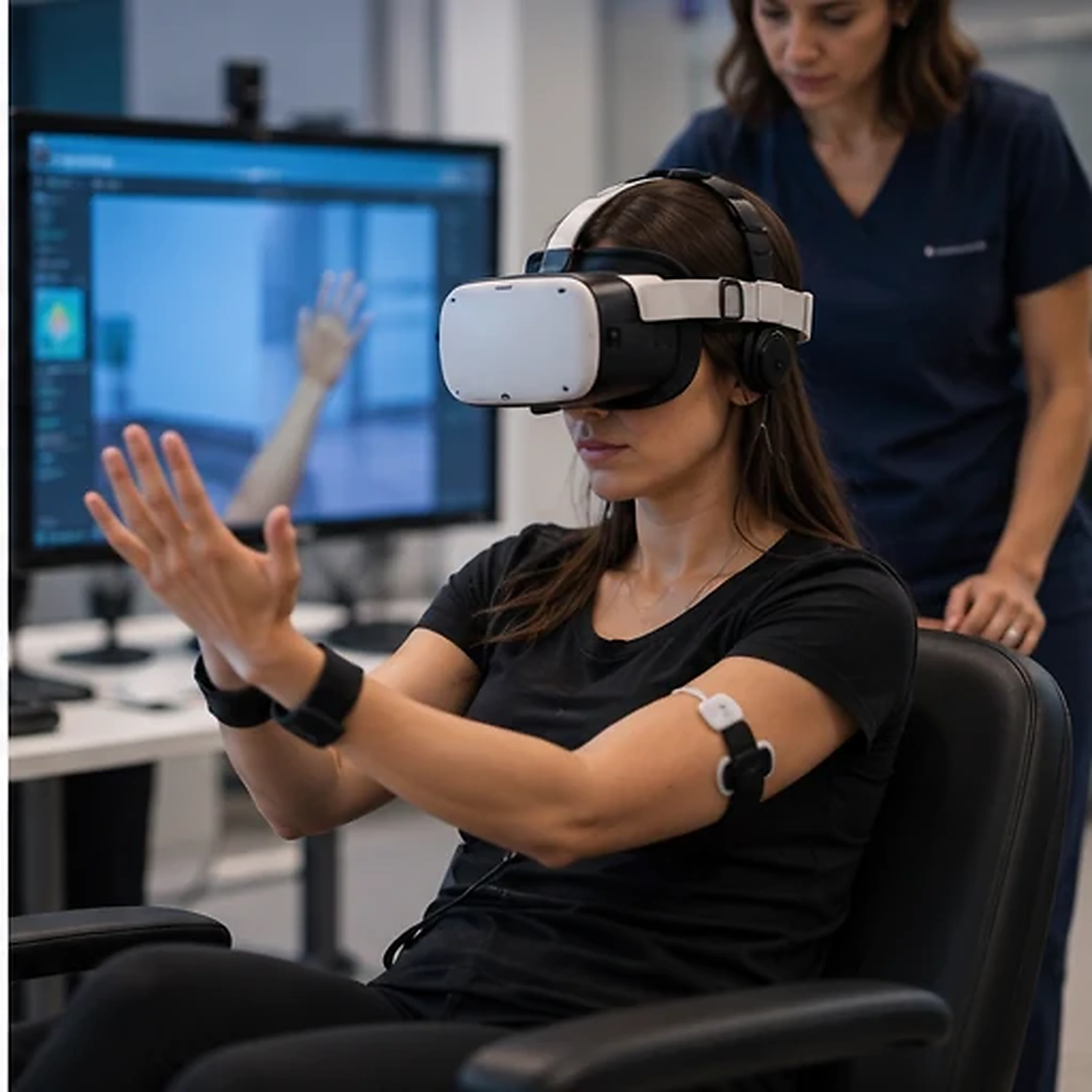
H35CRPS Pain & Body-Perception Rehabilitation
How are pain, body perception and movement avoidance changing during graded CRPS rehabilitation?
 H36
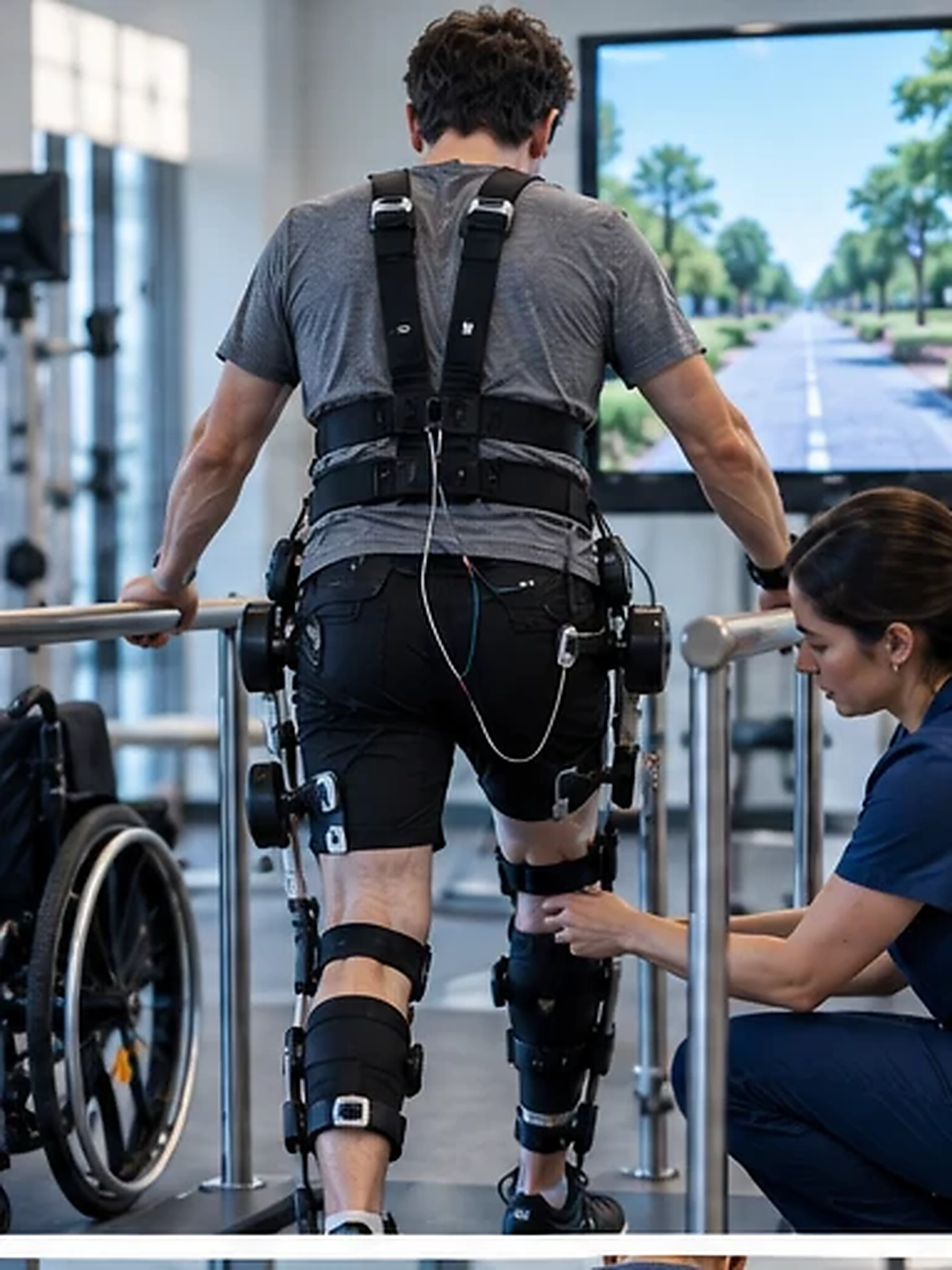
H36Spinal Cord Injury Assessment, Pain & Neurorehabilitation
What motor function remains after spinal cord injury, how does it support functional movement, and how is it changing with rehabilitation?
 H37
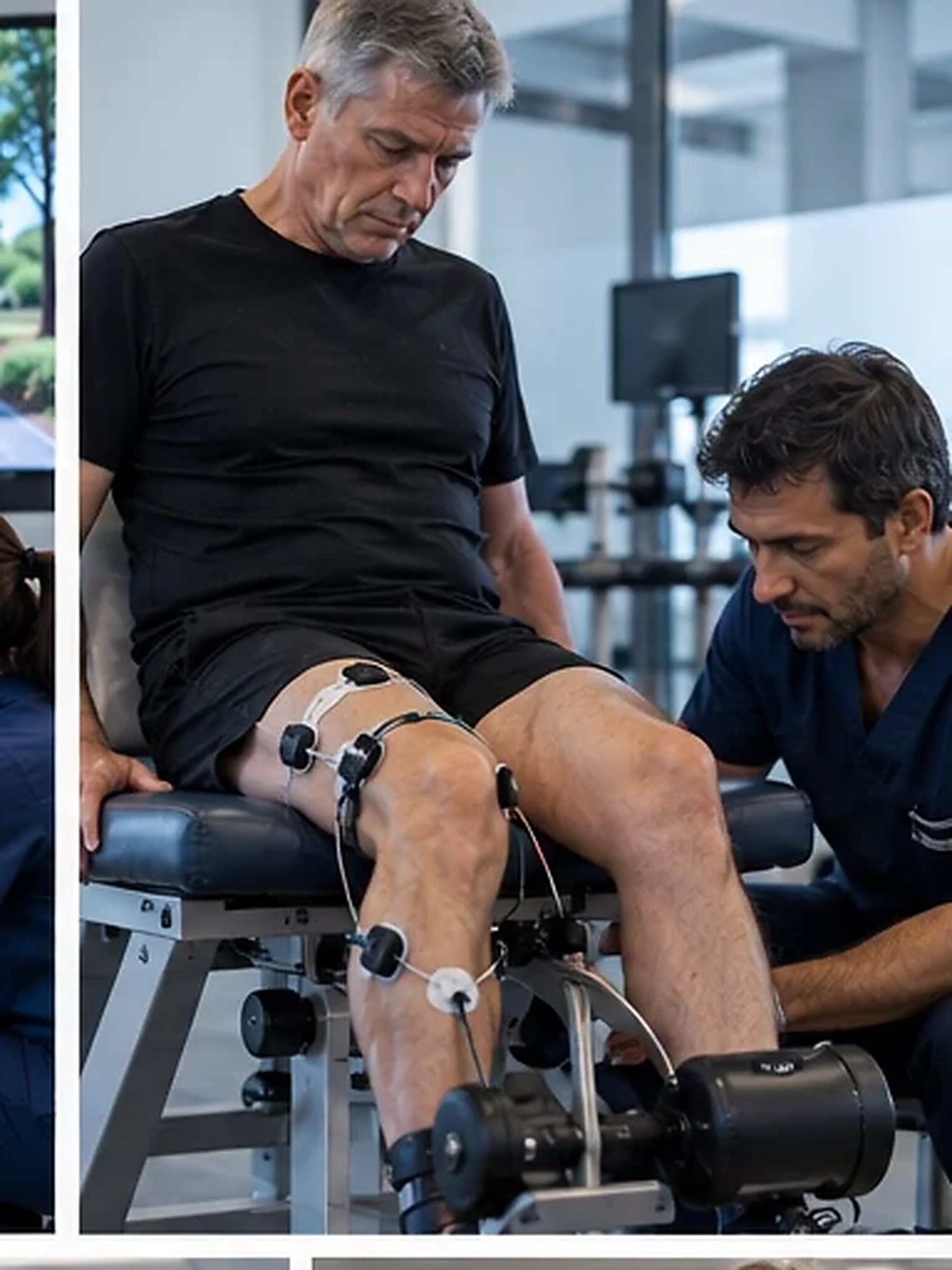
H37Myopathy & Muscular Disease Functional Assessment
How are muscle recruitment, fatigue and functional movement affected by the muscular disease?
 H38
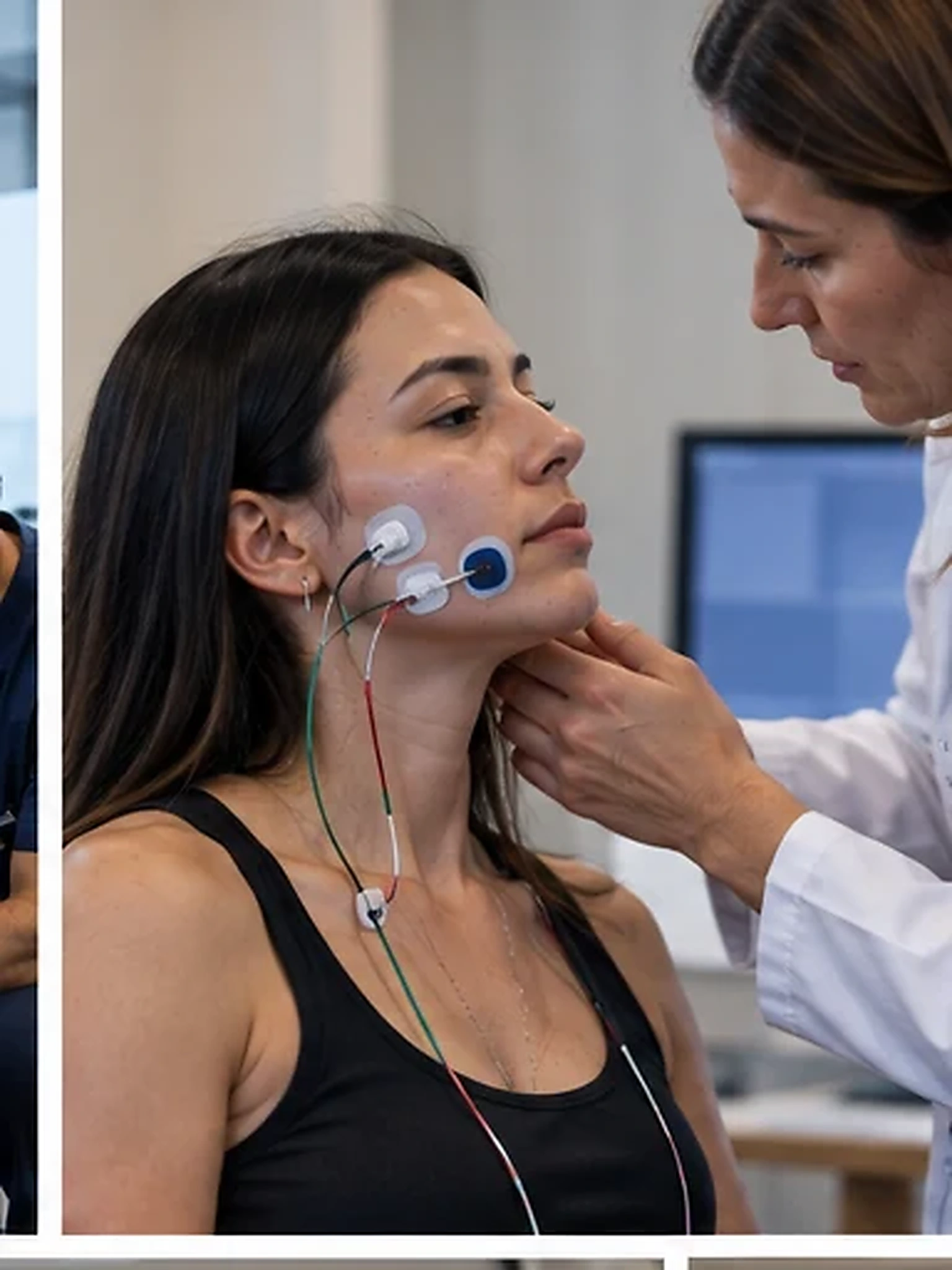
H38Temporomandibular Disorder EMG Assessment & Biofeedback
What masticatory-muscle activation pattern accompanies the temporomandibular disorder, and can the patient improve voluntary regulation?
 H39
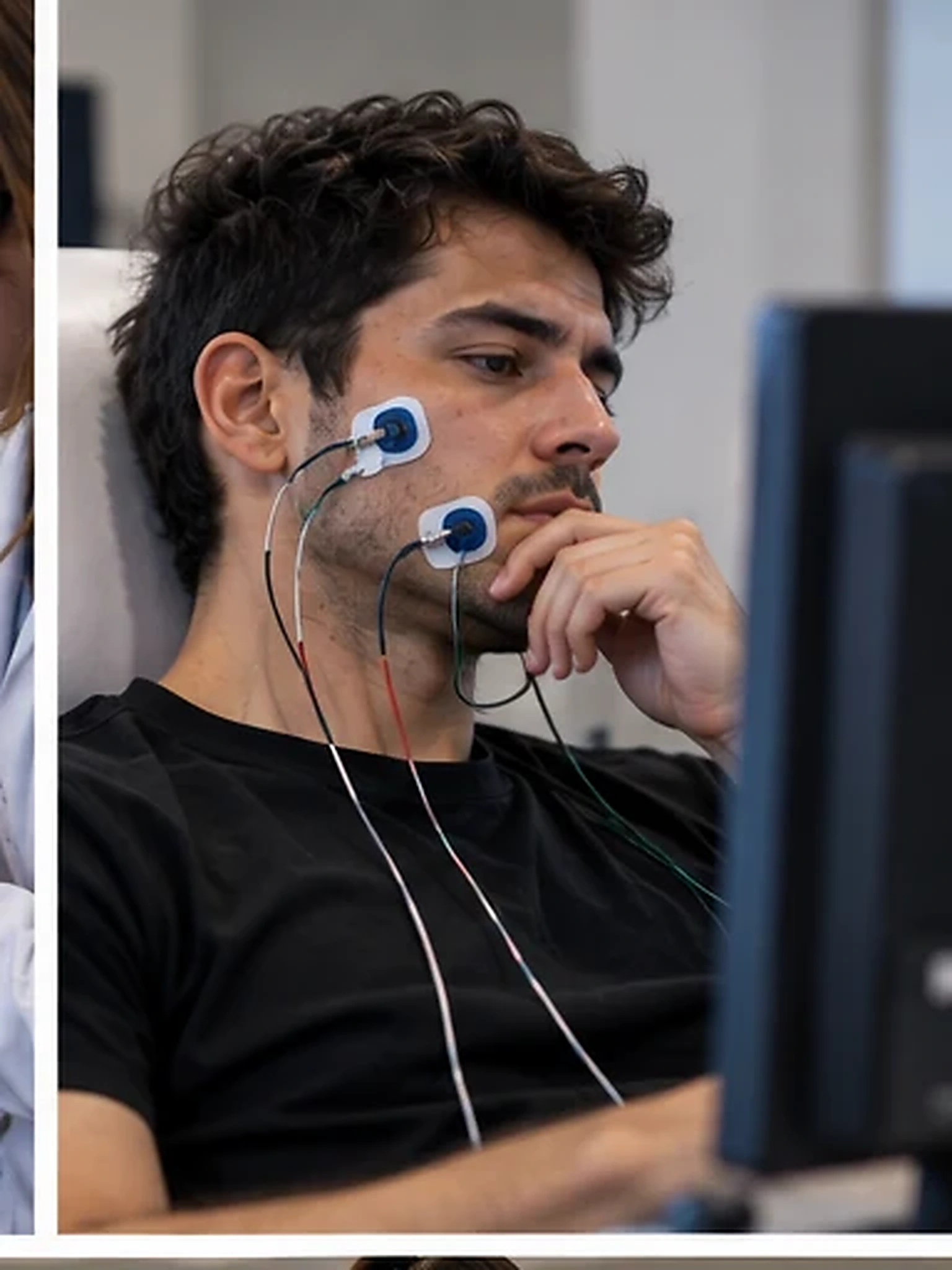
H39Awake Bruxism EMG Assessment & Biofeedback
How often and how strongly does excessive masticatory activity occur during wakefulness, and can the patient learn to reduce it?
 H40
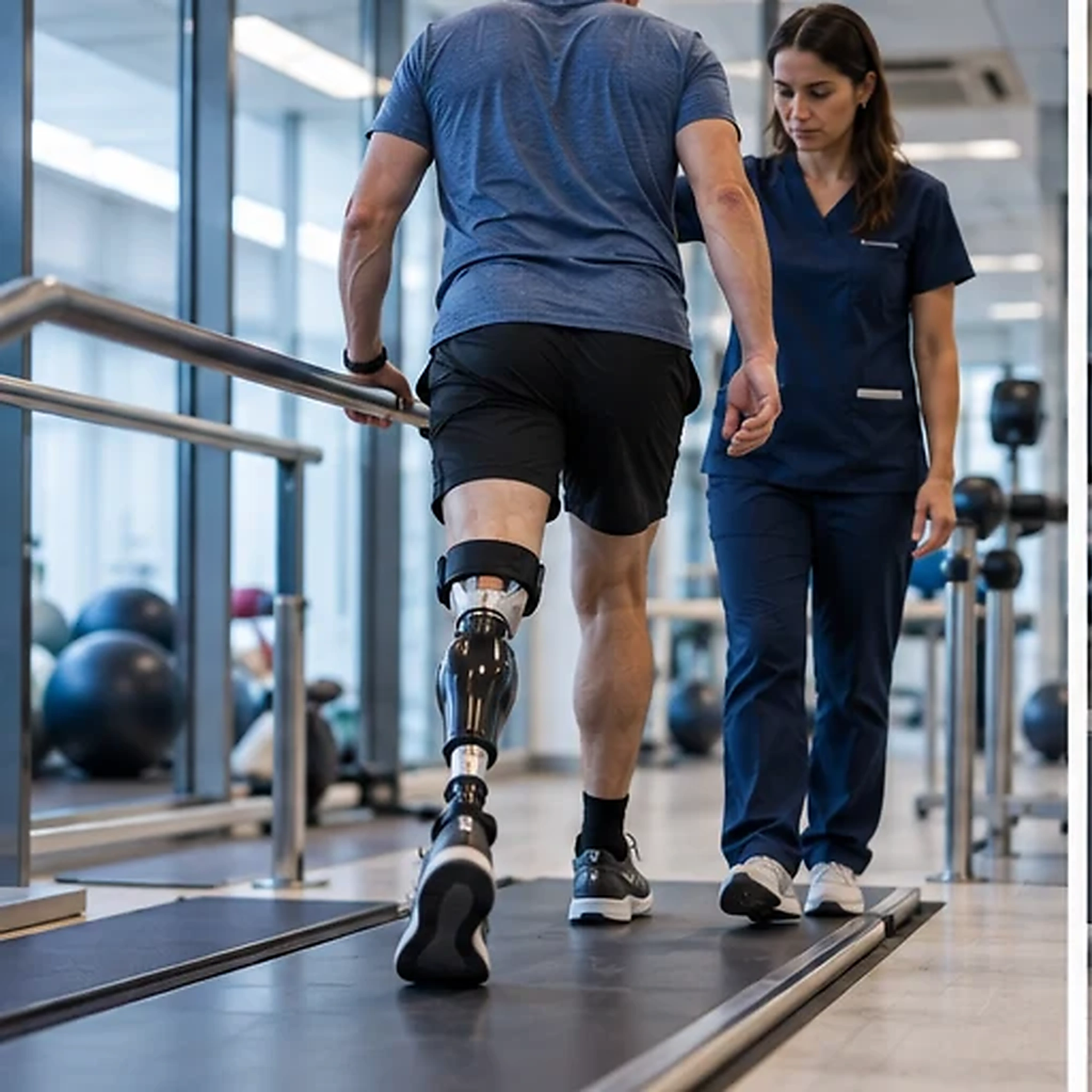
H40Lower-Limb Amputation & Prosthetic Rehabilitation
How effectively is the person adapting to the prosthesis during gait, balance and functional tasks?
 H41
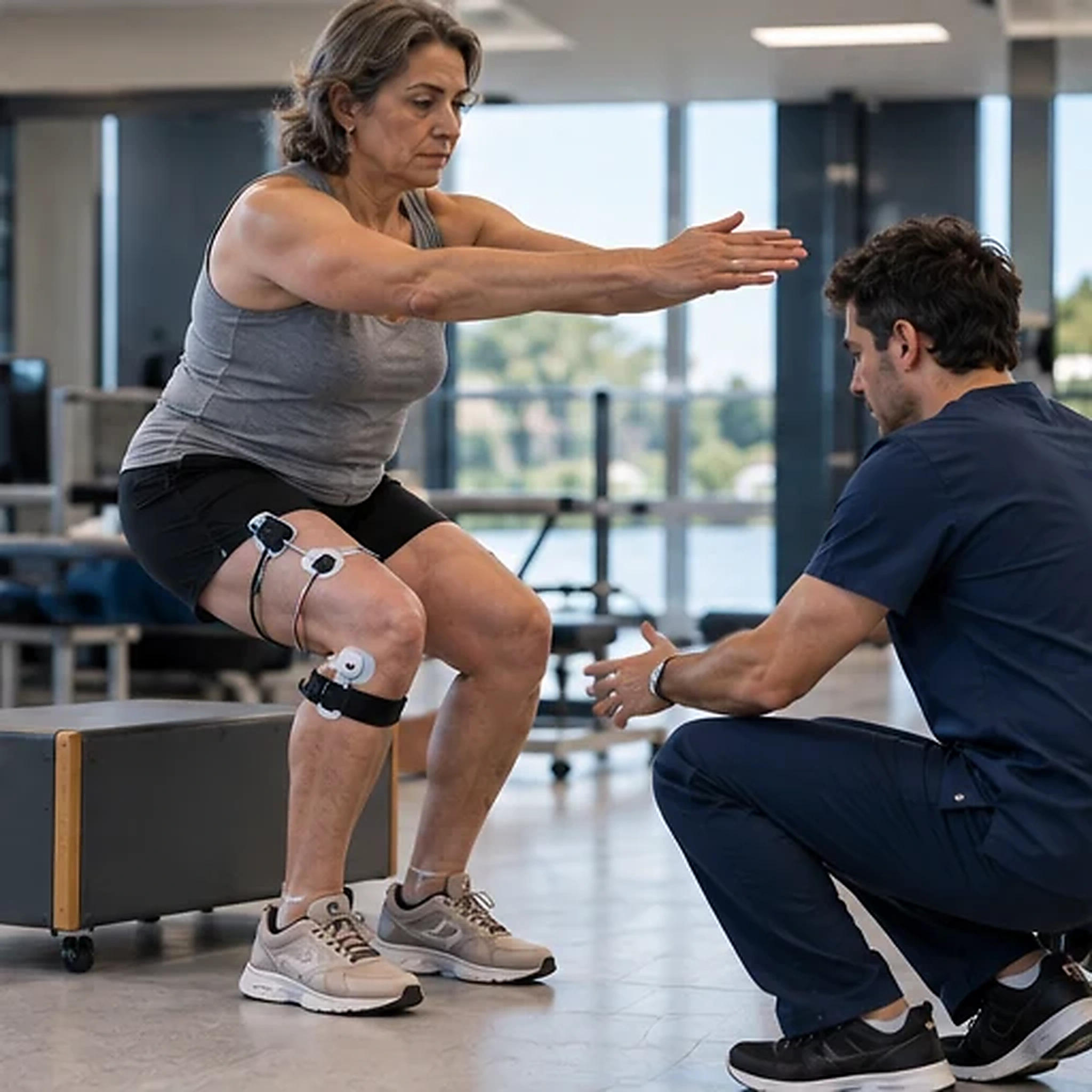
H41Post-TKA Rehabilitation & Functional Monitoring
How is gait, knee mobility, symmetry and functional performance recovering after total knee arthroplasty?
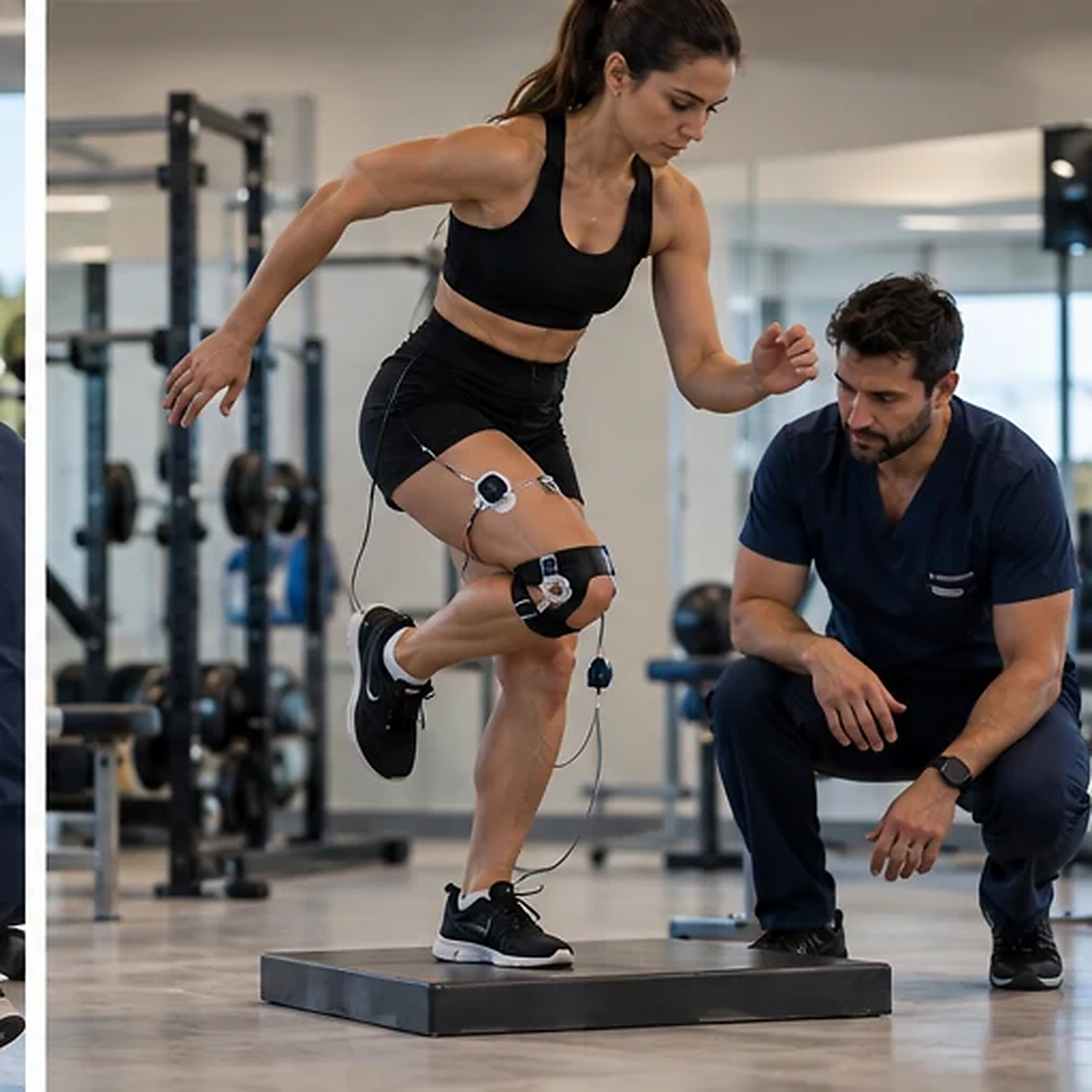 H42
H42ACL Post-Surgical Rehabilitation & Functional Recovery
Has neuromuscular control and functional symmetry recovered sufficiently to progress safely through ACL rehabilitation?
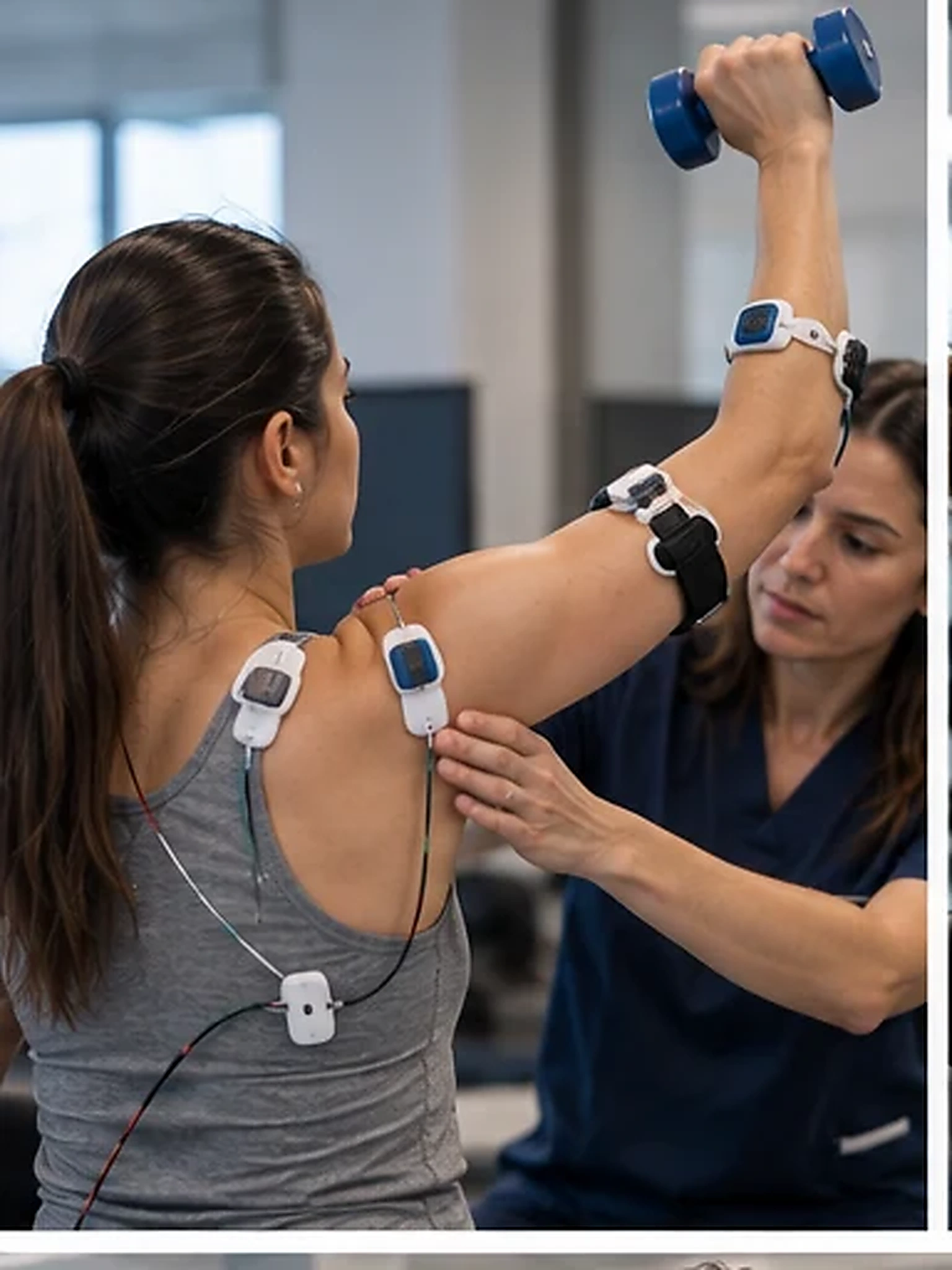 H43
H43Rotator Cuff Post-Surgical Rehabilitation
How are shoulder range of motion, reaching and movement compensation recovering after rotator cuff surgery?
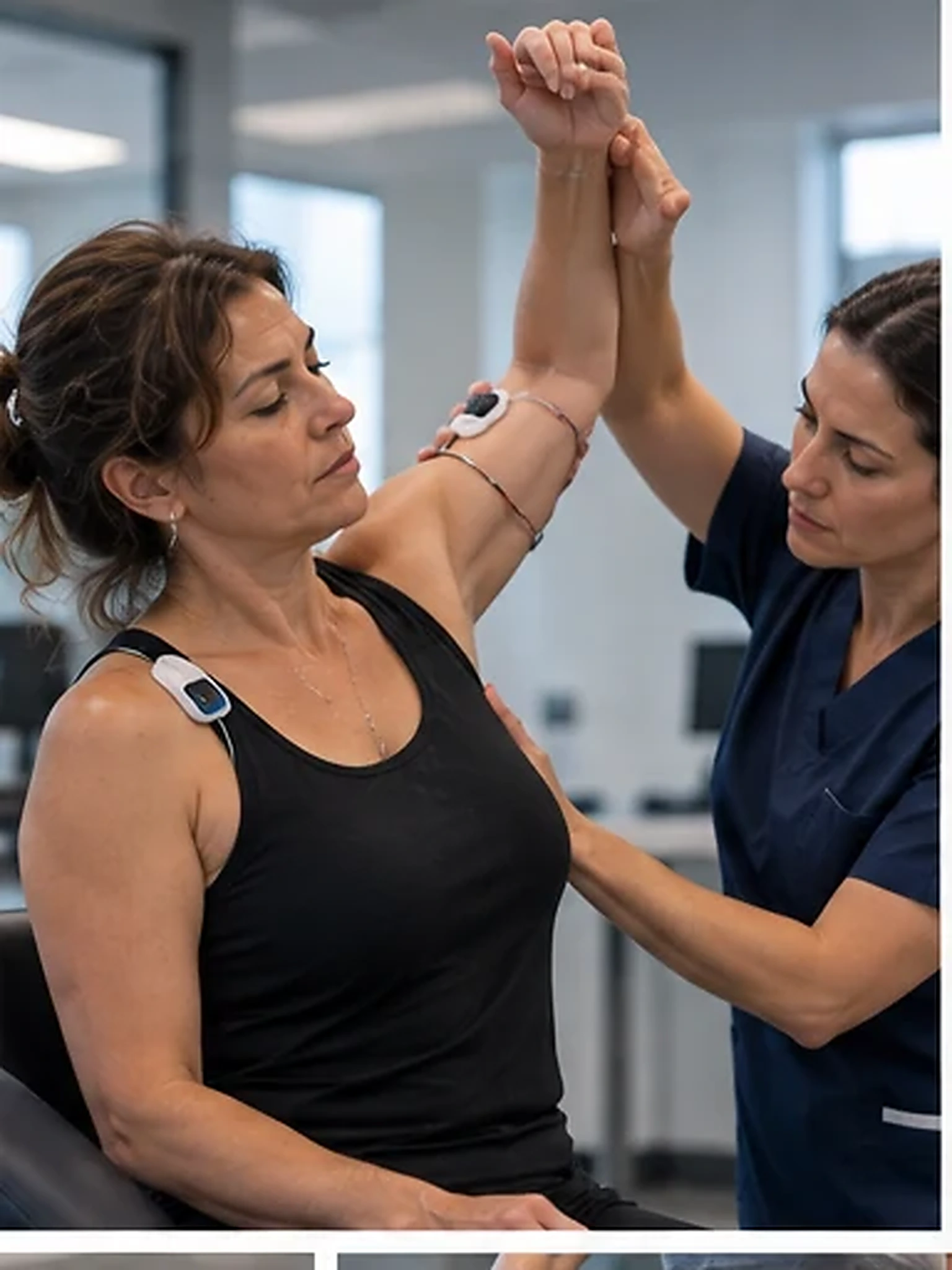 H44
H44Frozen Shoulder Mobility Rehabilitation
How restricted is shoulder mobility, what compensations are being used, and how is movement changing with rehabilitation?
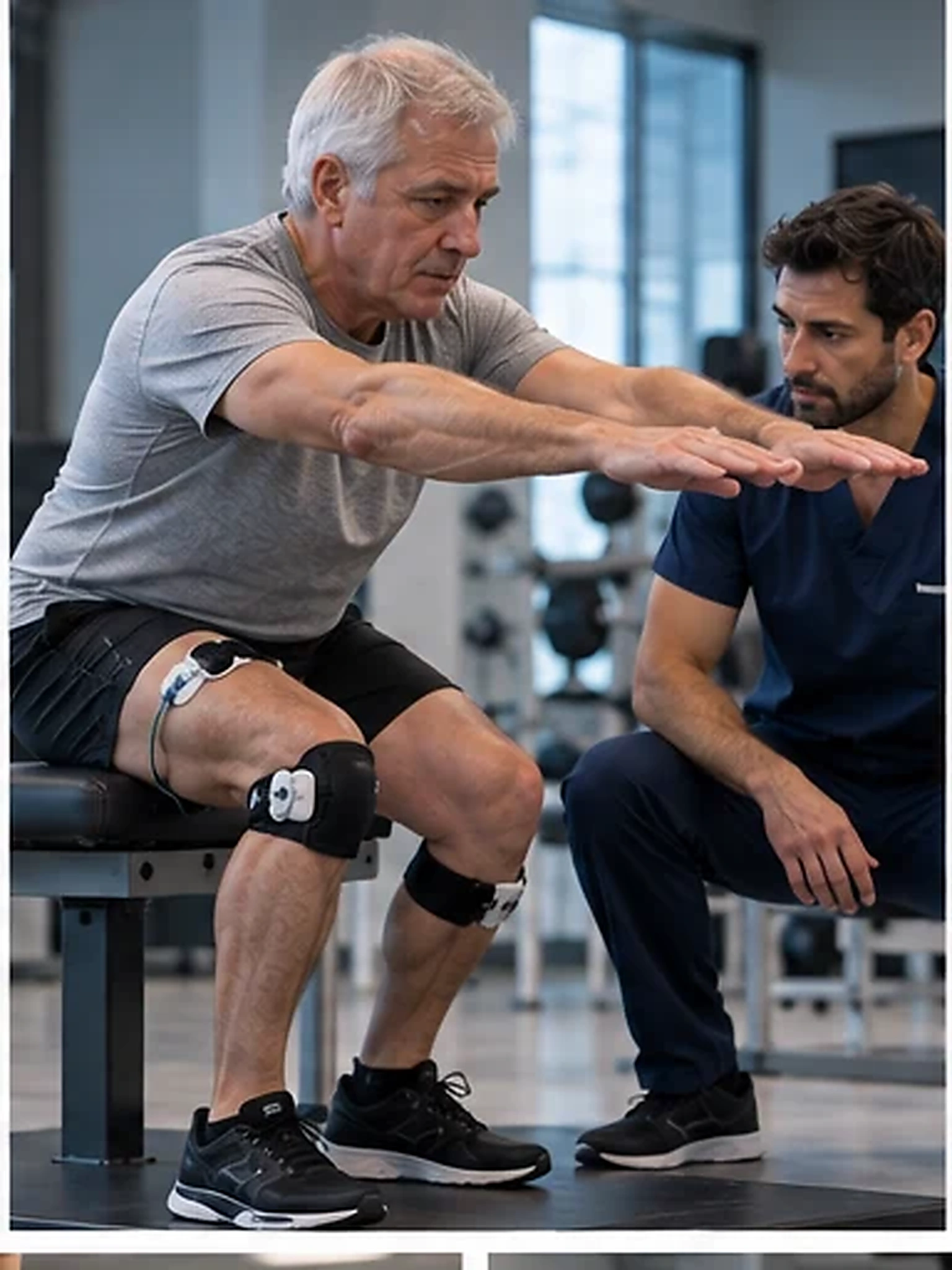 H45
H45Knee Osteoarthritis Functional Rehabilitation
How is knee osteoarthritis affecting gait, mobility and neuromuscular control, and how do those functions respond to rehabilitation?
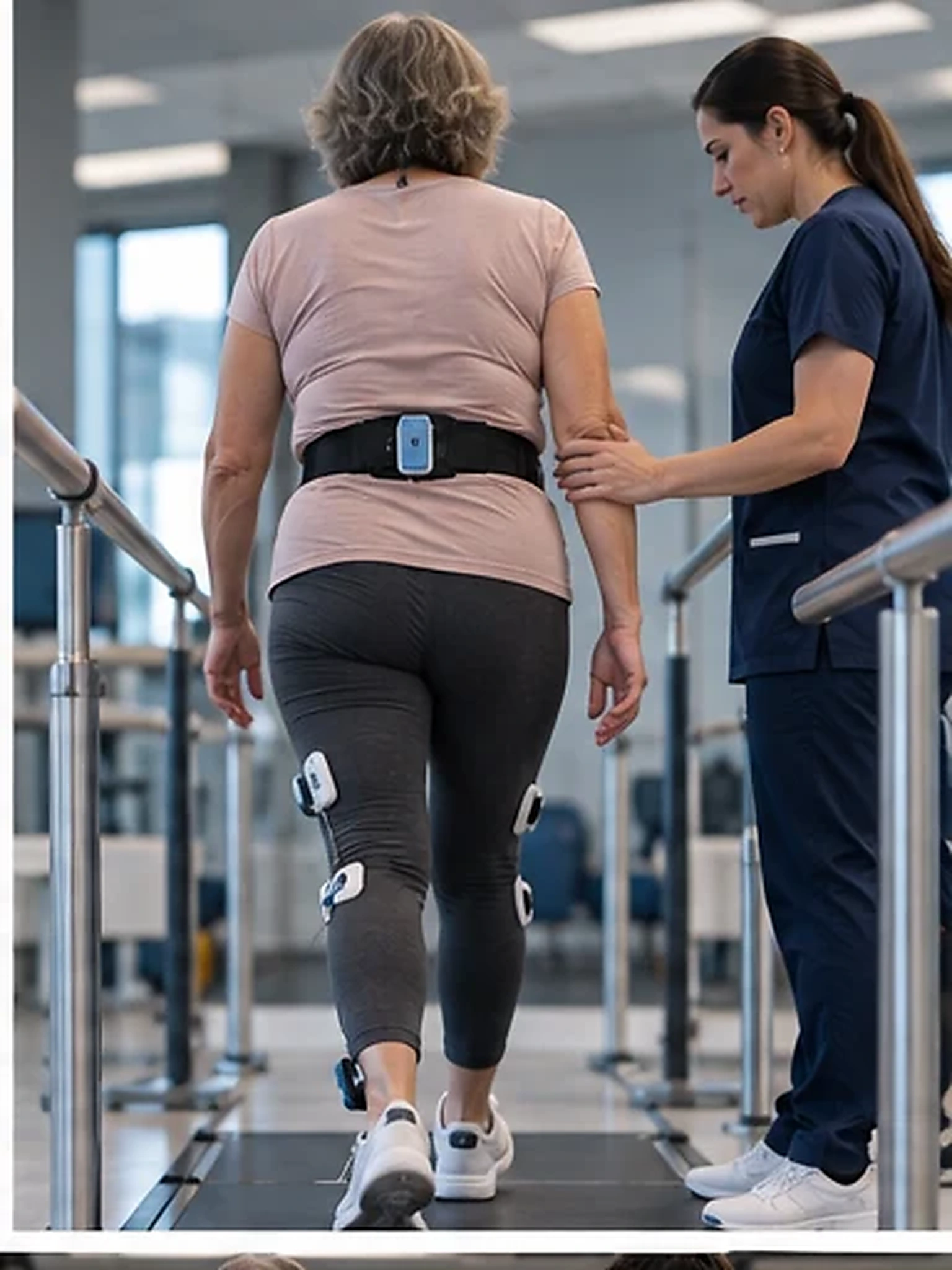 H46
H46Post-Hip Arthroplasty Rehabilitation & Monitoring
How are gait, symmetry and functional mobility recovering after hip arthroplasty?
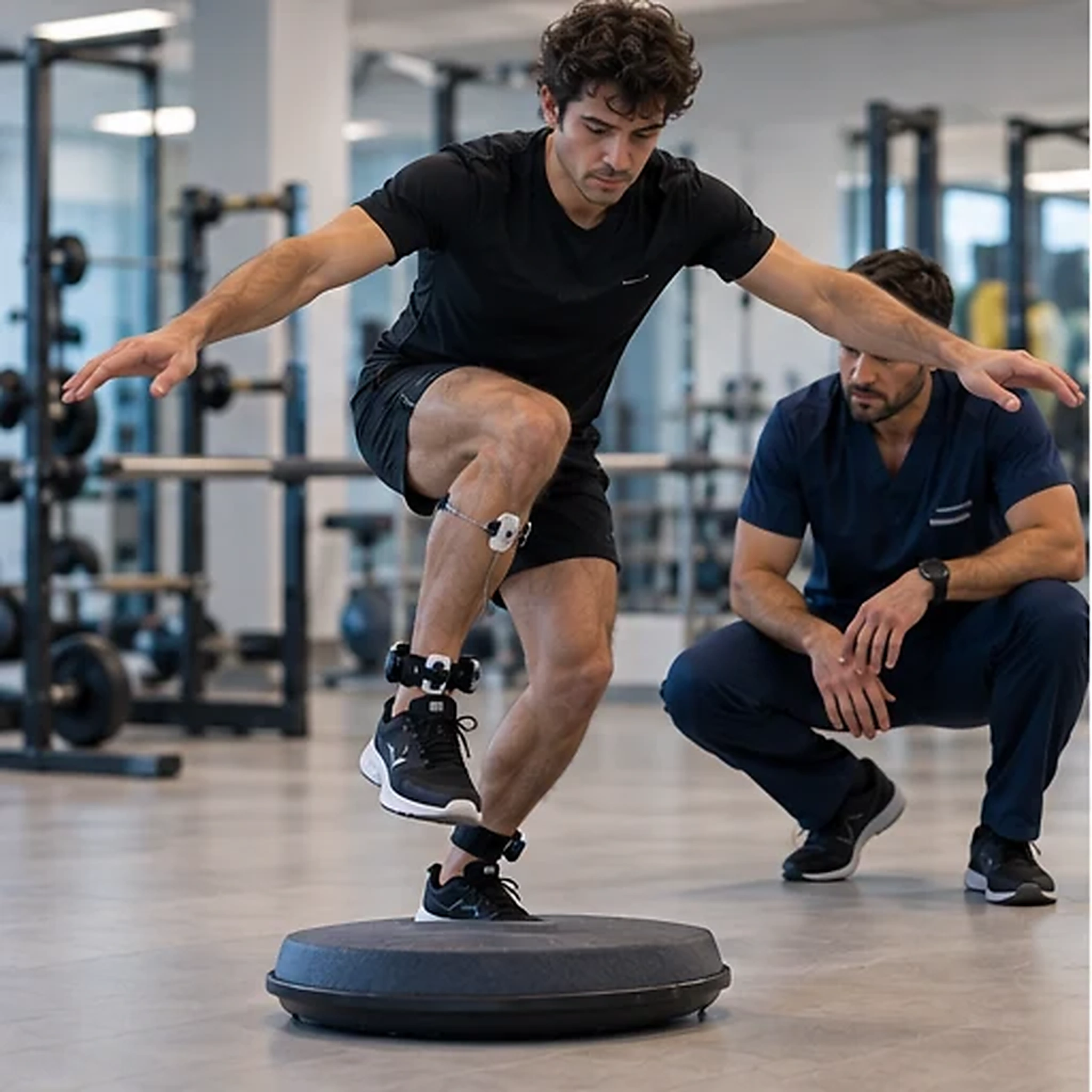 H47
H47Chronic Ankle Instability Rehabilitation
How stable is the ankle during static and dynamic tasks, and how does neuromuscular control improve with rehabilitation?
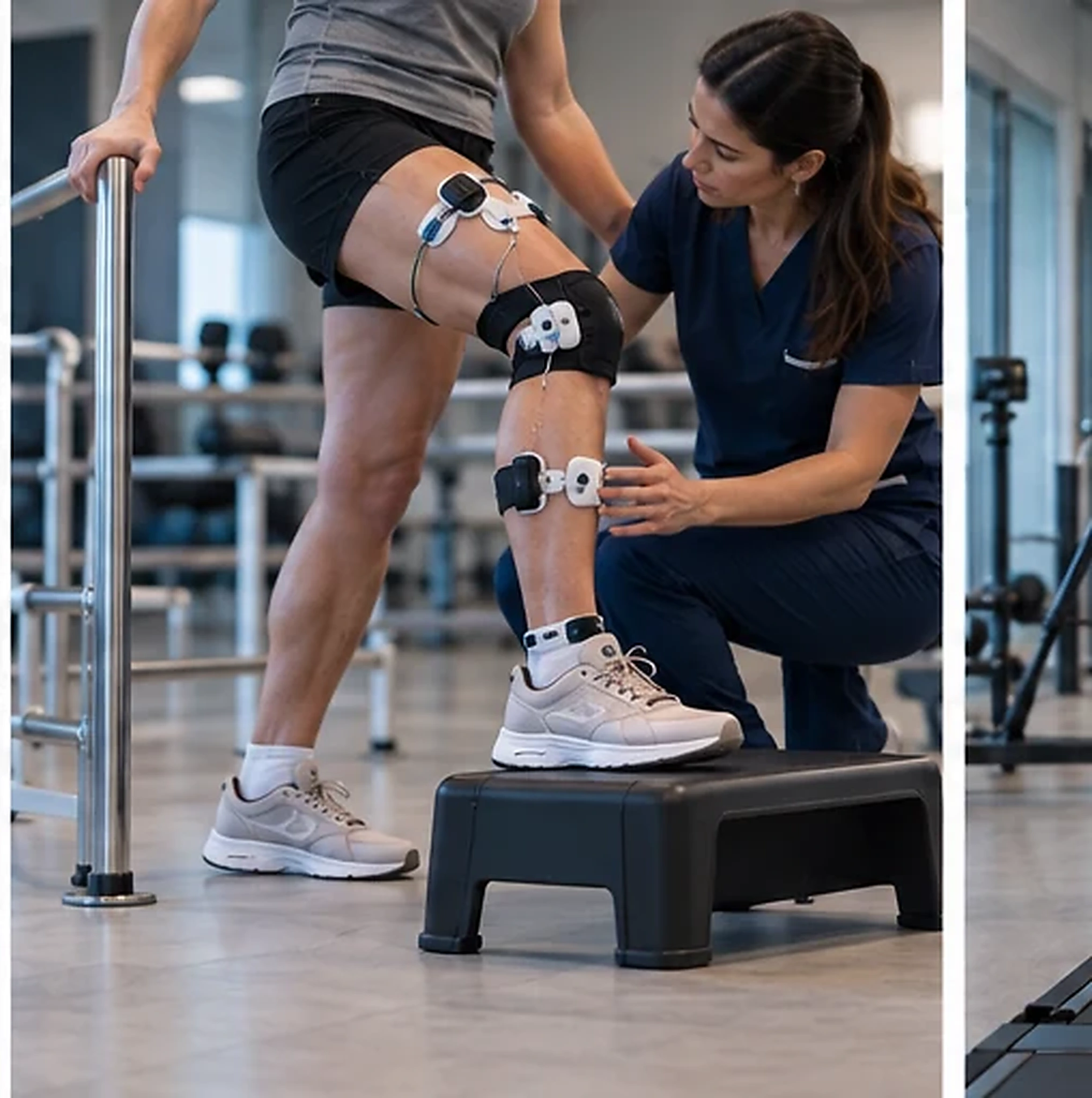 H48
H48Post-Surgical Lower-Limb Rehabilitation
How is lower-limb function recovering after surgery, and which mobility or muscle-control deficits remain?
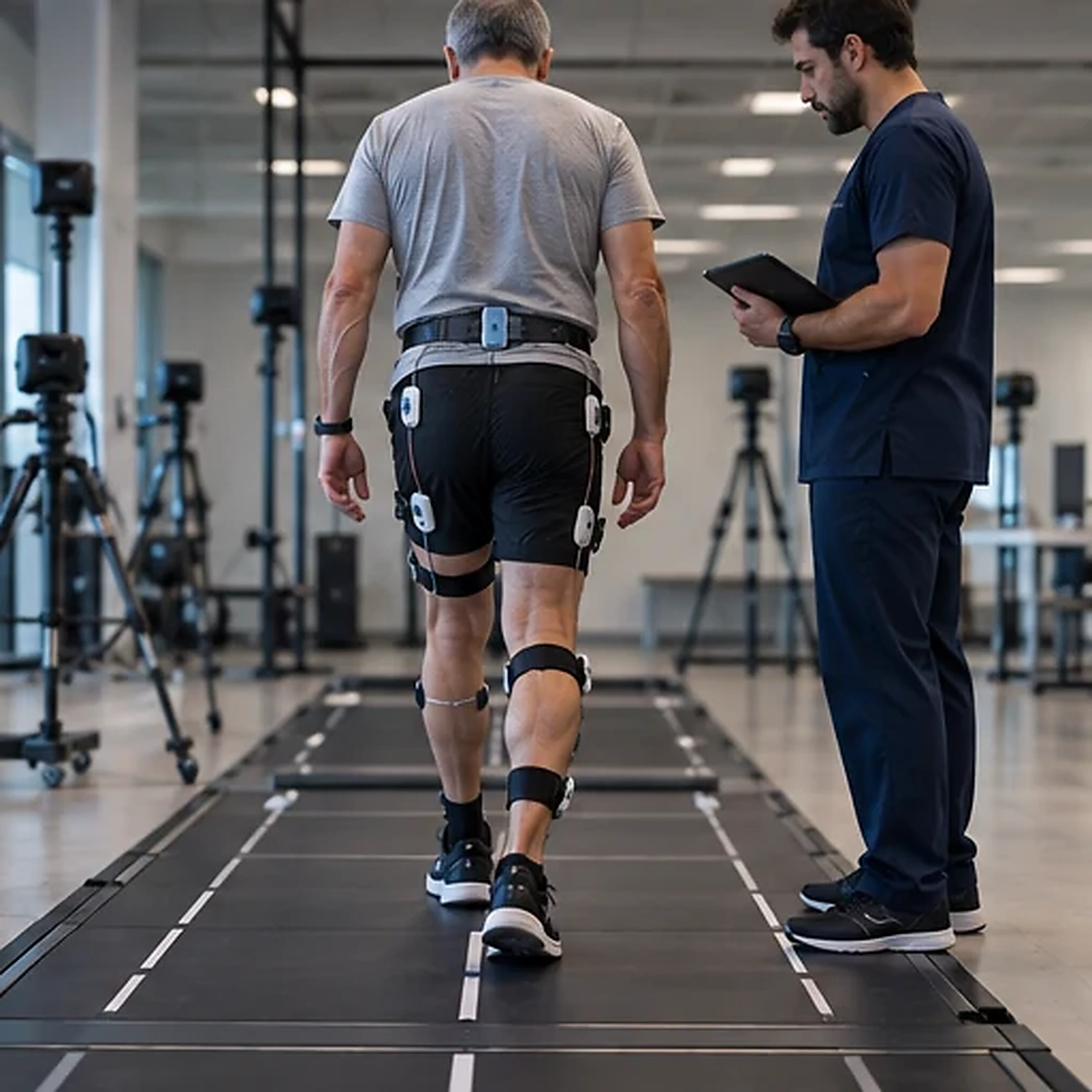 H49
H49Gait & Balance Assessment & Rehabilitation
Which gait, balance and mobility parameters are impaired, and how are they changing with rehabilitation?
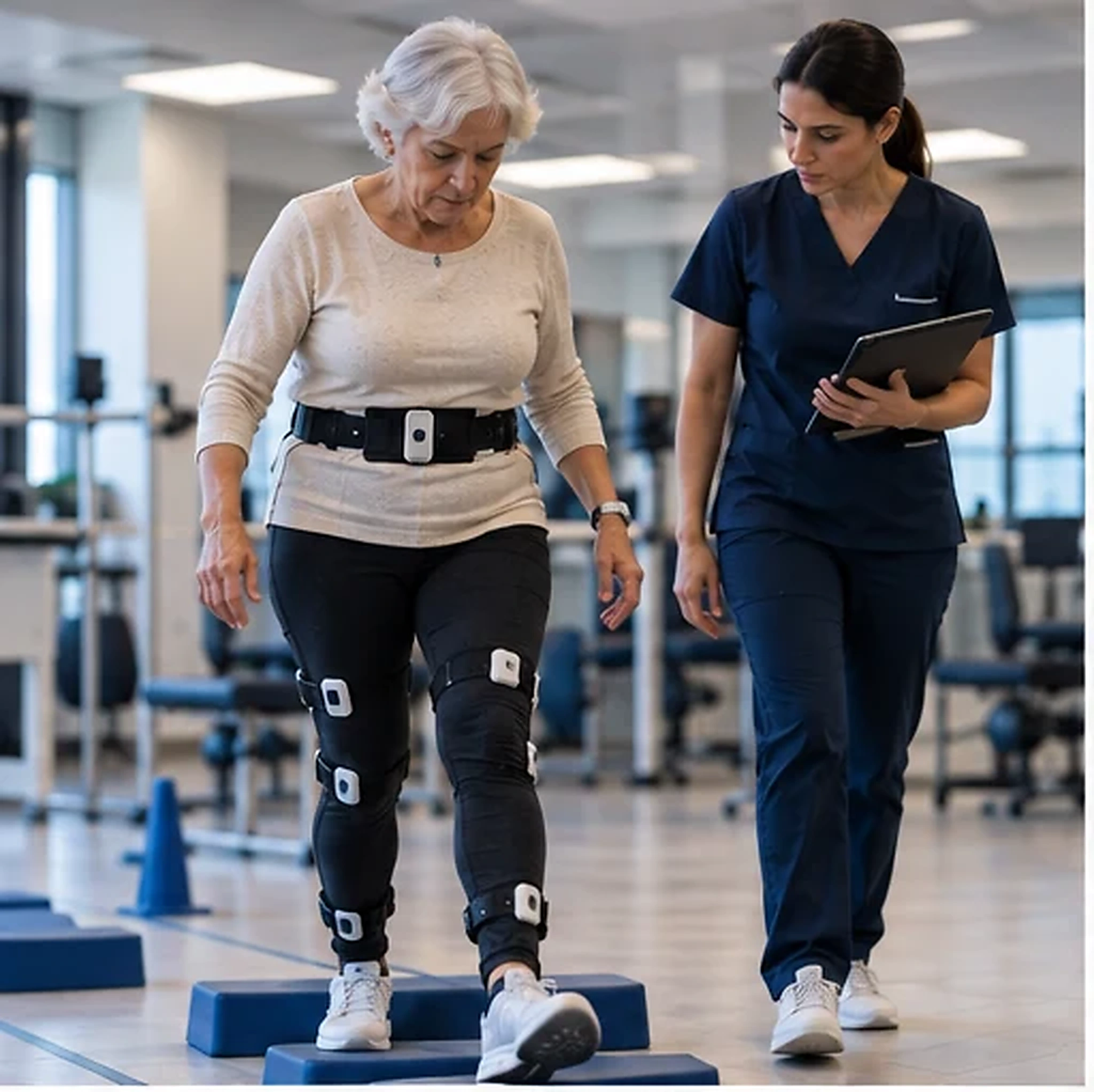 H50
H50Fall Risk & Mobility Assessment
Which measurable mobility and balance patterns are associated with elevated fall risk in this person?
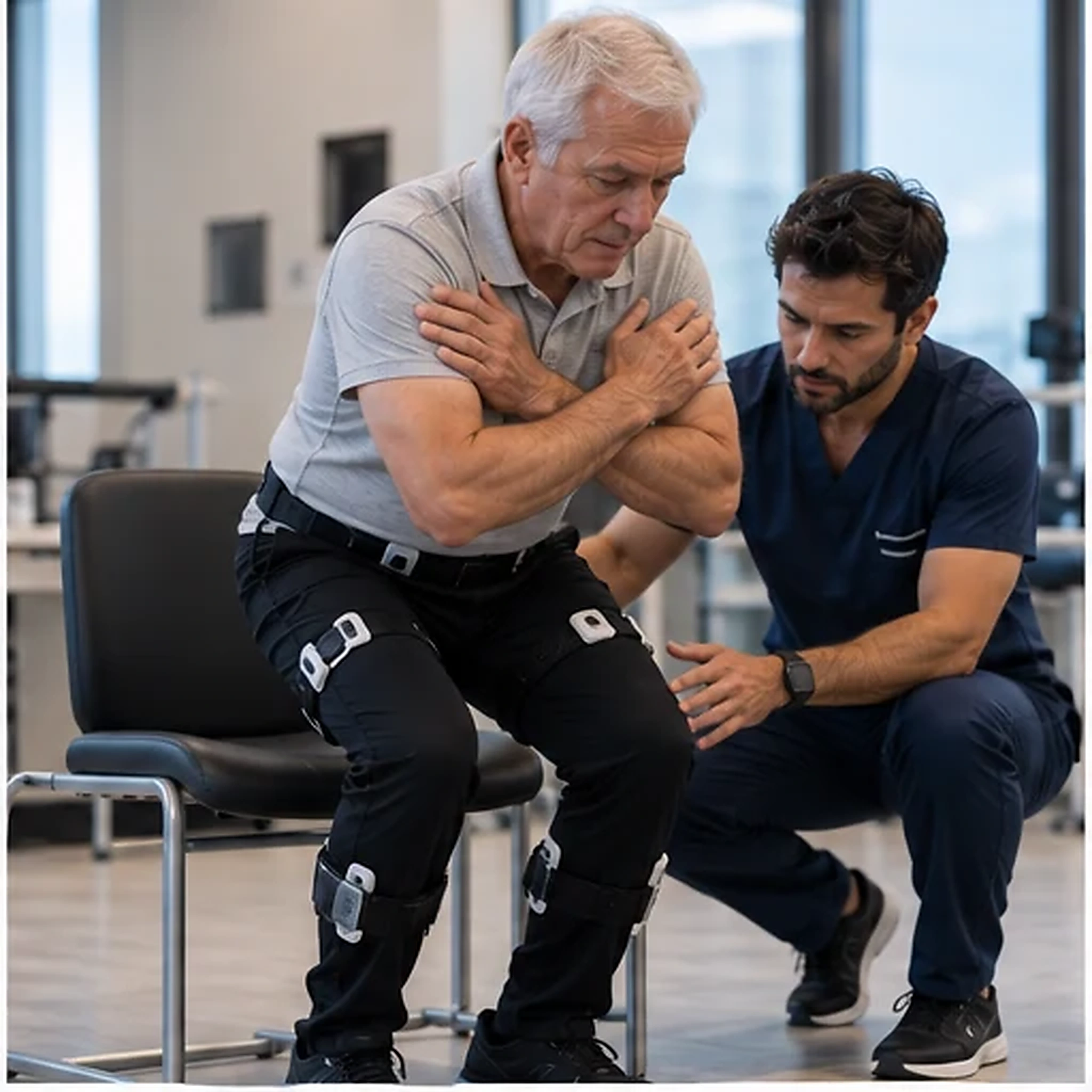 H51
H51Frailty & Functional Mobility Assessment
What functional mobility pattern is associated with frailty or pre-frailty in this person, and how is it changing over time?
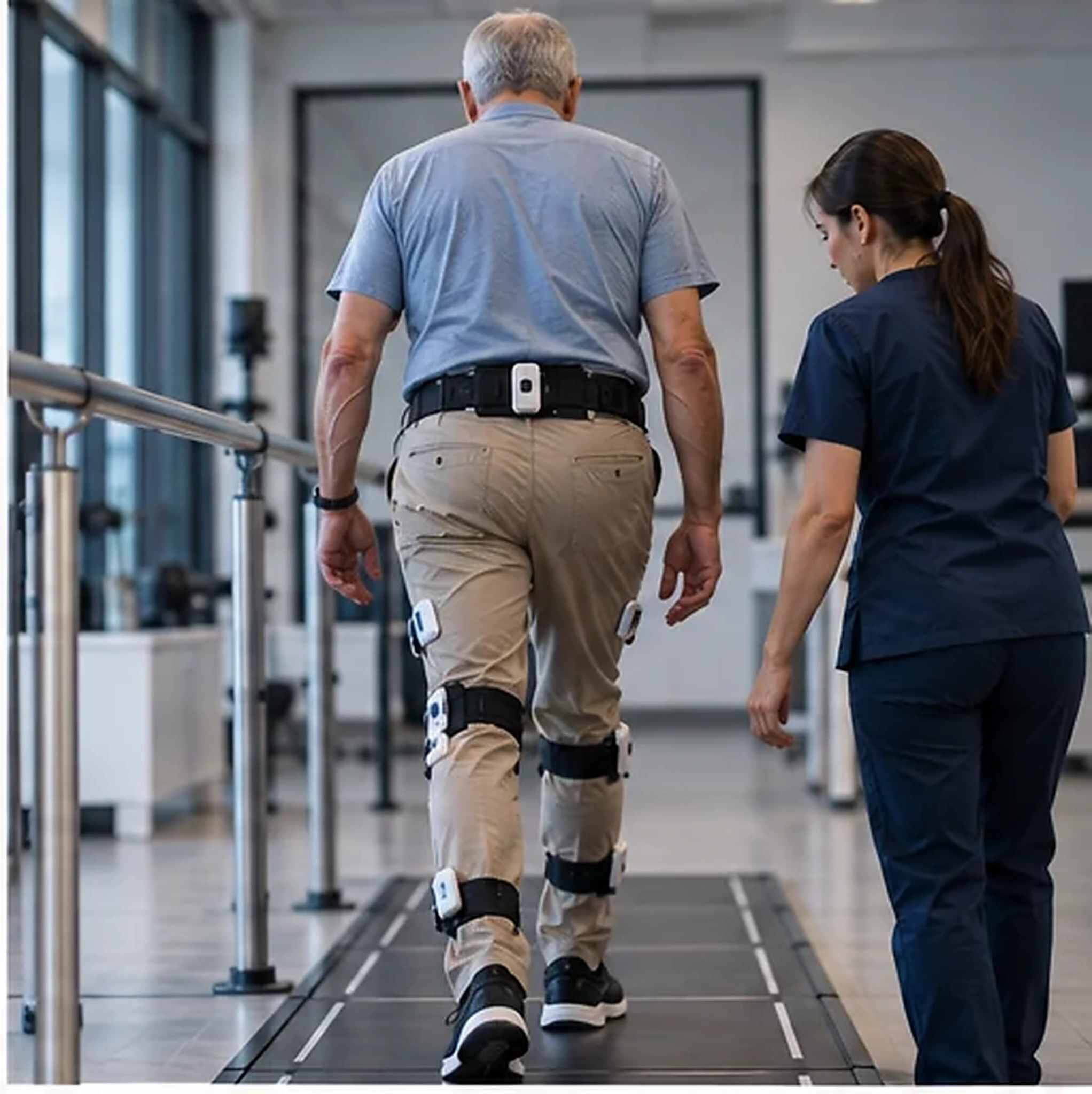 H52
H52Sarcopenia Gait & Mobility Assessment
How is mobility and gait performance affected in a person with sarcopenia or suspected sarcopenia?
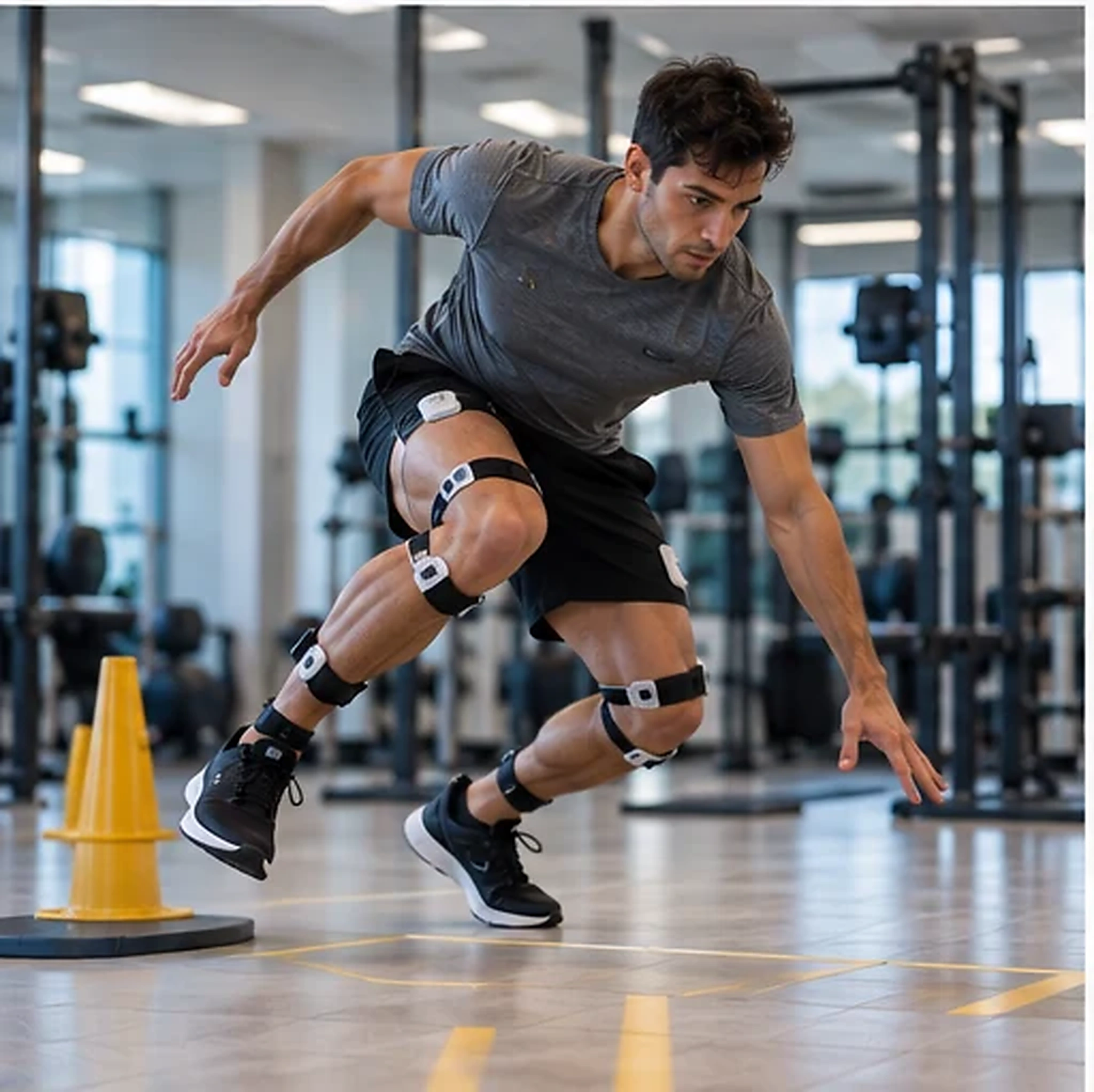 H53
H53Return-to-Performance Functional Assessment
What objective functional deficits remain before progression toward sport or high-demand professional performance?
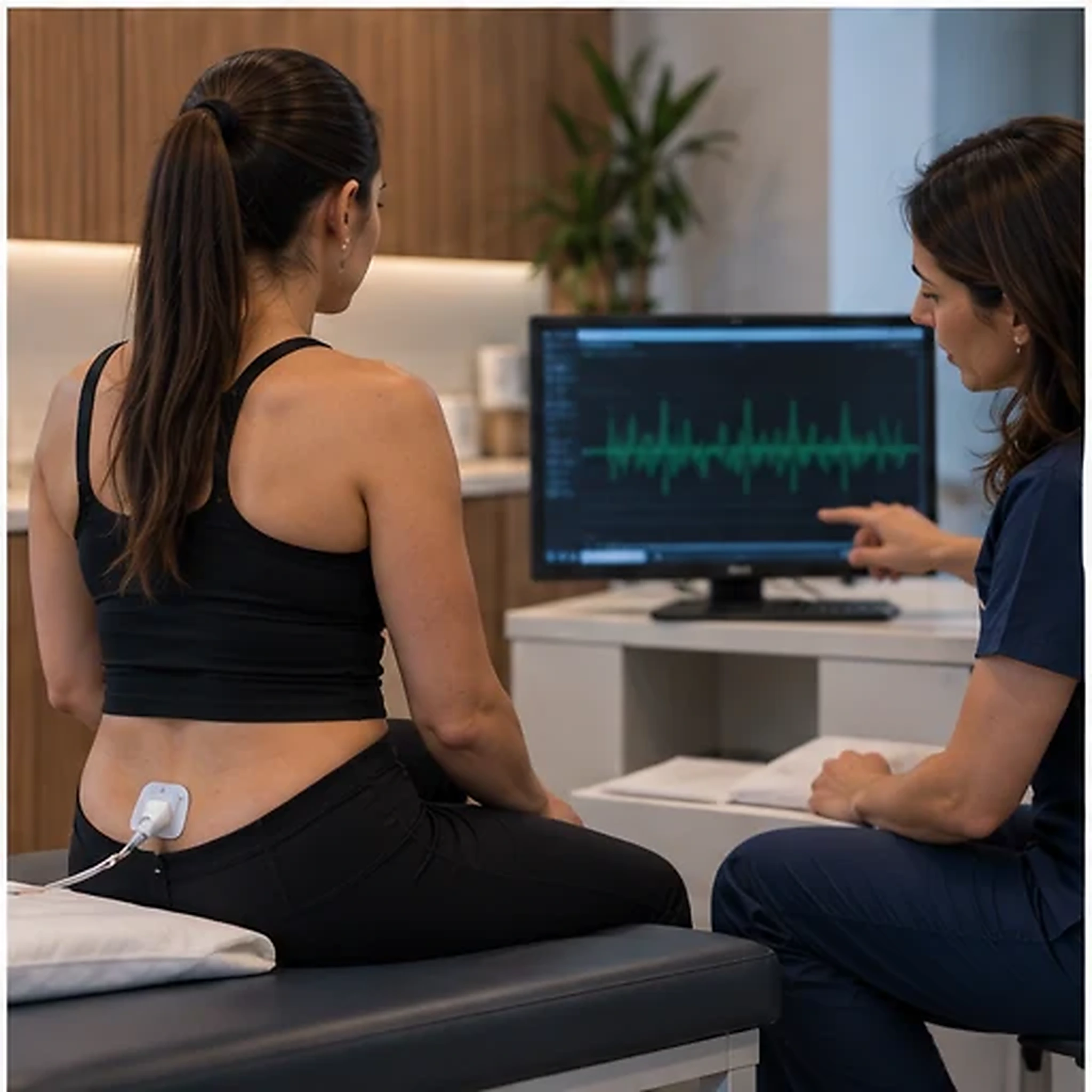 H54
H54Pelvic Floor EMG Assessment & Biofeedback
Can the patient correctly activate, sustain and relax the pelvic-floor muscles, and how does that control improve with biofeedback?
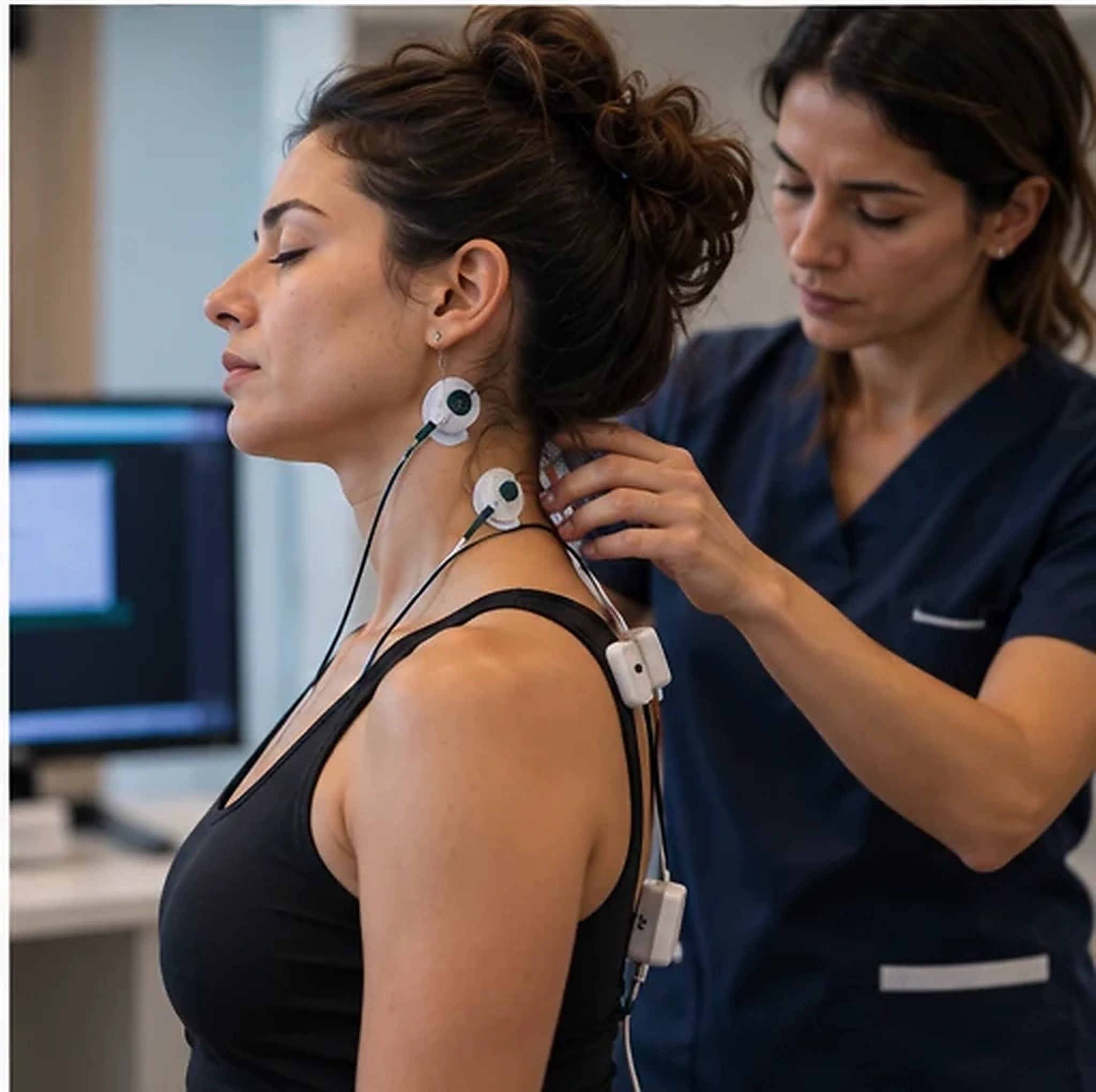 H55
H55Cervical Muscle Assessment & Biofeedback Rehabilitation
Which cervical muscle-activation and movement patterns are abnormal, and can motor control improve through feedback-based rehabilitation?