
H36 · Health
Spinal Cord Injury Assessment, Pain & Neurorehabilitation
What motor function remains after spinal cord injury, how does it support functional movement, and how is it changing with rehabilitation?
Research protocolSpinal Cord Injury Assessment, Pain & Neurorehabilitation
What motor function remains after spinal cord injury, how does it support functional movement, and how is it changing with rehabilitation?
HealthEMGIMUVRHealthSpinal
Health pathways are in-person and AD HOC. Every case is subject to clinical/scientific gating and jurisdiction-specific review. Neuro Garage measurements complement — and do not replace — licensed medical judgement, diagnosis or standard care.
FIELDHealth
EXECUTIONAD HOC · in-person scientific protocol
TECHNOLOGY PATHEMG · IMU · VR · Eye Tracking optional
STUDY CODEH36
The research question
What motor function remains after spinal cord injury, how does it support functional movement, and how is it changing with rehabilitation?
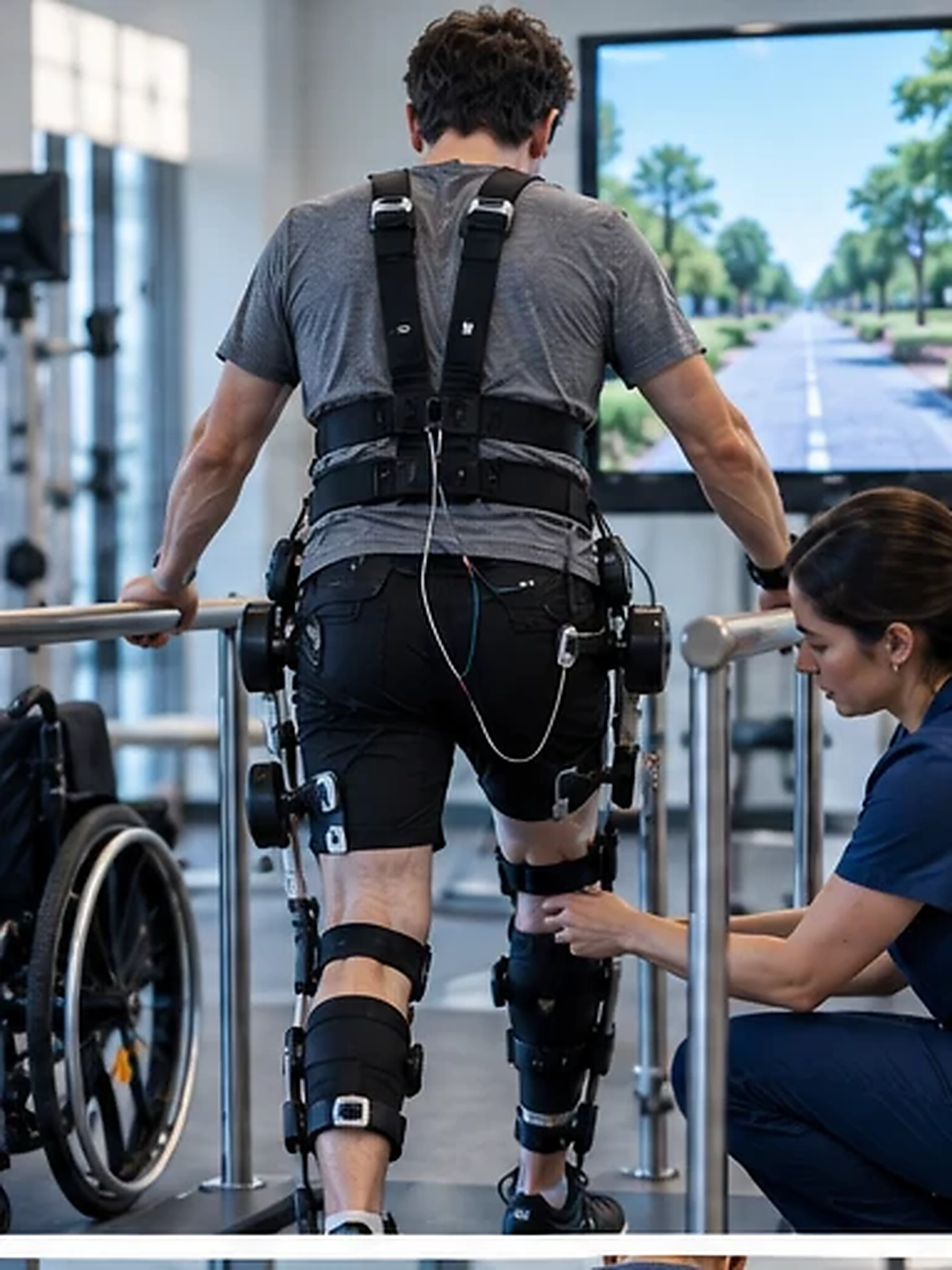
A modular spinal-cord-injury pathway combining residual motor assessment, upper-limb function, trunk/mobility measurement, neurorehabilitation and protocol-defined VR modules for neuropathic pain.
Rehabilitation clinicMovement laboratoryVR rehabilitation environment
Technology configuration
Measurement follows the task
The technology path shown here is the approved structure for this service. The exact protocol is configured around the research question, environment and participant flow.
Residual muscle activation and functional movement.
Motor rehabilitation and selected neuropathic-pain modules.
For interaction or access in severe motor impairment.
Typical protocol · Health
How this study is executed.
The protocol below reflects the service definition developed for Neuro Garage. Final details are confirmed before execution.
Define injury level, severity, safety restrictions and functional goals.
Measure residual muscle activation, trunk and relevant limb function.
Assess mobility, transfers or gait when feasible.
Configure motor or neuropathic-pain VR rehabilitation when indicated.
Repeat measures to track functional trajectory.
Typical outputs
What this specific study can produce
01SCI Motor Function Profile
02Residual Muscle Activation Profile
03Upper-Limb Functional Profile
04Trunk & Mobility Profile
05Movement Compensation Profile
06Neuropathic Pain Response
07VR Neurorehabilitation Progress
08Functional Recovery Trajectory
Decisions supported
What the client can change with the evidence
The study is designed to translate observed behavior into concrete operational, people, design or risk-management decisions.
Industry references / comparable applications
Who has used comparable research approaches?
Publicly documented examples from companies and institutions worldwide. These organizations are not presented as Neuro Garage clients, and the examples do not imply they purchased this exact Neuro Garage protocol.
01


German Heart Center BerlinPublic precedent
Eye tracking used to study cognition, training and attention in medical procedures.
View public source ↗02University of Massachusetts Amherst / Baystate Medical CenterPublic precedent
Wearable eye-tracking research on clinical-device usability and safety.
View public source ↗03Karolinska InstitutePublic precedent
Eye-movement research supporting healthcare and neurological investigations.
View public source ↗Scientific configuration
The method follows the question
Technology is selected because it is scientifically appropriate for the research objective, not because a device must be used. Santiago configures the study scope, stimuli, participant flow and measurement path before execution.
Discuss this study