
H39 · Health
Awake Bruxism EMG Assessment & Biofeedback
How often and how strongly does excessive masticatory activity occur during wakefulness, and can the patient learn to reduce it?
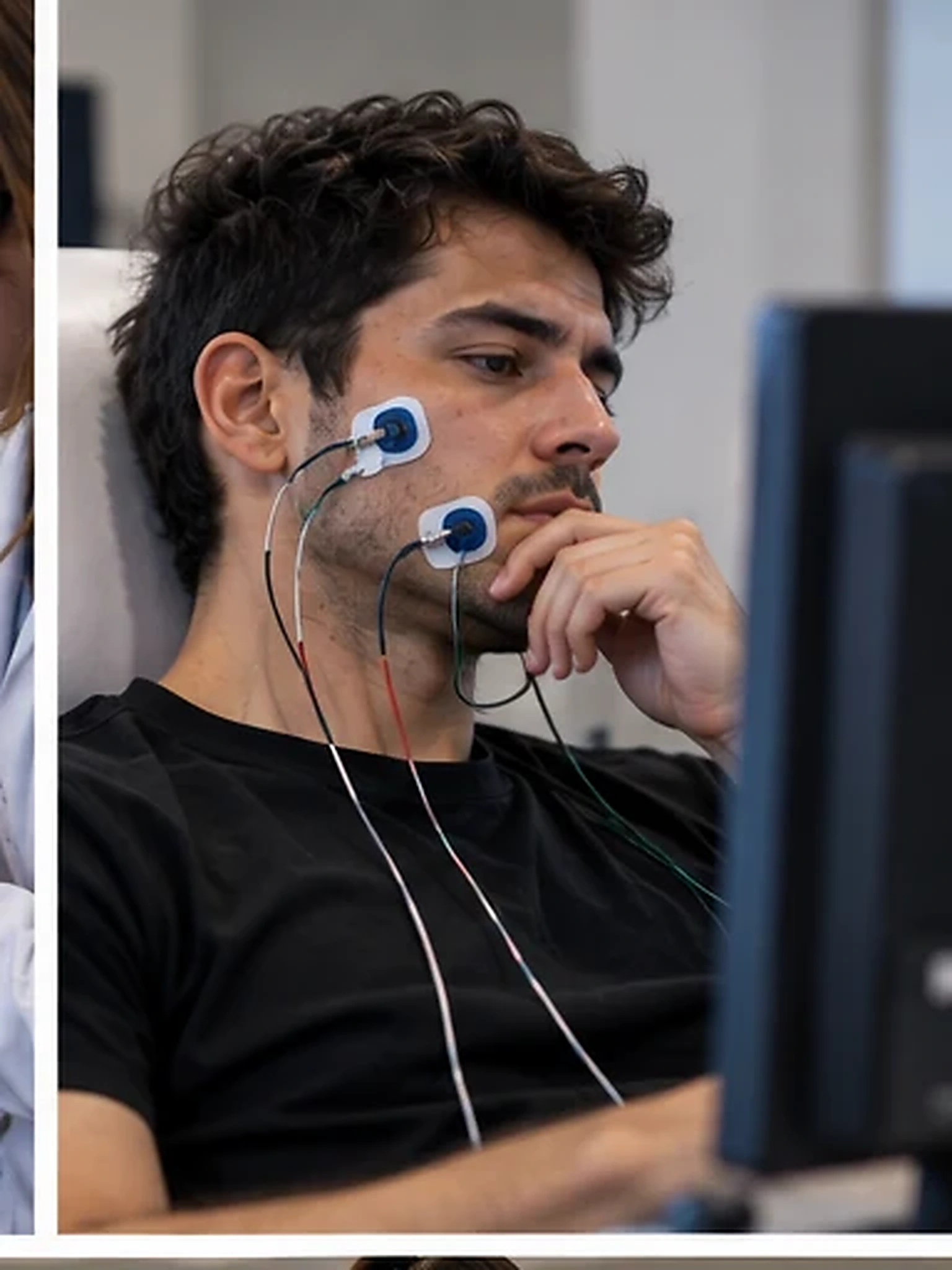
Research protocolAwake Bruxism EMG Assessment & Biofeedback
How often and how strongly does excessive masticatory activity occur during wakefulness, and can the patient learn to reduce it?
HealthSurface EMGHealthAwakeBruxism
Health pathways are in-person and AD HOC. Every case is subject to clinical/scientific gating and jurisdiction-specific review. Neuro Garage measurements complement — and do not replace — licensed medical judgement, diagnosis or standard care.
FIELDHealth
EXECUTIONAD HOC · in-person scientific protocol
TECHNOLOGY PATHSurface EMG
STUDY CODEH39
The research question
How often and how strongly does excessive masticatory activity occur during wakefulness, and can the patient learn to reduce it?
An awake-bruxism service focused on quantifying excessive masticatory muscle activity during wakefulness and training self-regulation through EMG biofeedback.
Clinical biofeedback roomProtocol-defined waking activity context
Technology configuration
Measurement follows the task
The technology path shown here is the approved structure for this service. The exact protocol is configured around the research question, environment and participant flow.
Wakeful monitoring and real-time or event-triggered feedback.
Typical protocol · Health
How this study is executed.
The protocol below reflects the service definition developed for Neuro Garage. Final details are confirmed before execution.
Establish individualized resting and normal-activity baseline.
Calibrate jaw activity.
Monitor masticatory EMG during wakefulness.
Identify excessive activation episodes.
Provide feedback and compare episode frequency/duration across sessions.
Typical outputs
What this specific study can produce
01Awake Bruxism Activity Profile
02Masticatory Muscle Activation
03Episode Frequency & Duration
04Excessive Activation Timeline
05Trigger / Context Pattern when recorded
06Biofeedback Response
07Self-Regulation Learning Curve
08Longitudinal Bruxism Activity Change
Decisions supported
What the client can change with the evidence
The study is designed to translate observed behavior into concrete operational, people, design or risk-management decisions.
Industry references / comparable applications
Who has used comparable research approaches?
Publicly documented examples from companies and institutions worldwide. These organizations are not presented as Neuro Garage clients, and the examples do not imply they purchased this exact Neuro Garage protocol.
01


UnileverPublic precedent
Shopper and packaging research using eye tracking to understand attention and package performance.
View public source ↗02Toyota CanadaPublic precedent
Showroom shopper research to understand buyer attention and the purchase journey.
View public source ↗03Procter & GamblePublic precedent
Documented user of consumer-research eye tracking for product and media behavior studies.
View public source ↗Scientific configuration
The method follows the question
Technology is selected because it is scientifically appropriate for the research objective, not because a device must be used. Santiago configures the study scope, stimuli, participant flow and measurement path before execution.
Discuss this study