
APPLICATIONSHealth
NEURO GARAGE · SCIENTIFIC SERVICE · H54Pelvic Floor EMG Assessment & Biofeedback
Can the patient correctly activate, sustain and relax the pelvic-floor muscles, and how does that control improve with biofeedback?
Every protocol is configured to the objective, sample and measurement environment.
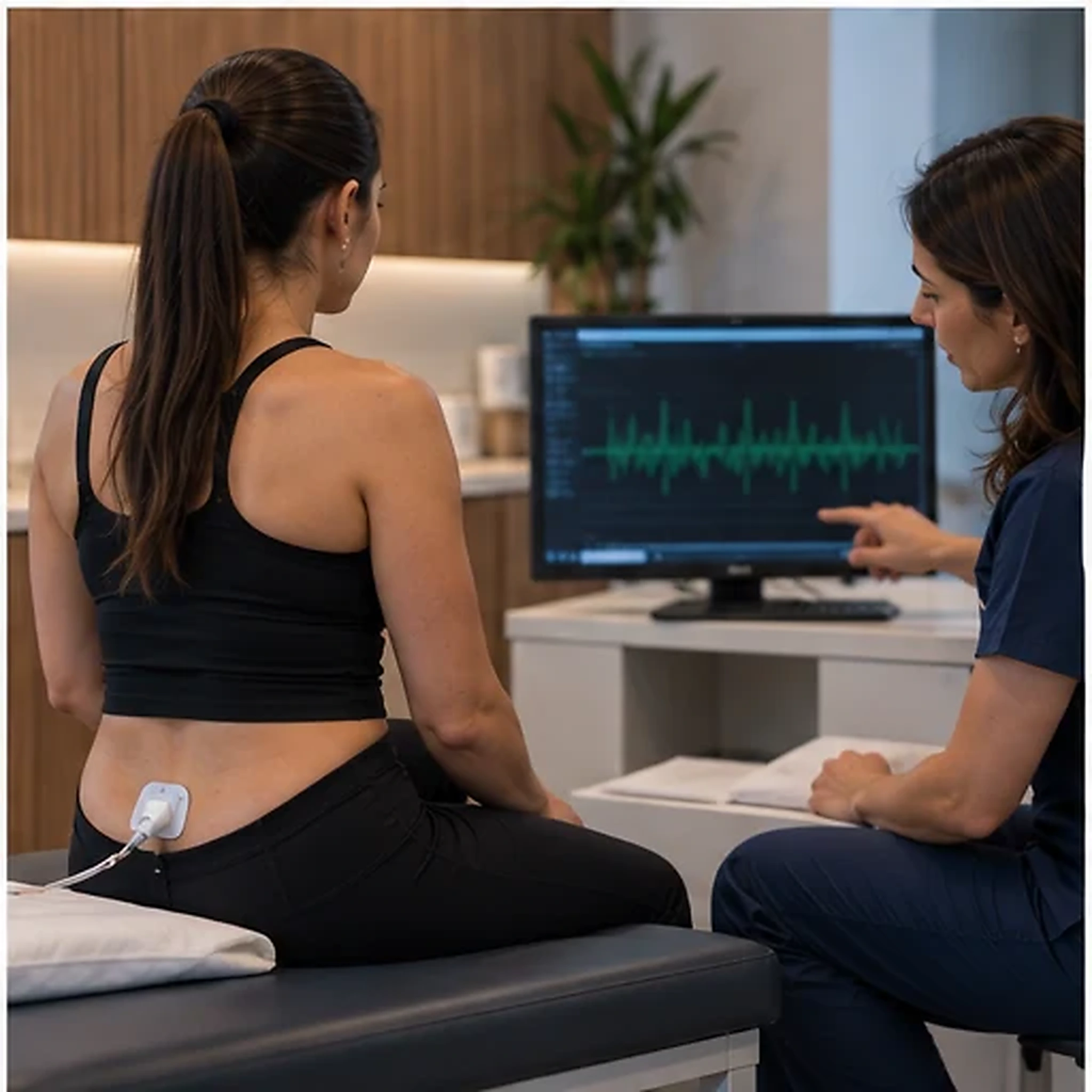
Research protocolPelvic Floor EMG Assessment & Biofeedback
Can the patient correctly activate, sustain and relax the pelvic-floor muscles, and how does that control improve with biofeedback?
HealthEMGHealthPelvicFloor
RESEARCH APPLICATIONHealth
Health pathways are in-person and AD HOC. Every case is subject to clinical/scientific gating and jurisdiction-specific review. Neuro Garage measurements complement — and do not replace — licensed medical judgement, diagnosis or standard care.
FIELDHealth
EXECUTIONAD HOC · in-person scientific protocol
TECHNOLOGY PATHEMG
STUDY CODEH54
THE VALUE OF THE STUDY
From a research question to actionable evidence.
A specialist-supervised pelvic-floor EMG and biofeedback service for functional assessment and motor learning in clinically appropriate pelvic-floor conditions.
Objective measurementProtocol-defined interpretationDecision-oriented reporting
01 / Scientific objective
Can the patient correctly activate, sustain and relax the pelvic-floor muscles, and how does that control improve with biofeedback?
A specialist-supervised pelvic-floor EMG and biofeedback service for functional assessment and motor learning in clinically appropriate pelvic-floor conditions.
Private pelvic-floor rehabilitation room
02 / Technology configuration
Measurement follows the task
The technology path shown here is the approved structure for this service. The exact protocol is configured around the research question, environment and participant flow.
Rest, voluntary contraction, endurance, relaxation and real-time feedback.
03 / Typical protocol · Health
How this study is executed.
The protocol below reflects the service definition developed for Neuro Garage. Final details are confirmed before execution.
Confirm indication, consent and privacy requirements.
Record resting activity.
Measure voluntary and sustained contraction plus relaxation.
Provide feedback-assisted motor training.
Track consistency, fatigue and learning across sessions.
05 / Expected study outputs
What the research delivers
01Pelvic Floor Muscle Activation Profile
02Contraction Quality
03Muscle Endurance Profile
04Relaxation Capacity
05Muscle Fatigue
06Biofeedback Learning Curve
07Rehabilitation Progress
SCIENTIFIC EVIDENCE
Observe. Measure. Decide.
The deliverables depend on the approved study protocol. The examples below are categories of outputs and potential decisions, not fabricated participant data or promised findings.
Appropriate instrumentation
EMG
Protocol-based metrics
Pelvic Floor Muscle Activation Profile
Contraction Quality
Muscle Endurance Profile
Decisions supported
Support pelvic-floor rehabilitation planning
Teach correct activation/relaxation
Monitor motor learning
Measurement outputs and interpretation must follow data-quality checks and the actual scientific protocol. No sample findings are represented here.
Decisions supported
What the client can change with the evidence
The study is designed to translate observed behavior into concrete operational, people, design or risk-management decisions.
Industry references / comparable applications
Who has used comparable research approaches?
Publicly documented examples from companies and institutions worldwide. These organizations are not presented as Neuro Garage clients, and the examples do not imply they purchased this exact Neuro Garage protocol.
01


Tongji UniversityPublic precedent
Eye-tracking classroom used in applied learning and human-centered design research.
View public source ↗02Peking UniversityPublic precedent
Eye-tracking classroom program used in teaching and student research.
View public source ↗03Slovak University of TechnologyPublic precedent
Eye-tracking classroom and lab used to study e-learning and human-computer interaction.
View public source ↗NEXT STEP
Define the right study, not just the equipment.
Tell us your research question. We will discuss the sample, measurement setting, technologies and reporting requirements before confirming the scope.
SCIENTIFIC SERVICEPelvic Floor EMG Assessment & Biofeedback
Request proposal