
APPLICATIONSHealth
NEURO GARAGE · SCIENTIFIC SERVICE · H44Frozen Shoulder Mobility Rehabilitation
How restricted is shoulder mobility, what compensations are being used, and how is movement changing with rehabilitation?
Every protocol is configured to the objective, sample and measurement environment.
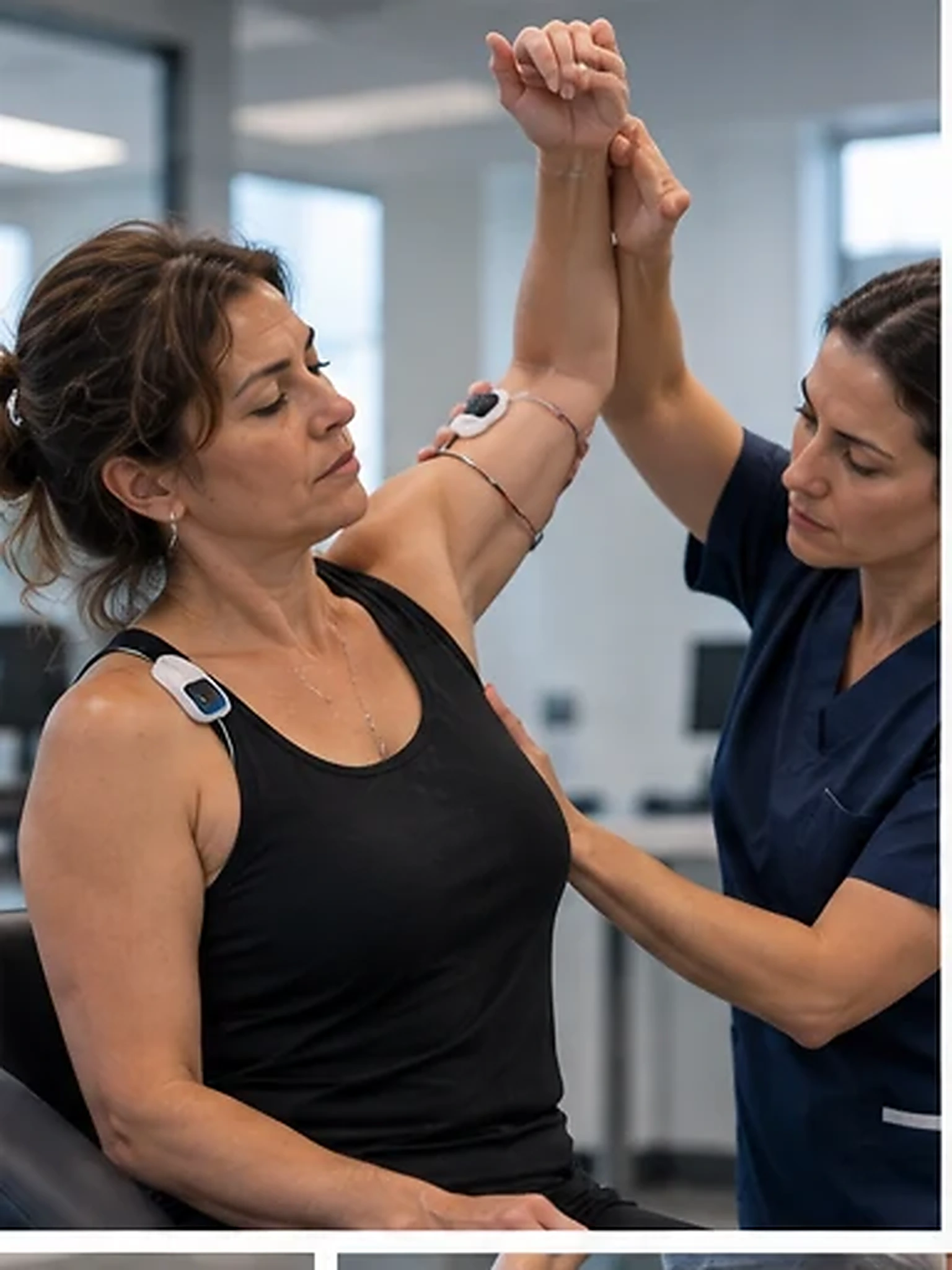
Research protocolFrozen Shoulder Mobility Rehabilitation
How restricted is shoulder mobility, what compensations are being used, and how is movement changing with rehabilitation?
HealthIMUEMG optionalHealthFrozenShoulder
RESEARCH APPLICATIONHealth
Health pathways are in-person and AD HOC. Every case is subject to clinical/scientific gating and jurisdiction-specific review. Neuro Garage measurements complement — and do not replace — licensed medical judgement, diagnosis or standard care.
FIELDHealth
EXECUTIONAD HOC · in-person scientific protocol
TECHNOLOGY PATHIMU · EMG optional
STUDY CODEH44
THE VALUE OF THE STUDY
From a research question to actionable evidence.
A mobility-focused rehabilitation pathway for adhesive capsulitis/frozen shoulder using objective motion measurement.
Objective measurementProtocol-defined interpretationDecision-oriented reporting
01 / Scientific objective
How restricted is shoulder mobility, what compensations are being used, and how is movement changing with rehabilitation?
A mobility-focused rehabilitation pathway for adhesive capsulitis/frozen shoulder using objective motion measurement.
Rehabilitation clinicUpper-limb movement laboratory
02 / Technology configuration
Measurement follows the task
The technology path shown here is the approved structure for this service. The exact protocol is configured around the research question, environment and participant flow.
Shoulder ROM, velocity, smoothness and compensation.
When a specific muscle-control question exists.
03 / Typical protocol · Health
How this study is executed.
The protocol below reflects the service definition developed for Neuro Garage. Final details are confirmed before execution.
Establish safe baseline ROM.
Measure flexion, abduction and permitted rotation.
Add reaching and functional upper-limb tasks.
Quantify trunk/scapular compensation.
Repeat measures to track mobility recovery.
05 / Expected study outputs
What the research delivers
01Frozen Shoulder Mobility Profile
02Shoulder ROM
03Movement Restriction Map
04Compensation Profile
05Functional Reach Profile
06Rehabilitation Progress
07Mobility Recovery Curve
SCIENTIFIC EVIDENCE
Observe. Measure. Decide.
The deliverables depend on the approved study protocol. The examples below are categories of outputs and potential decisions, not fabricated participant data or promised findings.
Appropriate instrumentation
IMU
EMG optional
Protocol-based metrics
Frozen Shoulder Mobility Profile
Shoulder ROM
Movement Restriction Map
Decisions supported
Target mobility rehabilitation
Monitor ROM recovery
Reduce compensatory movement
Measurement outputs and interpretation must follow data-quality checks and the actual scientific protocol. No sample findings are represented here.
Decisions supported
What the client can change with the evidence
The study is designed to translate observed behavior into concrete operational, people, design or risk-management decisions.
Industry references / comparable applications
Who has used comparable research approaches?
Publicly documented examples from companies and institutions worldwide. These organizations are not presented as Neuro Garage clients, and the examples do not imply they purchased this exact Neuro Garage protocol.
01


German Heart Center BerlinPublic precedent
Eye tracking used to study cognition, training and attention in medical procedures.
View public source ↗02University of Massachusetts Amherst / Baystate Medical CenterPublic precedent
Wearable eye-tracking research on clinical-device usability and safety.
View public source ↗03Karolinska InstitutePublic precedent
Eye-movement research supporting healthcare and neurological investigations.
View public source ↗NEXT STEP
Define the right study, not just the equipment.
Tell us your research question. We will discuss the sample, measurement setting, technologies and reporting requirements before confirming the scope.
SCIENTIFIC SERVICEFrozen Shoulder Mobility Rehabilitation
Request proposal