
APPLICATIONSSports
NEURO GARAGE · SCIENTIFIC SERVICE · SP03Sport ErgoMetrics
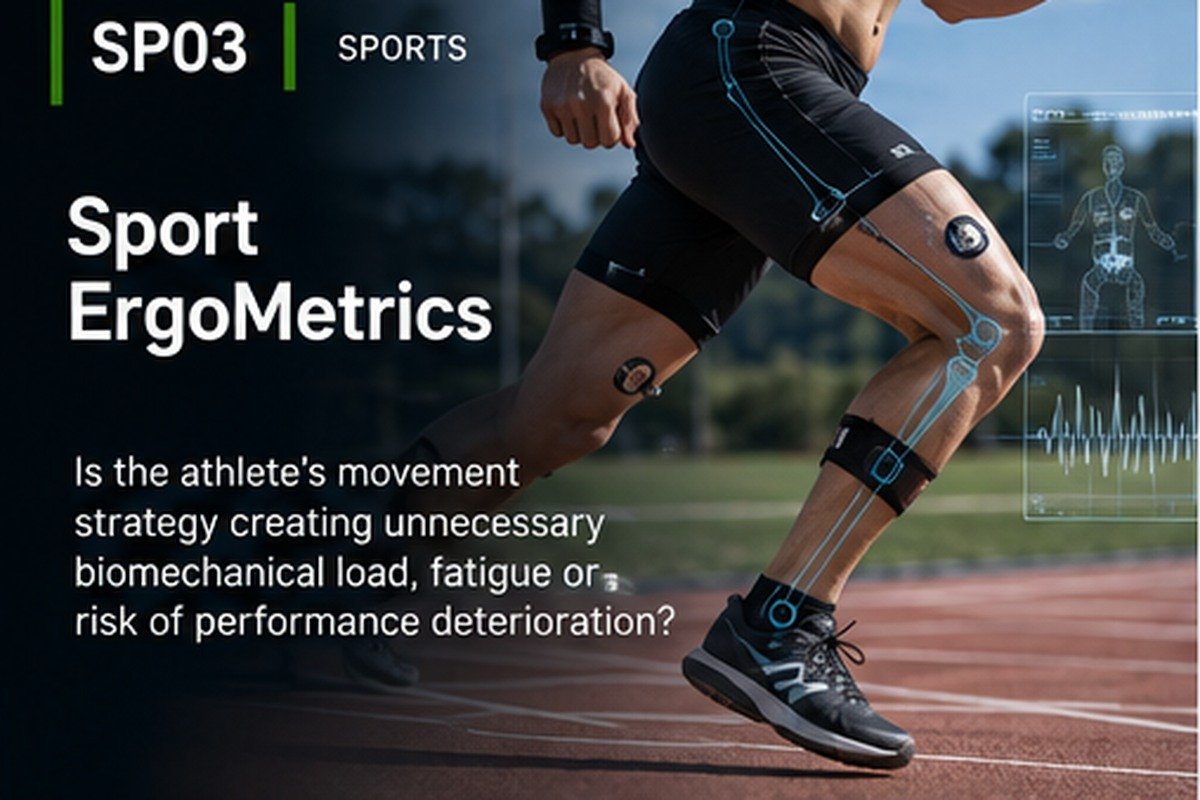
Is the athlete’s movement strategy creating unnecessary biomechanical load, fatigue or risk of performance deterioration?
Every protocol is configured to the objective, sample and measurement environment.
Research protocolSport ErgoMetrics
Is the athlete’s movement strategy creating unnecessary biomechanical load, fatigue or risk of performance deterioration?
SportsEMGIMUSynchronized videoSportsBiomechanics
RESEARCH APPLICATIONSports
FIELDSports
EXECUTIONIn-person execution
TECHNOLOGY PATHEMG · IMU · Synchronized video
STUDY CODESP03
THE VALUE OF THE STUDY
From a research question to actionable evidence.
Sport ErgoMetrics measures the movement, muscular activation and biomechanical efficiency of elite athletes in the real sporting environment, with particular attention to asymmetry and accumulated muscular fatigue.
Objective measurementProtocol-defined interpretationDecision-oriented reporting
01 / Scientific objective
Is the athlete’s movement strategy creating unnecessary biomechanical load, fatigue or risk of performance deterioration?
Sport ErgoMetrics measures the movement, muscular activation and biomechanical efficiency of elite athletes in the real sporting environment, with particular attention to asymmetry and accumulated muscular fatigue.
Real sporting environment only
02 / Technology configuration
Measurement follows the task
The technology path shown here is the approved structure for this service. The exact protocol is configured around the research question, environment and participant flow.
03 / Typical protocol · Sports
How this study is executed.
The protocol below reflects the service definition developed for Neuro Garage. Final details are confirmed before execution.
Define the sporting movement, performance phase and biomechanical question.
Instrument the athlete with EMG + IMU and capture synchronized video during the real task.
Measure posture, movement, muscular activation, symmetry / asymmetry, repetition, stability and fatigue accumulation.
Identify compensatory movement, load concentration and performance deterioration over time.
Translate the evidence into training, recovery, technique and return-to-competition decisions.
05 / Expected study outputs
What the research delivers
01Muscle activation patterns
02Asymmetries
03Fatigue accumulation
04Movement efficiency
05Repetitive-load zones
06Compensatory movement
07Stability
08Timing between muscle groups
09Performance deterioration over time
SCIENTIFIC EVIDENCE
Observe. Measure. Decide.
The deliverables depend on the approved study protocol. The examples below are categories of outputs and potential decisions, not fabricated participant data or promised findings.
Appropriate instrumentation
EMG
IMU
Synchronized video
Protocol-based metrics
Muscle activation patterns
Asymmetries
Fatigue accumulation
Decisions supported
Identify physical weaknesses
Prevent overload
Optimize technique
Measurement outputs and interpretation must follow data-quality checks and the actual scientific protocol. No sample findings are represented here.
Decisions supported
What the client can change with the evidence
The study is designed to translate observed behavior into concrete operational, people, design or risk-management decisions.
Industry references / comparable applications
Who has used comparable research approaches?
Publicly documented examples from companies and institutions worldwide. These organizations are not presented as Neuro Garage clients, and the examples do not imply they purchased this exact Neuro Garage protocol.
01


DensoPublic precedent
Eye-tracking and expert-vs-novice industrial inspection research to improve performance and training.
View public source ↗02Tokio Marine & Nichido Fire InsurancePublic precedent
Operational-behavior research in industrial settings to understand incident-related behaviors.
View public source ↗03Daiichi Sankyo PropharmaPublic precedent
Objective inspection and training research used in quality-improvement workflows.
View public source ↗NEXT STEP
Define the right study, not just the equipment.
Tell us your research question. We will discuss the sample, measurement setting, technologies and reporting requirements before confirming the scope.
SCIENTIFIC SERVICESport ErgoMetrics
Request proposal