
RS01 · Road Safety
Road Lab
Does your driver guarantee safe performance on the road?
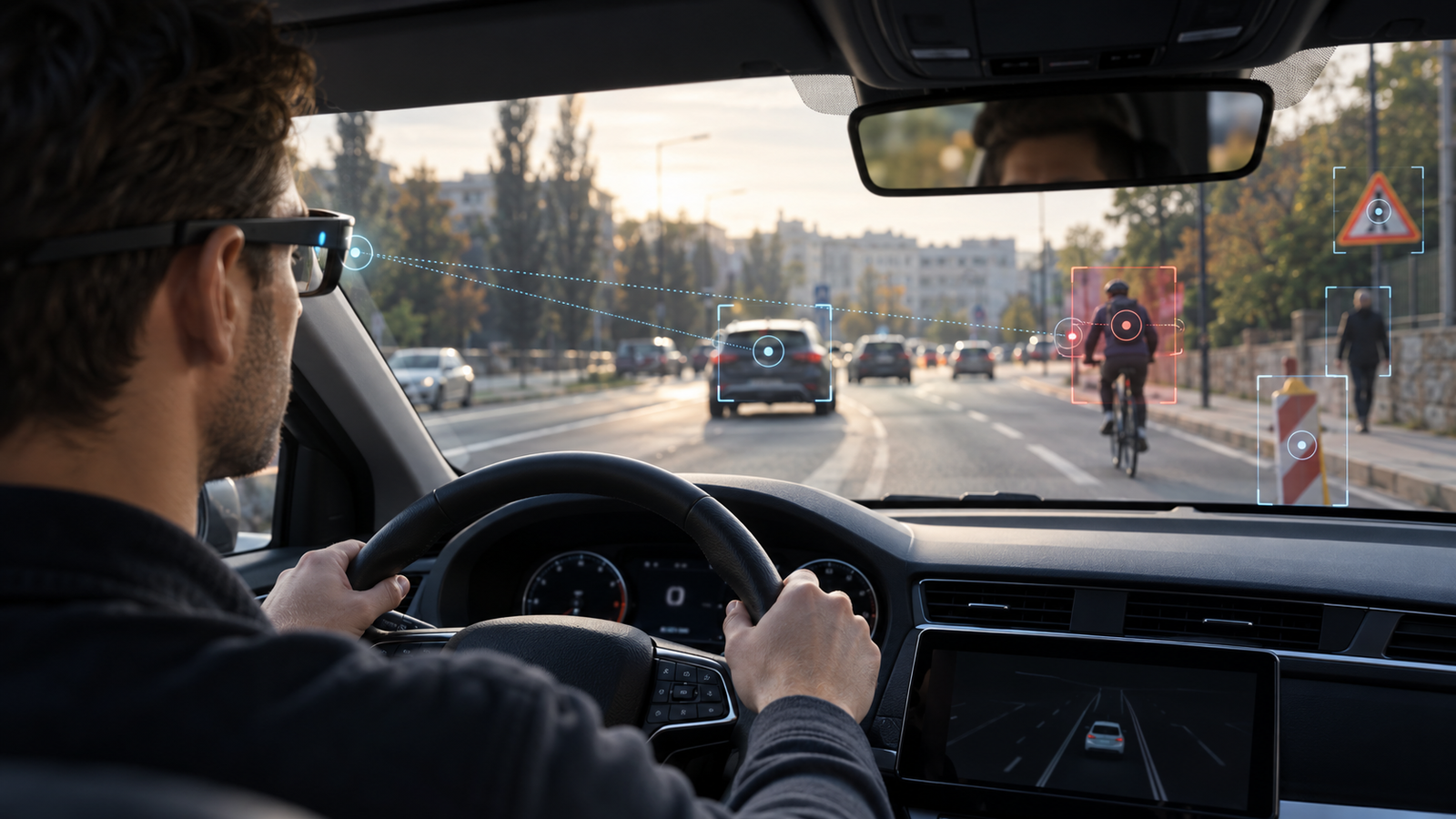
Real-road behavior, attention and risk — measured while the driver is actually driving.
Real-road behavior, attention and risk — measured while the driver is actually driving.Road Lab
Does your driver guarantee safe performance on the road?
Road SafetyEye Tracking GlassesWearable EEG optionalRoadDrivingSafety
FIELDRoad Safety
EXECUTIONIn-person execution
TECHNOLOGY PATHEye Tracking Glasses · Wearable EEG optional
STUDY CODERS01
The research question
Does your driver guarantee safe performance on the road?
Road Lab evaluates drivers on a real approved route to identify dangerous driving behaviors, visual-attention patterns, missed hazards, speed behavior and signs of drowsiness. It is configurable by route and operating context, and can be analyzed at both individual-driver and fleet level. Simulation is intentionally excluded from Road Lab; simulator-based training and assessment belongs to RS03 Driver Training Cabin.
Real driving routeUrban / interurban roadHighwayIndustrial or mining road / access route
Technology configuration
Measurement follows the task
The technology path shown here is the approved structure for this service. The exact protocol is configured around the research question, environment and participant flow.
Continuous real-road visual-attention measurement while the driver operates the vehicle.
Added when the protocol requires synchronized cognitive-state / vigilance measurement.
Typical protocol · Road Safety
How this study is executed.
The protocol below reflects the service definition developed for Neuro Garage. Final details are confirmed before execution.
Define the route, critical road segments, in-cabin AOIs and safety events to be observed.
Instrument the driver with Eye Tracking Glasses and add wearable EEG only when required by the approved protocol.
Record real driving behavior across the complete route, including speed, visual attention, mirrors / cabin AOIs, signage, tolls, crossings, curves and relevant hazards.
Synchronize gaze and driving events to identify hazard detection, missed cues, distraction, drowsiness indicators and critical driving behaviors.
Generate both individual-driver and fleet-level profiles, separating recurring operational patterns from isolated events.
Translate the evidence into route, fleet, driver-management and road-safety decisions.
Typical outputs
What this specific study can produce
01Driving Style / behavior profile
02Average speed
03Maximum speed
04General visual attention
05Attention by AOI
06Road / forward-view attention
07Mirror attention
08In-cabin AOI attention
09Traffic-sign detection
10Hazards detected / missed
11Time to relevant hazard or cue
12Toll / crossing / curve behavior
13Drowsiness / PERCLOS indicators
14Critical / dangerous driving behaviors
15Performance by driver profile
16Individual-driver report
17Fleet overview
Decisions supported
What the client can change with the evidence
The study is designed to translate observed behavior into concrete operational, people, design or risk-management decisions.
Industry references / comparable applications
Who has used comparable research approaches?
Publicly documented examples from companies and institutions worldwide. These organizations are not presented as Neuro Garage clients, and the examples do not imply they purchased this exact Neuro Garage protocol.
01


SEATPublic precedent
Driver-attention and road-safety research using eye tracking to understand gaze allocation in driving.
View public source ↗02MIT AgeLabPublic precedent
Automotive human-factors research on driver attention and interaction.
View public source ↗03Toyota CanadaPublic precedent
Real-world customer-journey research with wearable eye tracking; relevant to applied automotive behavior studies.
View public source ↗Scientific configuration
The method follows the question
Technology is selected because it is scientifically appropriate for the research objective, not because a device must be used. Santiago configures the study scope, stimuli, participant flow and measurement path before execution.
Discuss this study