
MI07 · Military Industry
Military Interface & Display Assessment
Does the military interface make critical information easy to see, understand and prioritize under pressure?
HUDs, consoles, displays and alerts evaluated through actual visual behavior.
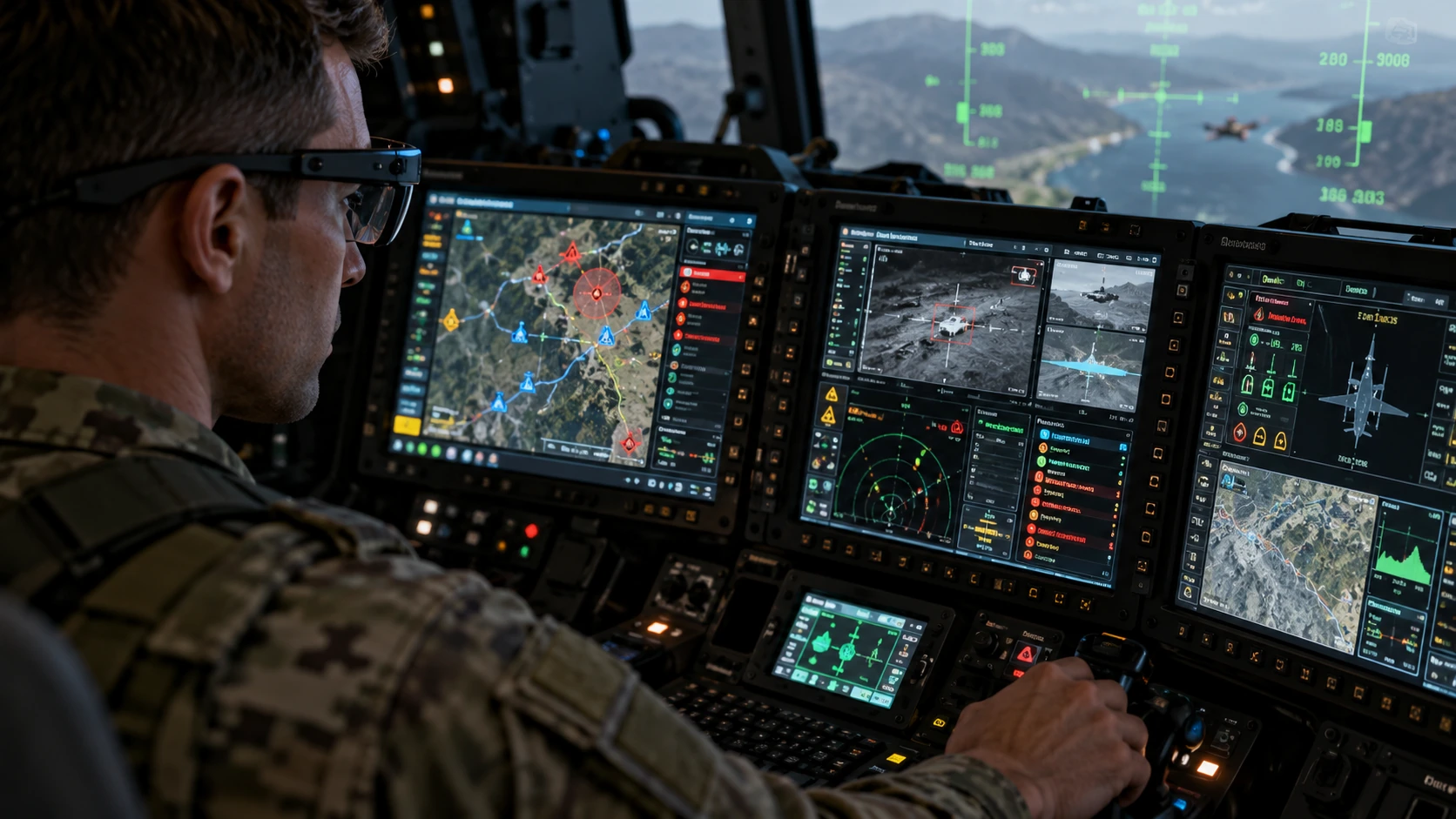
HUDs, consoles, displays and alerts evaluated through actual visual behavior.Military Interface & Display Assessment
Does the military interface make critical information easy to see, understand and prioritize under pressure?
Military IndustryEye Tracking GlassesEye Tracking VRMilitaryInterfaceDisplay
FIELDMilitary Industry
EXECUTIONIn-person execution
TECHNOLOGY PATHEye Tracking Glasses · Eye Tracking VR
STUDY CODEMI07
The research question
Does the military interface make critical information easy to see, understand and prioritize under pressure?
Military Interface & Display Assessment evaluates screens, HUDs, consoles, panels and displays to determine whether critical information is visible, legible and correctly prioritized. The protocol can place users under time pressure and multiple-source information demand to expose visual overload and interface bottlenecks.
Real equipmentSimulatorVR interface
Technology configuration
Measurement follows the task
The technology path shown here is the approved structure for this service. The exact protocol is configured around the research question, environment and participant flow.
Used for VR-native interface evaluation without EEG.
Typical protocol · Military Industry
How this study is executed.
The protocol below reflects the service definition developed for Neuro Garage. Final details are confirmed before execution.
Define critical information, alarms, symbols, color codes and task priorities.
Execute the approved interface task in the real equipment, simulator or VR condition.
Measure first fixation, dwell, visual sequence, ignored areas and switching across information sources.
Add time pressure and multiple-source conditions when required.
Identify hierarchy, alarm, legibility and overload problems and translate them into interface / display improvements.
Typical outputs
What this specific study can produce
01Elements seen / not seen
02Time to first fixation
03Dwell time
04Visual sequence
05Ignored areas
06Visual overload
07Information hierarchy performance
08Alarm visibility
09Color-code performance
10Symbol visibility
11Legibility under task conditions
Decisions supported
What the client can change with the evidence
The study is designed to translate observed behavior into concrete operational, people, design or risk-management decisions.
Industry references / comparable applications
Who has used comparable research approaches?
Publicly documented examples from companies and institutions worldwide. These organizations are not presented as Neuro Garage clients, and the examples do not imply they purchased this exact Neuro Garage protocol.
01


U.S. active-duty service-member researchPublic precedent
Published work used eye tracking and EEG to examine situational awareness during virtual navigation under cognitive load.
View public source ↗02NASA Langley Research CenterPublic precedent
Operator-state and human-performance research using eye tracking and psychophysiological measures in aviation contexts.
View public source ↗03OHB SwedenPublic precedent
Mission-control research on workload, visual behavior, task familiarity and interface use in satellite operations.
View public source ↗Scientific configuration
The method follows the question
Technology is selected because it is scientifically appropriate for the research objective, not because a device must be used. Santiago configures the study scope, stimuli, participant flow and measurement path before execution.
Discuss this study