
MI06 · Military Industry
Military Fatigue & Alertness Assessment
Is fatigue or drowsiness degrading operational alertness before the person reaches a critical failure point?
Fatigue, drowsiness, alertness and microsleep risk monitored before the critical event.
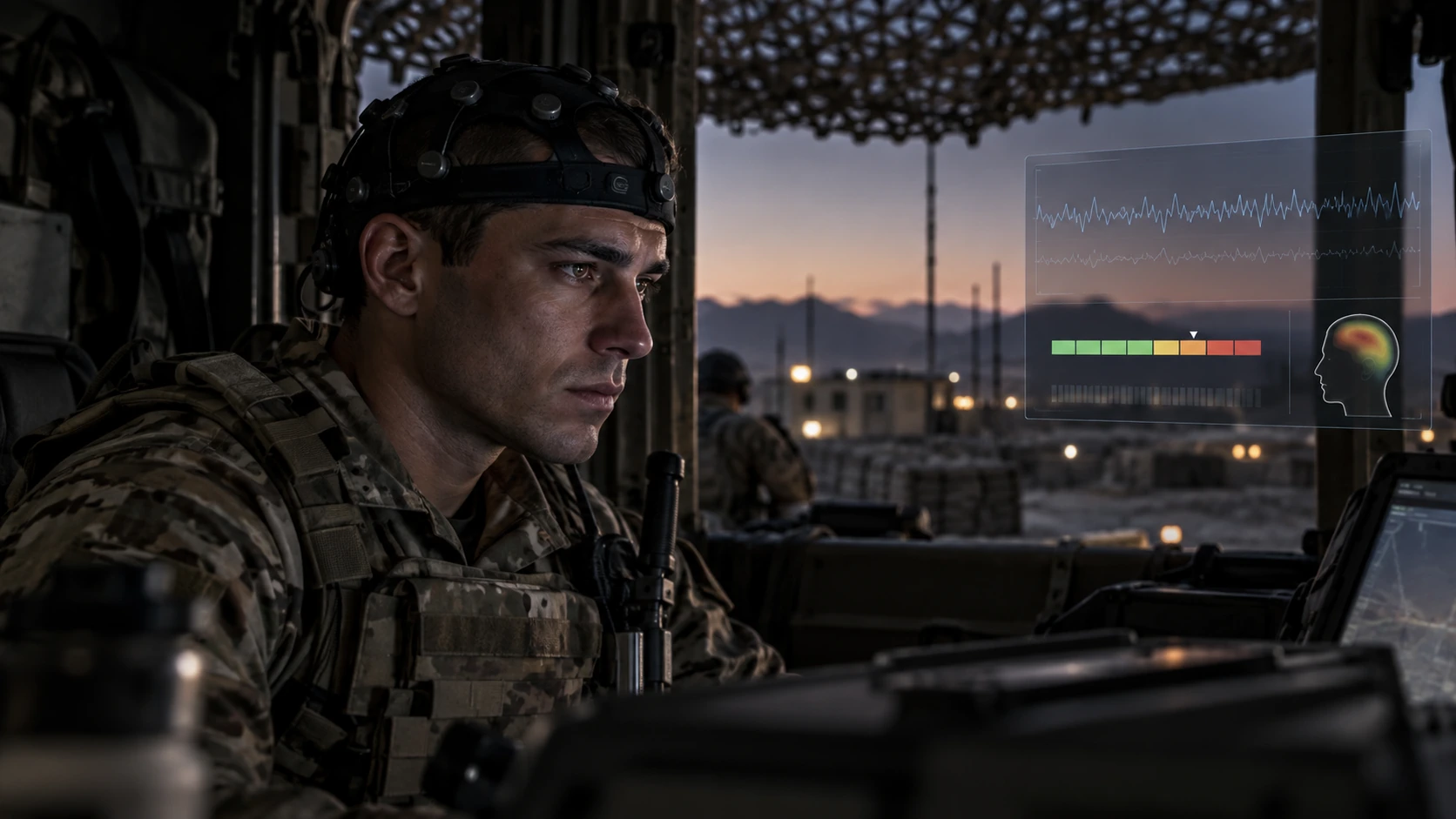
Fatigue, drowsiness, alertness and microsleep risk monitored before the critical event.Military Fatigue & Alertness Assessment
Is fatigue or drowsiness degrading operational alertness before the person reaches a critical failure point?
Military IndustryWearable EEGFatigueAlertnessDrowsiness
FIELDMilitary Industry
EXECUTIONIn-person execution
TECHNOLOGY PATHWearable EEG
STUDY CODEMI06
The research question
Is fatigue or drowsiness degrading operational alertness before the person reaches a critical failure point?
Military Fatigue & Alertness Assessment continuously monitors alertness state, fatigue, drowsiness and microsleep-related risk using wearable EEG. It is designed for guards, patrols, driving, surveillance, command-center duties and prolonged operations, with preventive alerts and historical analysis by person, shift, mission or operation.
Guard dutyPatrolDrivingSurveillanceCommand centerProlonged operation
Technology configuration
Measurement follows the task
The technology path shown here is the approved structure for this service. The exact protocol is configured around the research question, environment and participant flow.
No Eye Tracking or GSR is included in this service.
Typical protocol · Military Industry
How this study is executed.
The protocol below reflects the service definition developed for Neuro Garage. Final details are confirmed before execution.
Establish the baseline and verify EEG signal quality before the operational window.
Monitor alertness continuously during the approved guard, patrol, driving, surveillance, command-center or prolonged-duty period.
Track fatigue, drowsiness, alertness deterioration and events compatible with microsleep.
Escalate preventive and critical alerts according to the approved operational thresholds.
Aggregate events historically by person, shift, mission or operation and identify recurring higher-risk windows.
Typical outputs
What this specific study can produce
01Alertness level
02Fatigue
03Drowsiness
04Microsleep-related events
05Temporal evolution
06Higher-risk windows
07Preventive alerts
08Critical alerts
09Historical profile by person
10Historical profile by shift
11Historical profile by mission / operation
Decisions supported
What the client can change with the evidence
The study is designed to translate observed behavior into concrete operational, people, design or risk-management decisions.
Industry references / comparable applications
Who has used comparable research approaches?
Publicly documented examples from companies and institutions worldwide. These organizations are not presented as Neuro Garage clients, and the examples do not imply they purchased this exact Neuro Garage protocol.
01


SEATPublic precedent
Driver-attention and road-safety research using eye tracking to understand gaze allocation in driving.
View public source ↗02MIT AgeLabPublic precedent
Automotive human-factors research on driver attention and interaction.
View public source ↗03Toyota CanadaPublic precedent
Real-world customer-journey research with wearable eye tracking; relevant to applied automotive behavior studies.
View public source ↗Scientific configuration
The method follows the question
Technology is selected because it is scientifically appropriate for the research objective, not because a device must be used. Santiago configures the study scope, stimuli, participant flow and measurement path before execution.
Discuss this study