APPLICATIONSIndustrial
NEURO GARAGE · SCIENTIFIC SERVICE · IND02Fatigue & Drowsiness Screening Booth
Is this operator sufficiently alert to safely enter the work area and perform safety-critical tasks today?
Every protocol is configured to the objective, sample and measurement environment.
Research protocolFatigue & Drowsiness Screening Booth
Is this operator sufficiently alert to safely enter the work area and perform safety-critical tasks today?
IndustrialEye Tracking BarScreen-integrated Eye TrackerFatigueAlertnessDrowsiness
RESEARCH APPLICATIONIndustrial
FIELDIndustrial
EXECUTIONIn-person execution
TECHNOLOGY PATHEye Tracking Bar · Screen-integrated Eye Tracker
STUDY CODEIND02
THE VALUE OF THE STUDY
From a research question to actionable evidence.
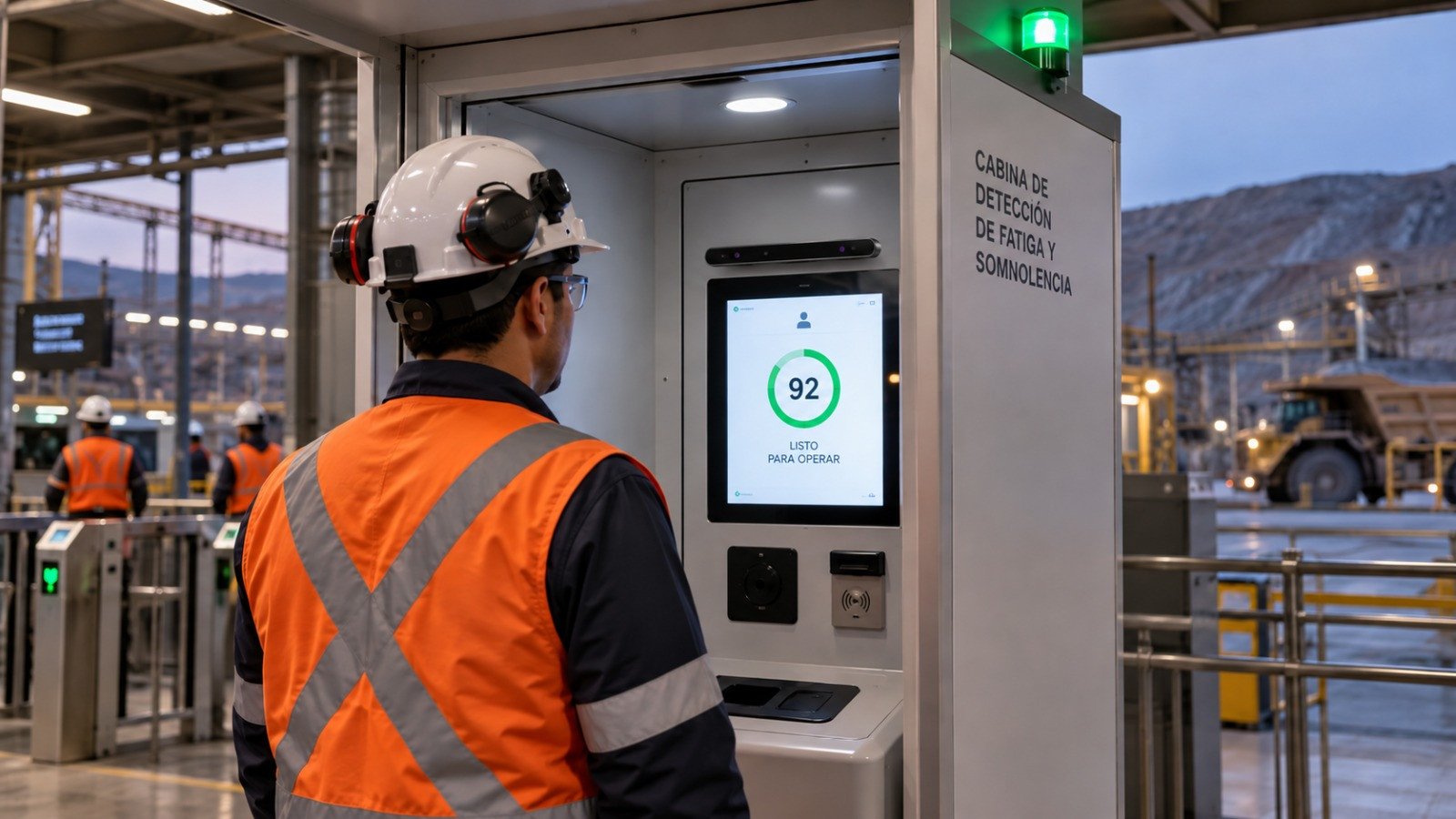
A fixed pre-shift screening booth installed at the client site. Operators complete a short visual task before entering the work area; eye-tracking indicators are evaluated against the approved operational thresholds and the booth provides a simple green / red Go–No-Go signal for the client safety protocol.
Objective measurementProtocol-defined interpretationDecision-oriented reporting
01 / Scientific objective
Is this operator sufficiently alert to safely enter the work area and perform safety-critical tasks today?
A fixed pre-shift screening booth installed at the client site. Operators complete a short visual task before entering the work area; eye-tracking indicators are evaluated against the approved operational thresholds and the booth provides a simple green / red Go–No-Go signal for the client safety protocol.
Fixed screening booth installed at the client plant
02 / Technology configuration
Measurement follows the task
The technology path shown here is the approved structure for this service. The exact protocol is configured around the research question, environment and participant flow.
Short standardized visual tasks.
Dedicated fixed installation for recurrent pre-shift screening.
03 / Typical protocol · Industrial
How this study is executed.
The protocol below reflects the service definition developed for Neuro Garage. Final details are confirmed before execution.
Install and configure the booth at the designated plant location.
Establish the client-approved screening task and operating thresholds.
Operator completes the visual task before entering the work area.
System estimates fatigue, drowsiness, alertness and reaction-time indicators.
The client workflow receives a green / red Go–No-Go signal and stores the recurrent screening history.
05 / Expected study outputs
What the research delivers
01Fatigue level
02Drowsiness level
03Alertness level
04Reaction time
05Predicted deterioration during the shift
SCIENTIFIC EVIDENCE
Observe. Measure. Decide.
The deliverables depend on the approved study protocol. The examples below are categories of outputs and potential decisions, not fabricated participant data or promised findings.
Appropriate instrumentation
Eye Tracking Bar
Screen-integrated Eye Tracker
Protocol-based metrics
Fatigue level
Drowsiness level
Alertness level
Decisions supported
Authorize or restrict access under the client safety protocol
Authorize manipulation of machinery, equipment or vehicles
Escalate the operator to the client-defined fatigue-management process
Measurement outputs and interpretation must follow data-quality checks and the actual scientific protocol. No sample findings are represented here.
Decisions supported
What the client can change with the evidence
The study is designed to translate observed behavior into concrete operational, people, design or risk-management decisions.
Industry references / comparable applications
Who has used comparable research approaches?
Publicly documented examples from companies and institutions worldwide. These organizations are not presented as Neuro Garage clients, and the examples do not imply they purchased this exact Neuro Garage protocol.
01


DensoPublic precedent
Eye tracking of expert and novice visual inspectors to improve quality inspection and shorten training.
View public source ↗02Tokio Marine & Nichido Fire InsurancePublic precedent
Eye-tracking study of factory operators to investigate behaviors associated with industrial accidents.
View public source ↗03Daiichi Sankyo PropharmaPublic precedent
Visual-inspection research using eye tracking as part of quality and training improvement.
View public source ↗NEXT STEP
Define the right study, not just the equipment.
Tell us your research question. We will discuss the sample, measurement setting, technologies and reporting requirements before confirming the scope.
SCIENTIFIC SERVICEFatigue & Drowsiness Screening Booth
Request proposal