
IND01 · Industrial
Safety Metrics
Can your operators really identify the hazards and risks around them?
Research protocolSafety Metrics
Can your operators really identify the hazards and risks around them?
IndustrialEye Tracking BarEye Tracking GlassesEye Tracking VRSafetyRisk
FIELDIndustrial
EXECUTIONIn-person execution
TECHNOLOGY PATHEye Tracking Bar · Eye Tracking Glasses · Eye Tracking VR
STUDY CODEIND01
The research question
Can your operators really identify the hazards and risks around them?
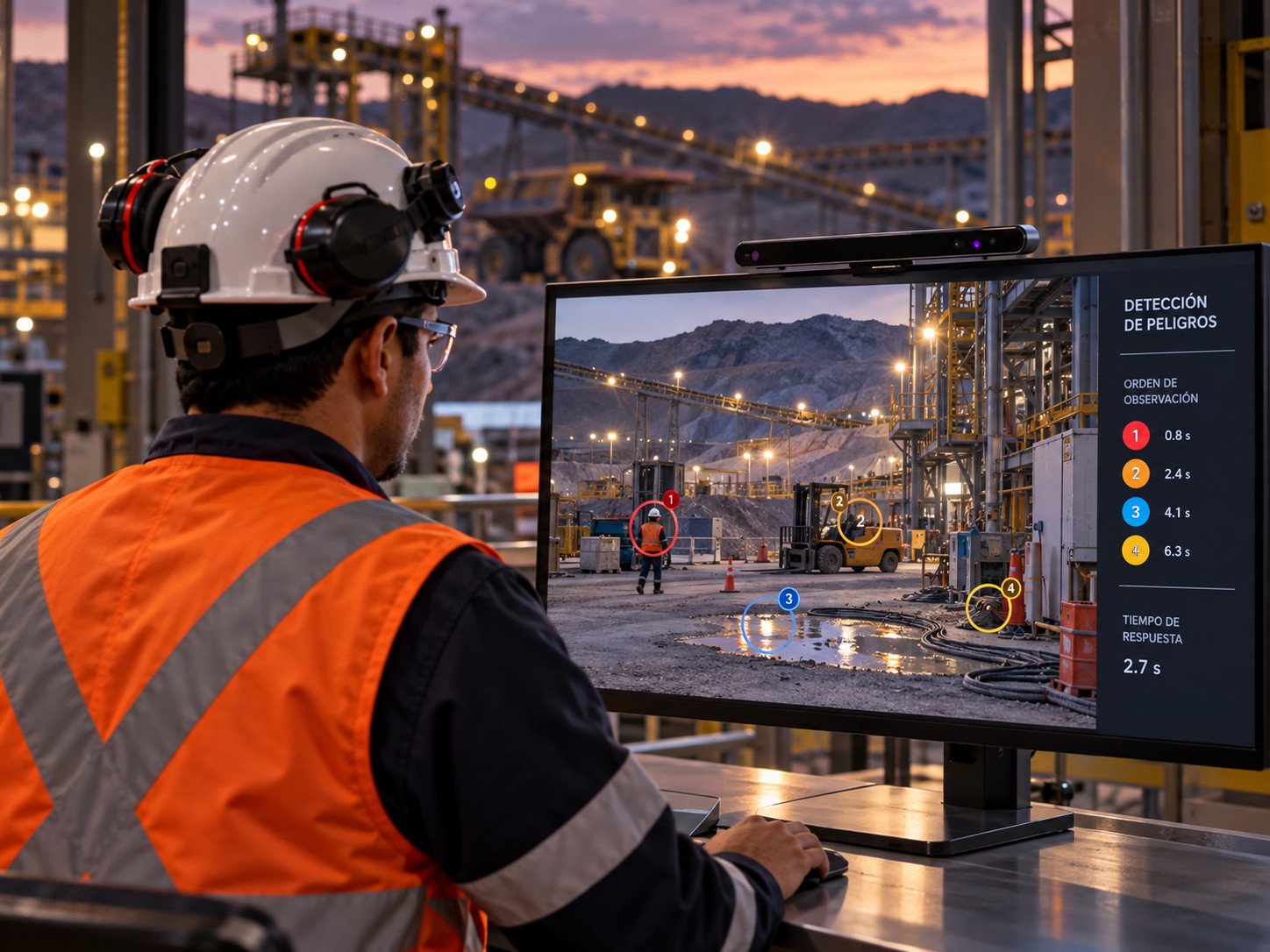
Safety Metrics measures whether operators, supervisors and personnel in training detect the hazards that matter before exposure occurs. The same research question can be tested with controlled visual stimuli or inside the real operating environment.
Real workplacePhotographsVideoVR
Technology configuration
Measurement follows the task
The technology path shown here is the approved structure for this service. The exact protocol is configured around the research question, environment and participant flow.
Controlled photographic or video stimuli.
Real routes, tasks or immersive operational scenarios.
Typical protocol · Industrial
How this study is executed.
The protocol below reflects the service definition developed for Neuro Garage. Final details are confirmed before execution.
Define the hazards, risks and critical visual areas for the task.
Expose participants to the approved photographs/video or execute the real route/VR scenario.
Record gaze behavior and the timing of hazard detection.
Identify detected and missed hazards, visual sequence and systematically ignored zones.
Translate the evidence into training, signage, procedure and workplace-design decisions.
Typical outputs
What this specific study can produce
01Hazards detected / not detected
02Time to hazard detection
03Visual sequence
04Ignored zones
Decisions supported
What the client can change with the evidence
The study is designed to translate observed behavior into concrete operational, people, design or risk-management decisions.
Industry references / comparable applications
Who has used comparable research approaches?
Publicly documented examples from companies and institutions worldwide. These organizations are not presented as Neuro Garage clients, and the examples do not imply they purchased this exact Neuro Garage protocol.
01


DensoPublic precedent
Expert inspector gaze recordings used to reduce onboarding time and improve training.
View public source ↗02Pigeon GlobalPublic precedent
Eye tracking used to standardize expert visual-inspection skills and reduce training time.
View public source ↗03KubotaPublic precedent
Inspection-training and digital-transformation work using eye tracking.
View public source ↗Scientific configuration
The method follows the question
Technology is selected because it is scientifically appropriate for the research objective, not because a device must be used. Santiago configures the study scope, stimuli, participant flow and measurement path before execution.
Discuss this study