
ED12 · Education
E-learning UX & Learning Effectiveness
Does the e-learning experience make it easy to navigate, focus on the right content and learn effectively?
Research protocolE-learning UX & Learning Effectiveness
Does the e-learning experience make it easy to navigate, focus on the right content and learn effectively?
EducationEye Tracking BarE-learningUxEducation
FIELDEducation
EXECUTIONIn-person execution
TECHNOLOGY PATHEye Tracking Bar
STUDY CODEED12
The research question
Does the e-learning experience make it easy to navigate, focus on the right content and learn effectively?
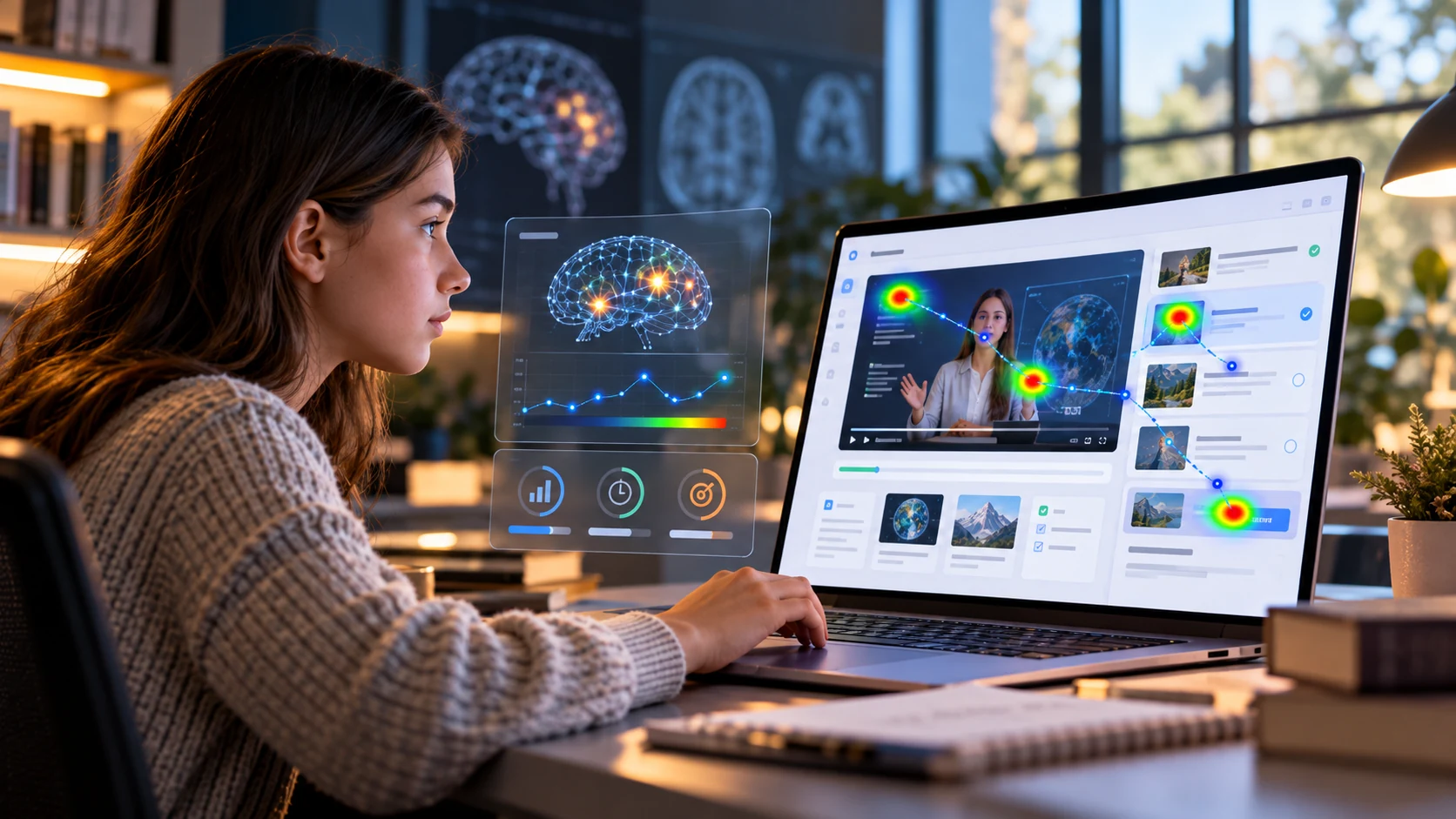
E-learning UX & Learning Effectiveness evaluates usability and learning effectiveness within the same screen-based protocol. It connects navigation behavior, visual hierarchy, ignored elements, confusion and friction with attention to educational content and task performance across LMS platforms, online courses, educational apps, simulators and virtual classes.
LMS and online coursesEducational platforms and appsDigital simulatorsVirtual classes
Technology configuration
Measurement follows the task
The technology path shown here is the approved structure for this service. The exact protocol is configured around the research question, environment and participant flow.
Typical protocol · Education
How this study is executed.
The protocol below reflects the service definition developed for Neuro Garage. Final details are confirmed before execution.
Define the e-learning journey, learning objectives, critical screens and participant profiles.
Run the approved tasks or learning modules while recording screen-based eye tracking.
Measure navigation, hierarchy, ignored elements, confusion, friction and attention to learning content.
Relate UX behavior and content attention to task performance and compare alternative interfaces or content versions when required.
Identify the platform and content changes most likely to reduce friction and support the intended learning experience.
Typical outputs
What this specific study can produce
01UX Efficiency
02Learning Attention
03Navigation Friction
04Content Effectiveness
05Learning Experience Score
Decisions supported
What the client can change with the evidence
The study is designed to translate observed behavior into concrete operational, people, design or risk-management decisions.
Industry references / comparable applications
Who has used comparable research approaches?
Publicly documented examples from companies and institutions worldwide. These organizations are not presented as Neuro Garage clients, and the examples do not imply they purchased this exact Neuro Garage protocol.
01


UnileverPublic precedent
Shopper and packaging research using eye tracking to understand attention and package performance.
View public source ↗02Toyota CanadaPublic precedent
Showroom shopper research to understand buyer attention and the purchase journey.
View public source ↗03Procter & GamblePublic precedent
Documented user of consumer-research eye tracking for product and media behavior studies.
View public source ↗Scientific configuration
The method follows the question
Technology is selected because it is scientifically appropriate for the research objective, not because a device must be used. Santiago configures the study scope, stimuli, participant flow and measurement path before execution.
Discuss this study