
ED04 · Education
Learning Attention Assessment
Where does the learner direct attention, how long can it be sustained, and at what moments does attention begin to break down?
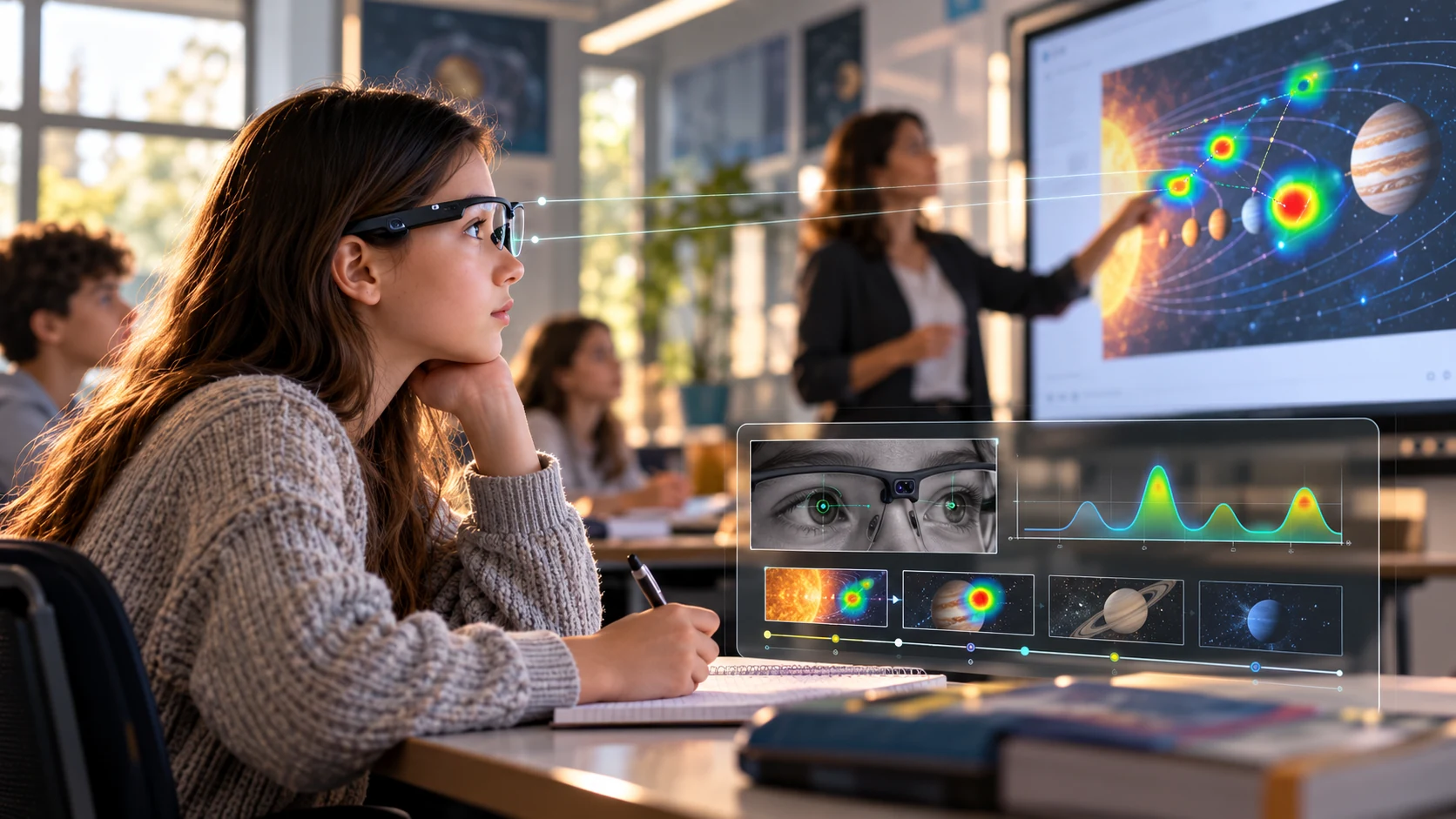
Research protocolLearning Attention Assessment
Where does the learner direct attention, how long can it be sustained, and at what moments does attention begin to break down?
EducationEye Tracking BarEye Tracking GlassesLearningAttentionSustained Attention
FIELDEducation
EXECUTIONIn-person execution
TECHNOLOGY PATHEye Tracking Bar · Eye Tracking Glasses
STUDY CODEED04
The research question
Where does the learner direct attention, how long can it be sustained, and at what moments does attention begin to break down?
Learning Attention Assessment measures the distribution and persistence of attention across educational experiences. Screen-based eye tracking is used for digital material, while Eye Tracking Glasses can assess sustained attention in real classrooms or when testing a new teaching methodology. Persistent atypical attention patterns can generate a non-diagnostic alert for a separate specialist study.
Reading and screen-based learningEducational video and presentationsExercises and digital platformsReal classroom / new teaching methodology
Technology configuration
Measurement follows the task
The technology path shown here is the approved structure for this service. The exact protocol is configured around the research question, environment and participant flow.
Used when sustained attention must be observed in the real learning environment.
Typical protocol · Education
How this study is executed.
The protocol below reflects the service definition developed for Neuro Garage. Final details are confirmed before execution.
Define the learning experience, participant profiles and critical content segments.
Use Eye Tracking Bar for screen-based material or Eye Tracking Glasses for classroom / methodology evaluation.
Measure time to first fixation, dwell time, fixation duration, revisits, scanpath and ignored zones.
Identify attention-loss points, distractors, disengagement moments and attention differences between content segments.
Compare learner profiles and issue only a non-diagnostic atypical-attention alert when persistent patterns justify a deeper specialist study.
Typical outputs
What this specific study can produce
01Attention Level
02Sustained Attention
03Attention Loss Points
04Distractor Impact
05Content Attention Map
Decisions supported
What the client can change with the evidence
The study is designed to translate observed behavior into concrete operational, people, design or risk-management decisions.
Industry references / comparable applications
Who has used comparable research approaches?
Publicly documented examples from companies and institutions worldwide. These organizations are not presented as Neuro Garage clients, and the examples do not imply they purchased this exact Neuro Garage protocol.
01


Tongji UniversityPublic precedent
Eye-tracking classroom used in applied learning and human-centered design research.
View public source ↗02Peking UniversityPublic precedent
Eye-tracking classroom program used in teaching and student research.
View public source ↗03Slovak University of TechnologyPublic precedent
Eye-tracking classroom and lab used to study e-learning and human-computer interaction.
View public source ↗Scientific configuration
The method follows the question
Technology is selected because it is scientifically appropriate for the research objective, not because a device must be used. Santiago configures the study scope, stimuli, participant flow and measurement path before execution.
Discuss this study