
APPLICATIONSCompliance
NEURO GARAGE · SCIENTIFIC SERVICE · COM01Ethic Metrics
When a corporate crisis or integrity risk emerges, what does your workforce actually know, how are they involved, and how do they respond to it?
The eyes don't lie.
Every protocol is configured to the objective, sample and measurement environment.
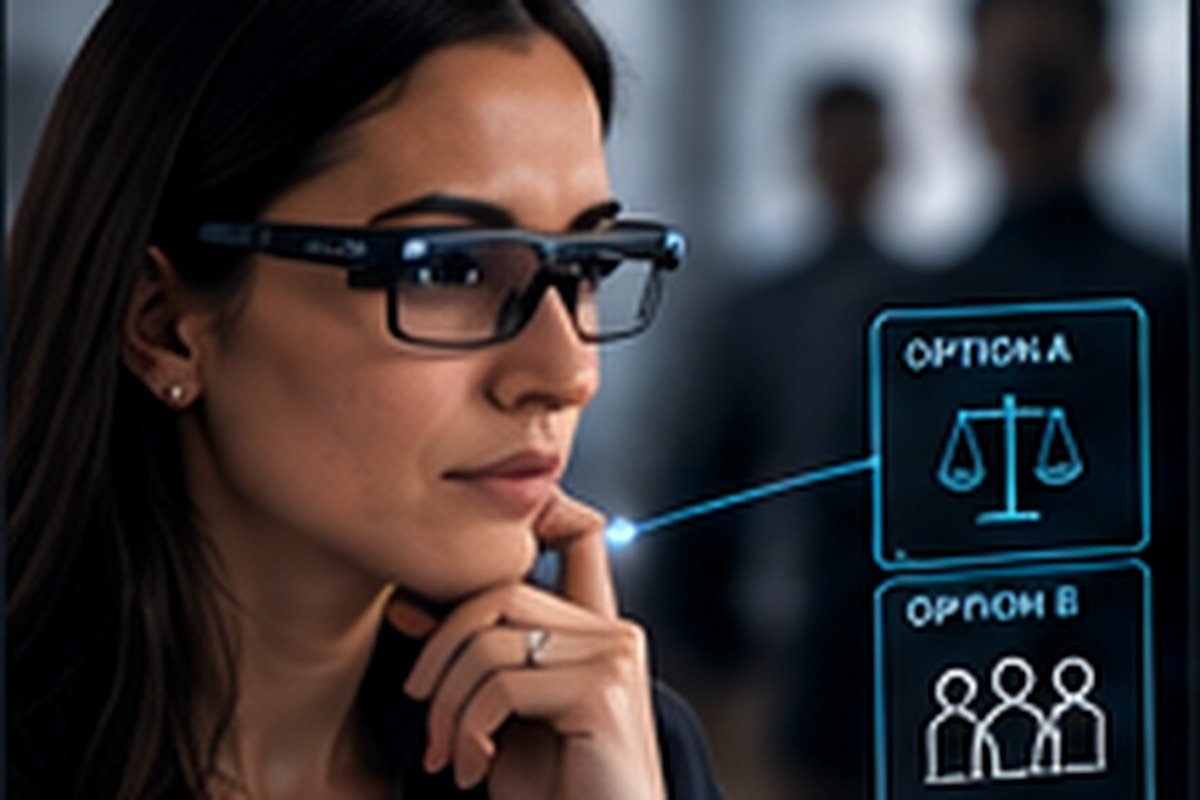
The eyes don't lie.Ethic Metrics
When a corporate crisis or integrity risk emerges, what does your workforce actually know, how are they involved, and how do they respond to it?
ComplianceEye Tracking BarEthicsIntegrityCorruption
RESEARCH APPLICATIONCompliance
FIELDCompliance
EXECUTIONIn-person execution
TECHNOLOGY PATHEye Tracking Bar
STUDY CODECOM01
THE VALUE OF THE STUDY
From a research question to actionable evidence.
Ethic Metrics is an in-situ, non-invasive eye-tracking protocol designed for corruption, fraud, conflicts of interest, bribery, information leakage, collusion, reputational crises and internal compliance failures. It uses IAT-style stimuli and photographs tailored to the case to examine individual cognitive and behavioral response patterns.
Objective measurementProtocol-defined interpretationDecision-oriented reporting
01 / Scientific objective
When a corporate crisis or integrity risk emerges, what does your workforce actually know, how are they involved, and how do they respond to it?
Ethic Metrics is an in-situ, non-invasive eye-tracking protocol designed for corruption, fraud, conflicts of interest, bribery, information leakage, collusion, reputational crises and internal compliance failures. It uses IAT-style stimuli and photographs tailored to the case to examine individual cognitive and behavioral response patterns.
In-situ controlled evaluation
02 / Technology configuration
Measurement follows the task
The technology path shown here is the approved structure for this service. The exact protocol is configured around the research question, environment and participant flow.
03 / Typical protocol · Compliance
How this study is executed.
The protocol below reflects the service definition developed for Neuro Garage. Final details are confirmed before execution.
Translate the integrity question into IAT-style stimuli and case-relevant photographs.
Run a standardized individual evaluation without attaching sensors to the participant.
Measure visual and cognitive-response patterns associated with the approved stimulus set.
Analyze ethical-response patterns, knowledge, involvement and case-relevant familiarity at individual level.
Deliver the individual findings for the client integrity / compliance decision process.
05 / Expected study outputs
What the research delivers
01Ethical-response patterns
02Ethical limits across scenarios
03Knowledge of the crisis / risk situation
04Level of individual involvement
05Associated emotional response patterns
06Resolution strategy patterns
07Relevant people / relationships within the strategy
SCIENTIFIC EVIDENCE
Observe. Measure. Decide.
The deliverables depend on the approved study protocol. The examples below are categories of outputs and potential decisions, not fabricated participant data or promised findings.
Appropriate instrumentation
Eye Tracking Bar
Protocol-based metrics
Ethical-response patterns
Ethical limits across scenarios
Knowledge of the crisis / risk situation
Decisions supported
Guide internal integrity review
Prioritize subsequent interviews
Strengthen controls
Measurement outputs and interpretation must follow data-quality checks and the actual scientific protocol. No sample findings are represented here.
Decisions supported
What the client can change with the evidence
The study is designed to translate observed behavior into concrete operational, people, design or risk-management decisions.
Industry references / comparable applications
Who has used comparable research approaches?
Publicly documented examples from companies and institutions worldwide. These organizations are not presented as Neuro Garage clients, and the examples do not imply they purchased this exact Neuro Garage protocol.
01


DensoPublic precedent
Expert inspector gaze recordings used to reduce onboarding time and improve training.
View public source ↗02Pigeon GlobalPublic precedent
Eye tracking used to standardize expert visual-inspection skills and reduce training time.
View public source ↗03KubotaPublic precedent
Inspection-training and digital-transformation work using eye tracking.
View public source ↗NEXT STEP
Define the right study, not just the equipment.
Tell us your research question. We will discuss the sample, measurement setting, technologies and reporting requirements before confirming the scope.
SCIENTIFIC SERVICEEthic Metrics
Request proposal