
CBR15 · Consumer Behavior Research
Wayfinding Research
Can people find their way—or is your space working against them?
Research protocolWayfinding Research
Can people find their way—or is your space working against them?
Consumer Behavior ResearchEye Tracking GlassesEye Tracking VREEGWayfindingNavigation
FIELDConsumer Behavior Research
EXECUTIONIn-person execution
TECHNOLOGY PATHEye Tracking Glasses · Eye Tracking VR · EEG
STUDY CODECBR15
The research question
Can people find their way—or is your space working against them?
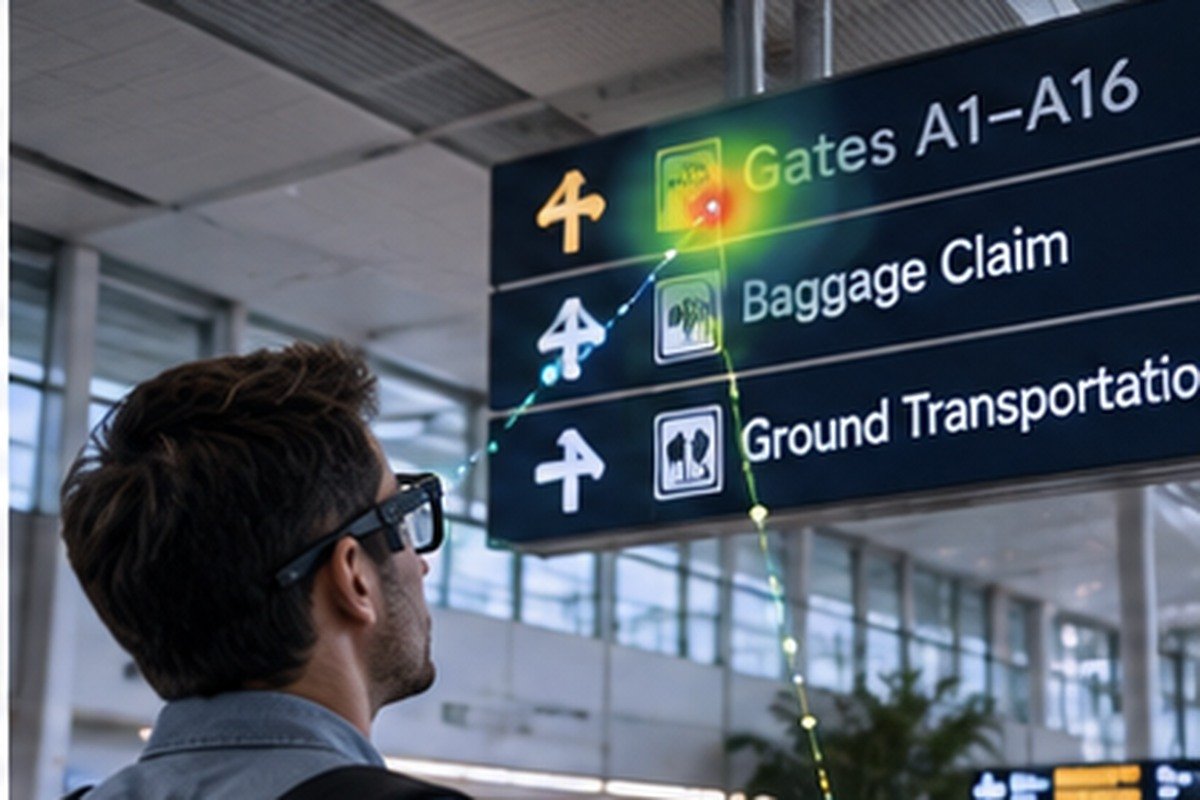
Wayfinding Research studies how people orient themselves and navigate complex spaces. It reveals whether signage, maps, color coding, floor cues, digital guidance and spatial design support an efficient route or create hesitation, confusion and wrong turns.
AirportsHospitalsShopping centersUniversities / campusesStations / terminalsMuseumsCorporate buildingsIndustrial plantsPublic spacesVR representation of the environment
Technology configuration
Measurement follows the task
The technology path shown here is the approved structure for this service. The exact protocol is configured around the research question, environment and participant flow.
Typical protocol · Consumer Behavior Research
How this study is executed.
The protocol below reflects the service definition developed for Neuro Garage. Final details are confirmed before execution.
Define the origin, destination, critical decision points, signage system and route-success criteria.
Run the navigation task in the real environment or approved VR representation.
Measure route efficiency, signage visibility / comprehension, time-to-decision, visual search, hesitation, wrong turns, missed signs and route deviations.
Evaluate maps, color coding, floor cues, kiosks, digital signage and navigation apps when relevant.
Translate the evidence into signage, map, hierarchy, route, decision-point and people-flow redesign.
Typical outputs
What this specific study can produce
01Route map
02Gaze path
03Signage detection rate
04Time-to-sign
05Time-to-decision
06Wrong-turn points
07Hesitation zones
08Missed signs
09Misunderstood signs
10Navigation efficiency
11Route deviation
12Visual / cognitive overload zones
13Friction map
14Arrival success
Decisions supported
What the client can change with the evidence
The study is designed to translate observed behavior into concrete operational, people, design or risk-management decisions.
Industry references / comparable applications
Who has used comparable research approaches?
Publicly documented examples from companies and institutions worldwide. These organizations are not presented as Neuro Garage clients, and the examples do not imply they purchased this exact Neuro Garage protocol.
01
HT
Heathrow Terminal 5Public precedent
Comparable eye-tracking wayfinding research in a complex passenger environment.
View public source ↗02MA
Munich AirportPublic precedent
Comparable wayfinding and signage research in an airport environment.
View public source ↗03OM
Osaka MetroPublic precedent
Comparable navigation and wayfinding research in public transport.
View public source ↗Scientific configuration
The method follows the question
Technology is selected because it is scientifically appropriate for the research objective, not because a device must be used. Santiago configures the study scope, stimuli, participant flow and measurement path before execution.
Discuss this study