
CBR03 · Consumer Behavior Research
Shopper Research
What makes shoppers notice, consider and choose your product?
Research protocolShopper Research
What makes shoppers notice, consider and choose your product?
Consumer Behavior ResearchEye Tracking GlassesEye Tracking VREEGShopperRetail
FIELDConsumer Behavior Research
EXECUTIONIn-person execution
TECHNOLOGY PATHEye Tracking Glasses · Eye Tracking VR · EEG
STUDY CODECBR03
The research question
What makes shoppers notice, consider and choose your product?
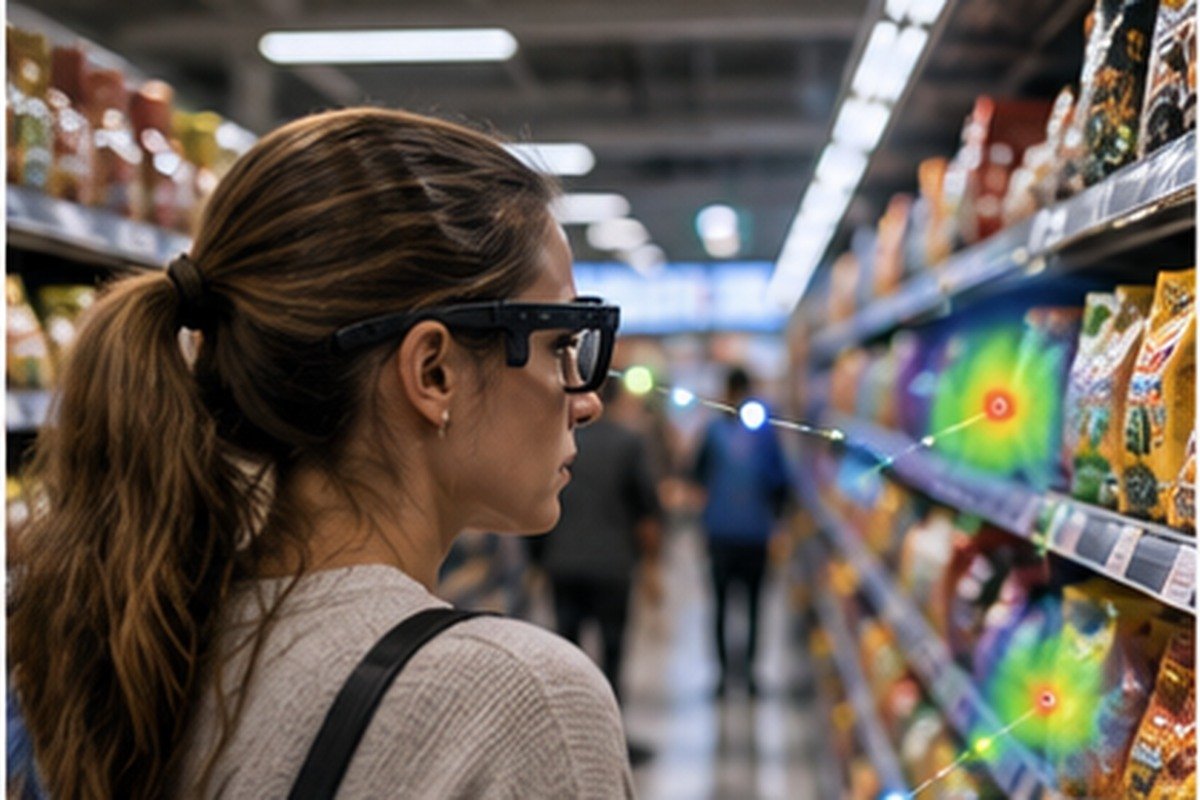
Shopper Research reveals how attention, navigation, category context and interaction shape the path-to-purchase. It maps what shoppers notice, compare and ignore across the store or immersive retail environment, from initial exploration to final choice.
Real retail environmentImmersive retail environment / VR
Technology configuration
Measurement follows the task
The technology path shown here is the approved structure for this service. The exact protocol is configured around the research question, environment and participant flow.
Typical protocol · Consumer Behavior Research
How this study is executed.
The protocol below reflects the service definition developed for Neuro Garage. Final details are confirmed before execution.
Define the retail environment, shopper profile, categories, products, POP materials and research objective.
Capture the real or immersive shopper journey from entry / exploration through category and product decisions.
Map heat points, exploration patterns, performance by area, need states, interactions and the decision tree.
Quantify route behavior, fixations, AOI metrics, attention / attraction, recognition, category interactions and decision sequences.
Translate the evidence into changes to layout, category management, product placement, displays, promotions, signage and shopper journey.
Typical outputs
What this specific study can produce
01Shopper path
02Heat points / traffic map
03Exploration patterns
04Performance by area
05Need states
06Decision tree
07Number and range of interactions
08Heatmaps and focus recording
09Navigation / comparison / search / exit routes
10TTFF / TVD / fixation metrics
11Visibility / attention / attraction by stimulus and AOI
12Brand recognition
13Shopping habits
14Cross-category interaction
15Blind spots
16Decision sequence
17Path-to-purchase
Decisions supported
What the client can change with the evidence
The study is designed to translate observed behavior into concrete operational, people, design or risk-management decisions.
Industry references / comparable applications
Who has used comparable research approaches?
Publicly documented examples from companies and institutions worldwide. These organizations are not presented as Neuro Garage clients, and the examples do not imply they purchased this exact Neuro Garage protocol.
01


UnileverPublic precedent
Shopper and packaging research using eye tracking to understand attention and package performance.
View public source ↗02Toyota CanadaPublic precedent
Showroom shopper research to understand buyer attention and the purchase journey.
View public source ↗03Procter & GamblePublic precedent
Documented user of consumer-research eye tracking for product and media behavior studies.
View public source ↗Scientific configuration
The method follows the question
Technology is selected because it is scientifically appropriate for the research objective, not because a device must be used. Santiago configures the study scope, stimuli, participant flow and measurement path before execution.
Discuss this study