
CBR01 · Consumer Behavior Research
Advertising Research
Does your advertising work?
Optimize your budget. Maximize the impact of every execution.
Optimize your budget. Maximize the impact of every execution.Advertising Research
Does your advertising work?
Consumer Behavior ResearchOnline Eye TrackingOnline FaceCodingEye Tracking BarAdvertisingAd
FIELDConsumer Behavior Research
EXECUTIONOnline or in-person execution
TECHNOLOGY PATHOnline Eye Tracking · Online FaceCoding · Eye Tracking Bar · FaceReader Desktop
STUDY CODECBR01
The research question
Does your advertising work?
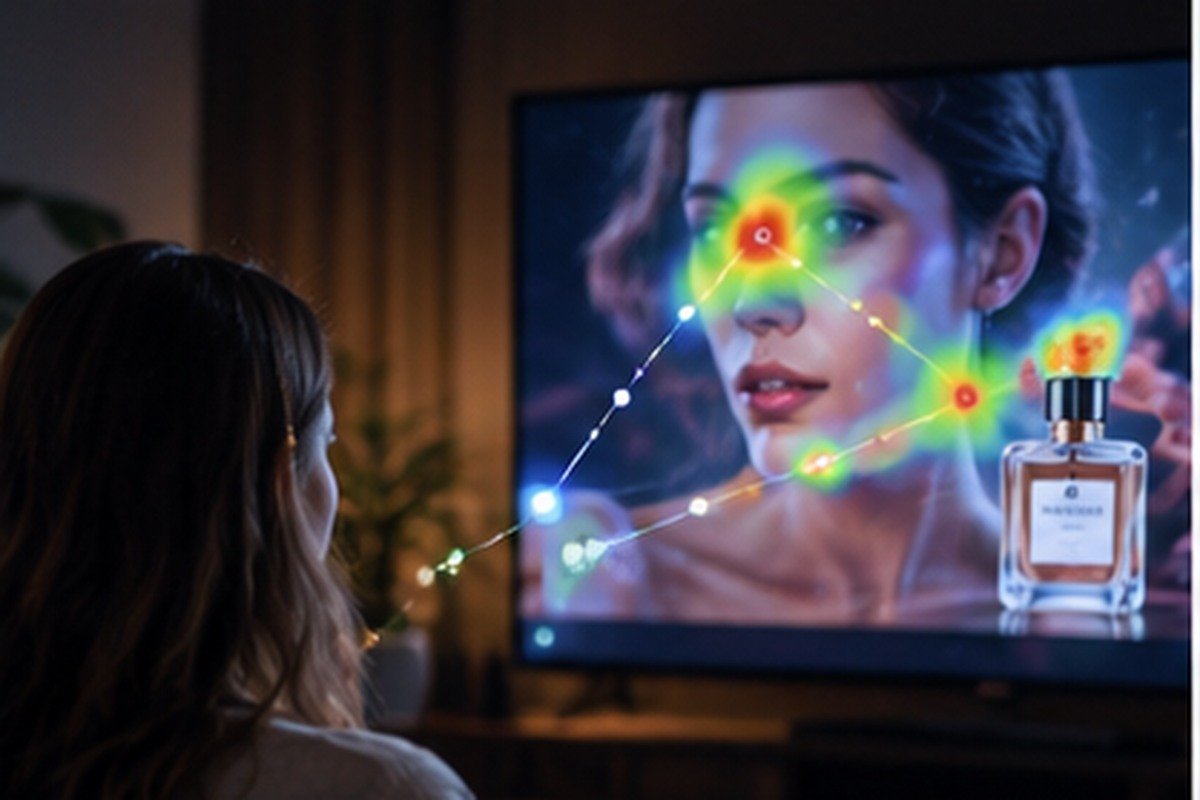
Advertising Research evaluates video and static advertising by measuring what people see, how long they look, in what sequence they explore the execution and how facially expressed emotion changes across the experience. It reveals whether branding, messages and calls-to-action are actually visible—and which creative execution performs best.
OnlineControlled in-person desktop evaluation
Technology configuration
Measurement follows the task
The technology path shown here is the approved structure for this service. The exact protocol is configured around the research question, environment and participant flow.
Typical protocol · Consumer Behavior Research
How this study is executed.
The protocol below reflects the service definition developed for Neuro Garage. Final details are confirmed before execution.
Define the campaign objective, target audience and the video / static executions to compare.
Run the approved online or desktop protocol and capture gaze plus facially expressed response.
Map what is seen, for how long and in what sequence, including branding, message and CTA visibility.
Locate weak scenes, attention loss, visual bounce / saccadic movement, blind spots and emotional-response changes.
Compare executions and translate the evidence into creative, narrative and media-budget decisions.
Typical outputs
What this specific study can produce
01Visual attention
02Attention sequence
03Gaze patterns
04Branding / message / CTA visibility
05Creative-element visibility
06Visual engagement
07Emotional-response timeline
08Recall / retention indicators
09Persuasion-related response
10Narrative response
11Attention-loss moments
12Visual bounce / saccadic movement across the piece
13Blind spots
14Creative comparison
Decisions supported
What the client can change with the evidence
The study is designed to translate observed behavior into concrete operational, people, design or risk-management decisions.
Industry references / comparable applications
Who has used comparable research approaches?
Publicly documented examples from companies and institutions worldwide. These organizations are not presented as Neuro Garage clients, and the examples do not imply they purchased this exact Neuro Garage protocol.
01


UnileverPublic precedent
Shopper and packaging research using eye tracking to understand attention and package performance.
View public source ↗02Toyota CanadaPublic precedent
Showroom shopper research to understand buyer attention and the purchase journey.
View public source ↗03Procter & GamblePublic precedent
Documented user of consumer-research eye tracking for product and media behavior studies.
View public source ↗Scientific configuration
The method follows the question
Technology is selected because it is scientifically appropriate for the research objective, not because a device must be used. Santiago configures the study scope, stimuli, participant flow and measurement path before execution.
Discuss this study